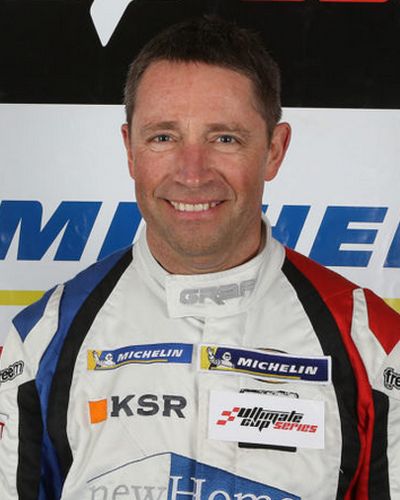
Sébastien Page
Racing driver
18
APPEARANCES
9
PODCASTS
Sep 22, 2026

18:05

You know, what is what is your relationship to this work and why did it feel necessary? for you? Where do you want to start? Do you want to start with the psychology of leadership, or do you want to talk a little bit about your own story?
Sébastien PageGUEST
I can answer both at the same time because the book starts with my own story.
Sébastien PageGUEST
By the way, when I finished the book and sent my father the manuscript, my father, who was a finance professor, he replied in a slightly snarky way, I believe, what? Are you in HR now? And for him, for a finance professor, for a numbers guy, for me having spent my career in quantitative finance and economics research, he was a bit puzzled that it was, why are you writing this? Why are you so interested? Well, first of all, I have to manage high performing teams.
Sébastien PageGUEST
And the bottom line is that I got interested in the psychology of leadership because I was stressed at work.
Sébastien PageGUEST
I was saying to myself, I was doing what I'm telling your audience not to do.
21 MINS LATER

Sebastien PageGUEST
So that was an important moment for me, though, in my career because as a quant analyst, when my colleagues and importantly my bosses realized that I could communicate clearly and well, then the combination of deep skills, quantitative, and the ability to communicate it Became really an attractive package for the firm, and I got-- I was an intern at the time.
Sebastien PageGUEST
I got a job offer, and soon enough, I was asked to explain difficult quantitative concepts to clients.
Sebastien PageGUEST
That's how I built the first few years of my career, by combining these things.


6 MINS LATER


21 MINS LATER

Sebastien PageGUEST
When you get goal-induced blindness, this is specific often to high performers, you become so obsessed with your goal, usually a measurable goal, that you lose sight of anything in your life that's not goal-related, and that becomes a big problem.
18 MINS LATER

Sacha AwwaHOST
And I love this because both sides of the spectrum are brilliant in and of themselves, right? But how should leaders actually think about building high-performing teams today through that lens?
Sebastien PageGUEST
Tom, interestingly, people worry about debt levels and the sustainability of earnings.
Sebastien PageGUEST
The Russell 1000 large cap growth over the last five years at times have, has traded as high as 30 price earnings ratio.
Sébastien PageGUEST
When you get goal-induced blindness, this is specific often to high performers, you become so obsessed with your goal, usually a measurable goal, that you lose sight of anything in your life that's not goal-related, and that becomes a big problem.
18 MINS LATER
Sacha AwwaHOST
And I love this because both sides of the spectrum are brilliant in and of themselves, right? But how should leaders actually think about building high-performing teams today through that lens?
Sebastien PageGUEST
You know, I think the typical is hard to describe because its duration, its sensitivity to interest rate moves, has been highly unstable historically.
Sebastien PageGUEST
The earnings growth projected for the next 12 months for US large cap growth stocks are at 28%.
Sebastien PageGUEST
Now, you could say that's a high bar, but those are companies that tend to meet that high bar.
Sebastien PageGUEST
So Tom, we're still along the broadening trade, but we've taken about half the profits, and we've been moving money from international back to the US.

Tom KeeneHOST
Cliff Asness had a beautiful tweet out going, "What is this hot air?" What should we do with diversification given this war?
Sébastien PageGUEST
But financial advisors everywhere just use a negative return correlation assumption.
Sébastien PageGUEST
The twelve-month correlation historically between stocks and bonds has flipped time... has, has flipped signs twenty-nine times over the last eighty years, from positive to negative.
Paul SweeneyHOST
So Sebastian, what are we doing in the bond market here? Um, how much credit risk should you be taking in a world that has black swan events, has a lot of cross currents, has a lot of geopolitical risk here? How about credit?


Melissa LeeHOST
Do things go back to, quote unquote, "normal" when it comes to your view of stocks and how they should be valued?
Sebastien PageGUEST
But as market participants, we need to understand the damage that has already been done, and it's a little curious to me that the two-year inflation swap is at only 2.8%.
Mike SantoliHOST
So are there pockets of this market that you feel as if the, the risk-reward has really improved a lot?


Tyler DickerhoofHOST
It's when do you set the metrics? When do you fold? When do you hold? My guess is that's the stressful part.
Sebastien PageGUEST
Because I was stressed at work, you know, and not only was I stressed at work, but I was stressing about stressing.
Sebastien PageGUEST
What stressed you out? You know, the uncertainty associated with the job and as a leader, I'll be completely transparent with you.
39 MINS LATER
Lisa AbramowiczHOST
Sebastian, how important is non-farm payrolls on Friday in light of this, given the fact that a lot of whether this is an inflationary shock or whether this is potentially a shock to growth is predicated on how much momentum there was heading into this?
Sebastien PageGUEST
this?No, I think the geopolitical headlines will continue to dominate into Friday.
Sebastien PageGUEST
No single data point matters, but we still debate employment quite a bit in our asset allocation committee, especially in the context of AI.
Sebastien PageGUEST
I always remind people that the longer an average unemployment is 5.7%, so the economy in the US is humming.
Jonathan FerroHOST
They're not deescalating, and I just wonder how you think that's gonna play out in the weeks to come.
Sébastien PageGUEST
... residential and commercial and so on, and it's part of a diversified real asset strategy.
Sébastien PageGUEST
It doesn't move hand-in-hand with energy prices, and that's a feature, not a bug, right? So we like putting all these stocks together and have it as a dedicated allocation because if you compare this with commodities, for example, with the real asset equities, you get an equity risk premium over time.
Sébastien PageGUEST
So even when there's no geopolitical risk, you get pretty good equity returns.
Sébastien PageGUEST
And then when you do get an inflation shock and bonds like Treasuries go down together with stocks, those stocks actually behave quite well and can outperform significantly in the portfolio.

Norah MulindaHOST
So I understand that you have a diversified portfolio, but how exactly do you position yourself for that worst case scenario, the bear case scenario? Where do you find a safe haven?
Tom KeeneHOST
First, Sebastien Page of T. Rowe Price looking at the oddity of markets higher given sentiment.
Sebastien PageGUEST
When everybody thinks we might be in a bubble, counterintuitively, that's kind of a good thing.
Tom KeeneHOST
How much of a draw down do we need to see where we break that inertial constructive force? 5%? 10% bear market?
Sebastien PageGUEST
Well, it's interesting the way you phrased the question, "How much of a draw down do we need to get the market broadening?" That's an assumption we're making, and I think it's the right one, uh, that in a draw down, we will see broadening.
Sebastien PageGUEST
If you look at how value stocks have been behaving over the last two, three years, every time we get a 3%, 4% move daily on the downside, value stocks outperform.
Sebastien PageGUEST
So my view is that a big draw down in the markets would be, almost mathematically, has to be driven by maybe an AI scare, something going on to unwind market concentration.
speaker_2UNKNOWN
Yeah.
Sebastien PageGUEST
... and as valuation-sensitive investors, we still have a long credit exposure because, and our head of high yield keeps reminding our asset allocation committee every time, this is not the same asset class that it used to be.
Sebastien PageGUEST
So if you draw a chart of high yield spreads over time and you look at where spreads were in prior market cycles, you're looking at a different index.

Sebastien PageGUEST
Because for me, the realization that optimal performance does not occur at a stress level of zero.
Sebastien PageGUEST
That stress up to a point will increase your performance because you'll be activated, motivated, you'll prepare better, the adrenaline will push you.
Sebastien PageGUEST
But this idea that there's a curve, it's called a Yerkes-Dodson curve, and there's a- like 80 years of research on this.
Sebastien PageGUEST
And I think it's so underestimated how useful this concept is for business and life.
8 MINS LATER
Tom KeeneHOST
Single best idea. And today, there were s- uncountable single best ideas into a Fed day. Special thanks to have Stephen Englund here on from Standard Charter Bank, and just before him, Michael Kushman of Morgan Stanley is what the magic's all about. These are very, very experienced, very wise, wisdom, wise, wise people. And it was the way the whole show was today. It was just great. Sebastien Page showed up. He grew up in Quebec, in the land of the hockey stick, in Sher- Sherbrooke, Quebec. That is where they make all the hockey sticks. It was like the Vatican of my childhood, if you will. We talked with him about Canada, had some incredible insights about the tensions in the 51st state concept. But mostly we talked to Sebastien Page of T. Rowe Price about allocation and about where we are right now.
Sebastien PageGUEST
We're not panicking, Tom. I think markets, the economy, I think we're gonna be okay. We're looking at a slowdown. The data for the consumer is showing that things are slowing down. And the markets is selling off, but it's not just because of tariff headlines. It's because of the growth slowdown. It's because we had extremely high valuations going into this. And yes, the word of the hour, uncertainty. So it's a combination of all these things, but I don't think we're getting a recession.

speaker_3ADVERTISER
Sierra is different. We build AI agents that talk directly to your customers so you can say goodbye to hold times and chatbots. Always friendly, always helpful, always ready. Visit sierra.ai to learn more. That's sierra.ai.
Sebastien PageGUEST
(guitar music) Bloomberg Audio Studios. Podcasts, radio, news. (instrumental music) This is the Bloomberg Surveillance podcast. Catch us live weekdays at 7:00 AM Eastern on Apple CarPlay or Android Auto with the Bloomberg Business app. Listen on demand wherever you get your podcasts, or watch us live on YouTube.
Sebastien PageGUEST
... prints. The last one was positive, but still below expectation. The one before was revised -1.2% month over month. Those two data points are not good and they're showing some slowdown. Overall, the economic surprise index in the US is in negative territory. But I'm not counting the US consumer out yet. Unemployment at 4.1% is a low number for-