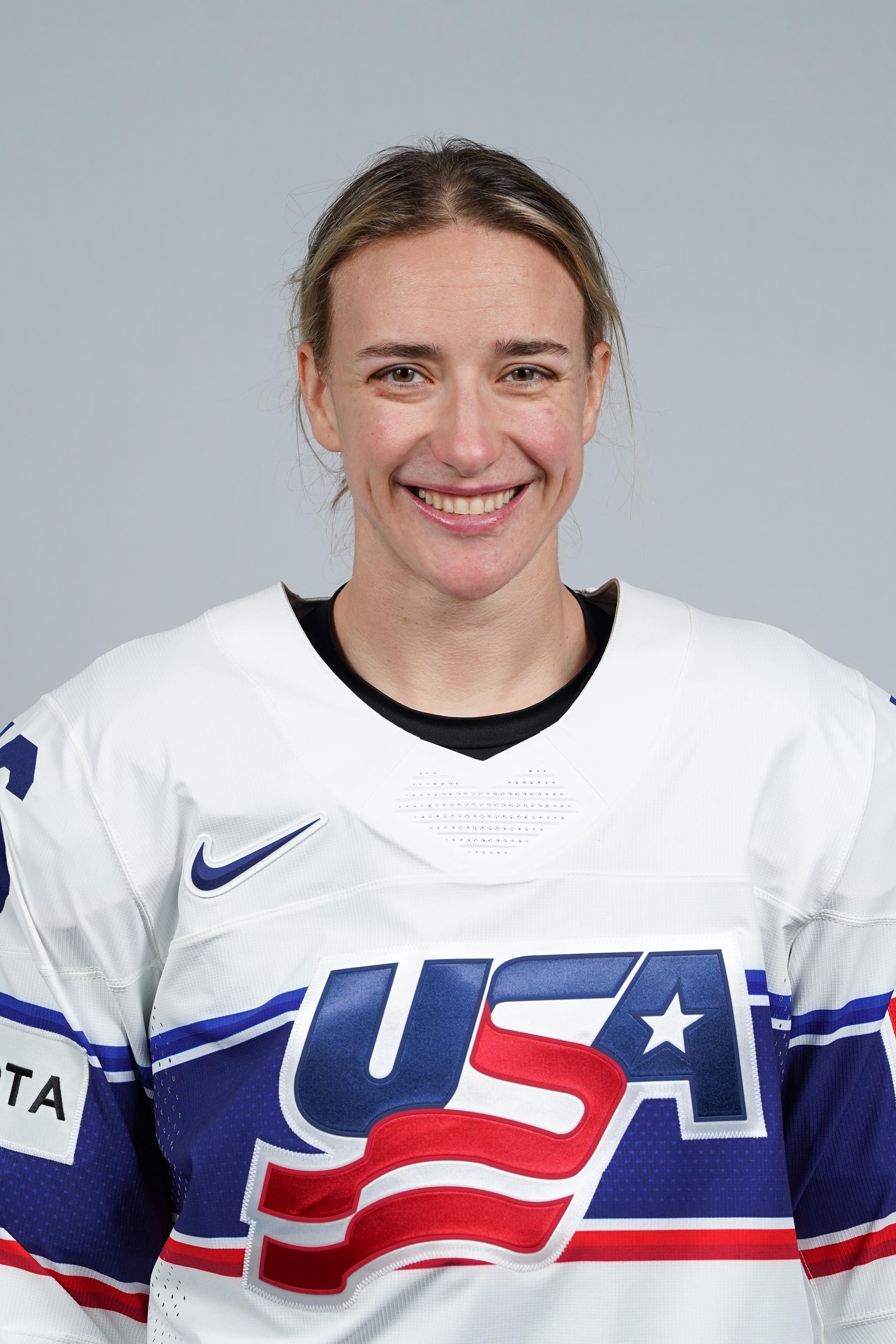
Hayley Scamurra
American ice hockey player
20
APPEARANCES
3
PODCASTS
Oct 13, 2026

Lee M.J. EliasHOST
anonymous asks have you ever had a coach or teammate you didn't get along with and how did you handle that situation hard-hitting question to start the episode

Hayley ScamurraGUEST
I yes I've definitely had you know my times from youth on there's been plenty of people I maybe haven't you know, clicked with or gotten along with exceptionally well.
Hayley ScamurraGUEST
I found the people that I was comfortable with and I would just kind of stick with them.
Hayley ScamurraGUEST
I definitely had some hard times in the past and it was tricky and I felt like isolated at times.
Hayley ScamurraGUEST
But then once I found my people and I just hung out with them, I would either carpool with them or... you know, just go to dinners with them or at the hotels and different things like that.
14 MINS LATER
Lee M.J. EliasHOST
again? What qualities do you notice in a captain that makes them a great leader? So from the player perspective, what do you see in captains that really you love?
Hayley ScamurraGUEST
And his one requirement for our home was that we could build a backyard rink.
18 MINS LATER
Hayley ScamurraGUEST
I mean, the amount of goals that were just being scored was we were like, OK, this is a weird game.
Hayley ScamurraGUEST
And I think I was super proud of our team that game because we just kept coming back.
Hayley ScamurraGUEST
We were like and then the ability of us to score multiple goals in the comeback and then to continue doing that.
22 MINS LATER
Hayley ScamurraGUEST
So we'll go there like a day or two before we would normally get to like an away game.
Hayley ScamurraGUEST
And the takeover tour games are typically in different markets where we don't have a PWHL team.
Hayley ScamurraGUEST
But we always get so many people out at those like coming to watch because like we never get to see this like because it's so far for them.
11 MINS LATER
Lee M.J. EliasHOST
him, but Haley, I want to ask you, like, are there even smaller steps coaches can take from a inclusion, a belonging standpoint, an impact standpoint, For all the kids, right? If we're on a co-ed team and making sure that all the kids understand that, hey, we belong together, right? Like what are some steps coaches can take to help grow the game in this nature?
Hayley ScamurraGUEST
So I think it's huge to, like, have your own standards and what gives you confidence when you're out there, what defines your game, what you define as success, and attribute that to your confidence and not... 'Cause otherwise, if you're focused on external validation, like, that's what it's dependent on.
Hayley ScamurraGUEST
And so I think it's super important to, um, to give that to yourself, to give yourself credit, um, and to set your own standards in that sense.
31 MINS LATER
Hayley ScamurraGUEST
Like, I really do think that is something in women that we're kind of conditioned by in just different ways in society, that we're expected to be able to do things perfectly.
Hayley ScamurraGUEST
Um, and in the fall I kind of started with soccer and then would go into hockey later.
Lee M.J. EliasHOST
... you know, acclimate to not being on the ice or not being on the field, on the pitch?
Hayley ScamurraGUEST
Um, and then we also did a lot of, like, game system stuff, so to make sure we were kind of all on the same page.
Hayley ScamurraGUEST
Um, and then just adding in games, uh, to make it more competitive and things like that.
Hayley ScamurraGUEST
And then as you get older, obviously, you know, maybe it changes, like when you're in college.
38 MINS LATER
Chris HowardGUEST
Like, uh, did you, was there a moment you realized you might be able to get more out of practice than the person next to you? And how was your approach to it?
Hayley ScamurraGUEST
... you know, who knows, right? But I think that's probably the only time I really got benched.
Hayley ScamurraGUEST
Um, I think, and then with USA Hockey, just my role has been just usually less lice- ice time, in general, just with the nature of it and where I've been utilized and, and how I've been utilized.
Hayley ScamurraGUEST
And, uh, to be honest though, I would be on that team and just sit on the bench if I needed to.
10 MINS LATER

Chuck VerdolinoHOST
So at what point did you realize that hockey can become more than just something you love doing on the pond? And what did your path in youth hockey look like? Did you play with the boys starting out? When did you transition to play with the girls?
Hayley ScamurraGUEST
There wasn't really any girls programs until probably, I want to say 14U, maybe 12U.
36 MINS LATER
Hayley ScamurraGUEST
And, uh, just got to meet more people, which was really fun and, uh, especially 'cause, like, a lot of the snow athletes, like, we didn't really get to meet because their village was so far away.
Hayley ScamurraGUEST
So meeting a lot of them was really cool and- Um, yeah, just sharing stories, sharing experiences, and it's, it was amazing.
13 MINS LATER
Hayley ScamurraGUEST
There's a lot of similarities in terms of the space that opens up on plays, like your running patterns, uh, getting the ball or the puck into space for someone to run onto it, rather than right directly on their stick.
Hayley ScamurraGUEST
Um, there's a lot of things that I felt, uh, translated in that sense, and I think that helped me tremendously with my hockey IQ.
Hayley ScamurraGUEST
I also had my dad always talking hockey with me, like, uh, you know, showing me plays on the boards.
Hayley ScamurraGUEST
Like, um, I remember, I mean, just growing up, whenever we'd have a game or a practice, we'd kind of dissect different plays and be like, "Okay, what could we have done better on this play?" Like, when this-
5 MINS LATER
Hayley ScamurraGUEST
... always something that was natural to me and something that- Um, I really enjoyed about the game, like, I like understanding the different aspects to it, and like little things I can work on to improve, like, with my timing, like getting to the net.
Hayley ScamurraGUEST
And I was like, "That could be really fun." My dad had just been getting back into coaching a little bit.
Hayley ScamurraGUEST
He would help, uh, kind of youth teams in the area, and just go on the ice with them and work with them.
Hayley ScamurraGUEST
And he's, like, 71 now, so, like, he doesn't move, uh, you know, as great as he would like on his skates.
19 MINS LATER
Hayley ScamurraGUEST
So basically, each expansion team made a list of 20 players that they wanted to negotiate with.
Hayley ScamurraGUEST
And let's say they didn't reach their five players by the end of that phase, they had to pick from that negotiation list.
21 MINS LATER
Lee M.J. EliasHOST
what's that process? Is it excitement? Is it wonder? Is it fear? I mean, what are the, what are the, maybe not fear, but you know what I'm saying?
Hayley ScamurraGUEST
Um, and it was also a lot of focus on what you could do outside of the sports to get better.
Hayley ScamurraGUEST
Like, I remember, like we were always being active, like always, uh, you know, doing like different types of workouts.
Hayley ScamurraGUEST
Like, you know, obviously safe and healthy workouts for whatever age I was.
Hayley ScamurraGUEST
And I think also having three older brothers, I always wanted to be playing up with them, so I did [laughs] whatever it took to kind of play with people who were always older than me, faster than me, um, and different things like that.
Hayley ScamurraGUEST
Like, I remember I was like probably 9 or 10, and I was working out with my brother's team, who was 12 probably, 12 or 13 at the time.
12 MINS LATER
Hayley ScamurraGUEST
We went to, we met at our practice rink, which is in Verdun, which is like a, uh, a suburb, if you will, outside of the downtown Montreal area, probably like 15 minutes or so away.
Hayley ScamurraGUEST
Um, which was real- you know, it's, it's hard, right? But I think they were just excited to see a Canadian team win it as well, and obviously bummed for their own team.
Hayley ScamurraGUEST
But we had a lot of people who stayed, and then a lot of Montreal fans were there too, so it was really nice to be able to celebrate it with them.
Hayley ScamurraGUEST
It was just so amazing and, and like I said, though, it was like a different kind of celebration just because, you know, it was a whole season that led up to this.
Hayley ScamurraGUEST
Like, when is this league gonna happen? Like, I'm, you know, happy to have, like, tr- you know, worked on the ground floor and try to, like, uh, get this league going, but, like, how much time can I keep doing this, right? Like, we weren't getting paid really.
Hayley ScamurraGUEST
And I was training by myself, so it was kind of lonely and isolating at times.
Hayley ScamurraGUEST
And so, uh, having her kind of point that out made me realize just how far we've come in such a short amount of time, and now we're a 12-team league, um, breaking records all the time.
12 MINS LATER
Hayley ScamurraGUEST
Yeah, I think, um, what was great about the goals was, like, our retrievals for pucks.
Hayley ScamurraGUEST
So it was, like, a board battle on the side, and I remember I was in it with, like, Abby Roque.
Hayley ScamurraGUEST
Yeah, so Abby Roque and I are in the pile, uh, working on getting the puck.
Hayley ScamurraGUEST
We know we have our D release, but then we also had that dot release in the middle.
Hayley ScamurraGUEST
Uh, it's super important to have that, 'cause usually two defenders kind of go to the walls to block those releases off.
Hayley ScamurraGUEST
Um, and so we were able to get it to her, and she did a great job kind of possessing it, waiting for, you know, pressure to come to then release the puck back to the point.
38 MINS LATER
Lee M.J. EliasHOST
Um, do you have any just final thoughts on, on the topic, right? Net front presence for the, for the group.


Hayley ScamurraGUEST
Um, I think I thought about going up there, and then I realized, I was like, "This is open." Like, I have it to the net.

7 MINS LATER