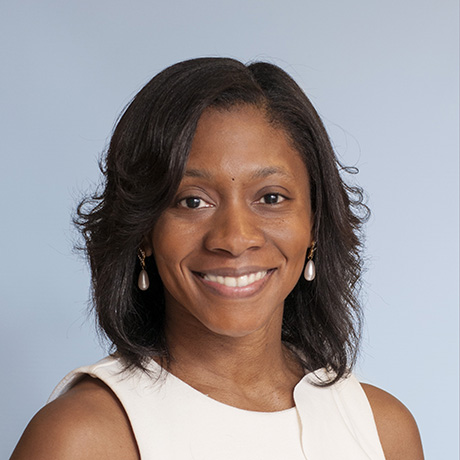
Fatima Cody Stanford
American physician
9
APPEARANCES
6
PODCASTS
Oct 21, 2026


Fatima Cody StanfordGUEST
Unless you're me, right? And so this is what I emphasize with my patients.
Fatima Cody StanfordGUEST
And when they're getting that mantra, they begin to realize the importance of strength training because we've been fed this idea that it's cardio, cardio, cardio, cardio, cardio.
Fatima Cody StanfordGUEST
But if you're really strength training in the way that we're talking about it, you are getting that heart health benefit from doing the strength training.
Fatima Cody StanfordGUEST
Now, moving into your second piece, which is how people pull back the utilization.
5 MINS LATER

Daniel LiebermanGUEST
Should we be giving GLP-1s to those kids? Me, my concern is how do we prevent those kids from getting into that problem in the first place?


Monique NugentHOST
Is there a health care policy or a policy that people wouldn't think is a health care policy that you would like us to know about and say, like, look, this is important for your health and outcomes?
Fatima Cody-StanfordGUEST
So I can tell you that in the obesity community, there's been a bill that we have tried to And tried.
7 MINS LATER


Marc McKeeHOST
Can you explain what that is? And was there a particular patient early on who changed your practice?
Fatima Cody StanfordGUEST
So the fellowship, I'll just explain what that is, and then I'll go back to talk about a patient that highly influenced me early in my career.
Fatima Cody StanfordGUEST
So here in the United States, you can do fellowship training in the field of obesity.
Fatima Cody StanfordGUEST
Here at Mass General, when I did my fellowship, we were required to do a minimum of two years.
Fatima Cody StanfordGUEST
I did three years of fellowship training just focused on caring for patients with obesity.
Fatima Cody StanfordGUEST
Now, I happen to be an internist, which means I take care of adults, and a pediatrician, which means I take care of children.
6 MINS LATER
speaker_3ADVERTISER
Now, without making it too complex,
Fatima Cody StanfordGUEST
And when I say beneath the hood, like look at what's going on in the insides.
Fatima Cody StanfordGUEST
So like you can't just say, you know, you're healthy just, you know, if you're either living in a leaner body or one that has, you know, carries more excess weight, you have to do an internal investigation.
Fatima Cody StanfordGUEST
Like what's going on inside of that leaner body? Maybe that leaner body isn't healthy and maybe the larger body is healthier, but what's really going on inside of that body? Which is why I do a full, workup of that individual before I can make that assessment.


13 MINS LATER
Fatima Cody StanfordGUEST
Well, let's, let's, okay, so let's simplify this, 'cause this can get, it can get a little academic, and I wanna bring it back down, 'cause I don't wanna, I don't wanna scare people away.
Fatima Cody StanfordGUEST
So let's, let's go back to the basics, and I wanna make sure I, I go back to the basics.
Fatima Cody StanfordGUEST
So let's talk about what are these medications and, and what were they intended for, what are they used for? So let's bring it back down.
Fatima Cody StanfordGUEST
So GLP-1 stands for glucagon-like peptide one receptor agonists, okay? So that's what y- when you hear that term, why are they kind of coming into the essence of what we're thinking about? Let's first talk about these medications have been around for over 20 years.
Fatima Cody StanfordGUEST
A lot of people are surprised to know that they've been around for over 20 years, because we're just hearing about them, and the reason we're just hearing about them is because the potency, how strong they are, have become, um, really at the paramount of, of their strength, right? So when they first came on the market, um, with the trade name or the, the, the first medication was exenatide, way back in the early 2000s, they weren't as powerful.
11 MINS LATER


Chelsea ClintonHOST
I just asked that 'cause I think many people think, like, "Oh, these are still very novel."
Fatima Cody StanfordGUEST
GLP-1s came around in the early 2000s, right? The very first set of GLP-1s, right? So they were first prescribed for patients with diabetes in the early 2000s.
Fatima Cody StanfordGUEST
The first ones that were approved for obesity were, you know, we're getting into the 2010s, so that was liraglutide or Saxenda.
Fatima Cody StanfordGUEST
Um, these were patients that were willing to give themselves a daily injection, but these didn't really become popular until we saw that kind of Ozempic, Wegovy era, which was kind of circa 2021, right? Kind of in that pandemic era, we started to really kind of see these really take off, because that once-a-week shot, particularly with the potency of response, when we started to see about 15% total body weight loss, people started to see that these were potent, just a once-a-week type of situation, and people started to really then ask for these as a potential treatment modality, which was a major shift.
Fatima Cody StanfordGUEST
People went from being scared of needles to being like: "Wait a minute, it's only once a week, I think I can handle this." We started to see these medications even begin to get approved for people as young as 12 years of age, right? So we started to see this even shift into the pediatric population.
20 MINS LATER
Chelsea ClintonHOST
Do you have any concerns about your patients being on these medications possibly for the rest of their lives?
Fatima Cody StanfordGUEST
I think it's important to, to note that we lose fat and muscle with lifestyle modification alone.
Fatima Cody StanfordGUEST
That can be fifteen to twenty percent, believe it or not, with just lifestyle, but we also can lose a considerable amount with the use of GLP-1s, and so it's important to note that.
Fatima Cody StanfordGUEST
So about one and a half times what you presume would be the level of protein that you would need, we need to emphasize the, the utilization of protein intake.
Fatima Cody StanfordGUEST
Now, people are like: "Do I just go eat steaks?" No, you don't have to go and eat steaks.
Chelsea ClintonHOST
... uh, with kind of the broad, uh, base of scientific consensus and when there's not.

speaker_2UNKNOWN
So can you talk a little bit more about, like, some of the science behind why obesity should now be classified as a disease? What is actually happening in the brain and in the fat?
Fatima Cody StanfordGUEST
So there's two really pathways around the brain that tell us how much to eat and how much to store.
Fatima Cody StanfordGUEST
It's a really small part of the brain, but there's two pathways, and one pathway is our anorexigenic pathway.
Fatima Cody StanfordGUEST
You know, when we hear anorexia, people are told not to eat, right, or told not to store fat mass.
16 MINS LATER
speaker_2UNKNOWN
Mm-hmm.