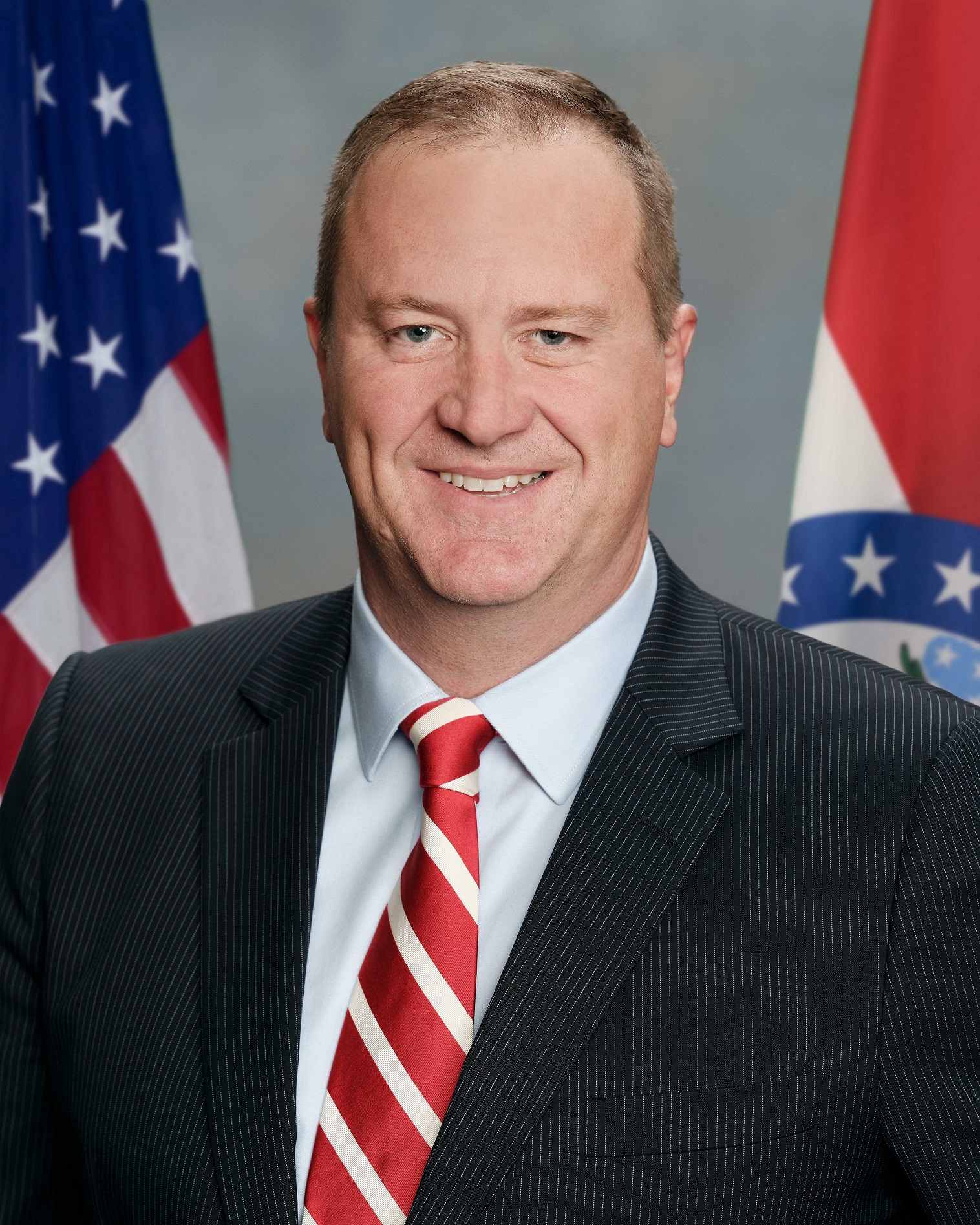
Eric Schmitt
American attorney and politician
180
APPEARANCES
52
PODCASTS
Oct 22, 2026


Eric SchmittGUEST
I mean, I just think I've never had lower confidence in polling than I do right now.
Eric SchmittGUEST
I just don't think, I mean, you know, depending on who you talk to, and we've had some presentations to the NRSC, the National Republican Senate Committee, about You know how just how much is off, how much Republicans are being underrepresented in the polls.
Eric SchmittGUEST
Republicans probably aren't answering as much as Democrats could be anywhere from like point one percent to four percent, depending on who you talk to.
Eric SchmittGUEST
So there's a lot of modeling happening, which means like they're just guessing who shows up.

Annie FryHOST
What's the difference between where the Senate goes if the country chooses one direction or the other?
Eric SchmittGUEST
I mean, I just think I've never had lower confidence in polling than I do right now.
Eric SchmittGUEST
I just don't think, I mean, you know, depending on who you talk to, and we've had some presentations to the NRSC, the National Republican Senate Committee, about just how much is off, how much Republicans are being underrepresented in the polls.
Eric SchmittGUEST
Republicans probably aren't answering as much as Democrats could be anywhere from like 0.1% to 4%, depending on who you talk to.
Eric SchmittGUEST
Um, so there's a lot of modeling happening, which means like they're just guessing who shows up.
Annie FryHOST
What's the difference between where the Senate goes if the country chooses one direction or the other?
Eric SchmittGUEST
I mean, I just think I've never had lower confidence in polling than I do right now.
Eric SchmittGUEST
I just don't think, I mean, you know, depending on who you talk to, and we've had some presentations to the NRSC, the National Republican Senate Committee, about know how just how much is off how how much republicans are being underrepresented in the polls and i think Uh, some of that just happens.
Eric SchmittGUEST
Republicans probably aren't answering as much as Democrats could be anywhere from like 0.1% to 4%, depending on who you talk to.
Eric SchmittGUEST
Um, so there's a lot of modeling happening, which means like they're just guessing who shows up.
Eric SchmittGUEST
And so one of the reasons why you see the vice president and the president out on the campaign trail, it's really to fire up Republicans to go out to vote.
Annie FryHOST
What's the difference between where the Senate goes if the country chooses one direction or the other?

Eric SchmittGUEST
The U.S. attorney, Tom Albus, who actually, when I was attorney general, was my chief deputy for a while.
Eric SchmittGUEST
There's a lot of alignment of local and state and federal law enforcement now.
Eric SchmittGUEST
Thankfully, Scott, I think the challenge is when you have these sanctuary jurisdictions like Chicago or Minneapolis or in California, they're prohibited really from working with federal law enforcement.
5 MINS LATER

Scott JenningsHOST
What's your gut tell you? Will Republicans retain control of the Senate in November?

Eric SchmittGUEST
Well, we have the-- uh, to give you an example, the, the police chief was there today.
Eric SchmittGUEST
Uh, a representative from the highway pat-- Missouri Highway Patrol was there.
Eric SchmittGUEST
The U.S. Attorney, Tom Albus, who actually when I was attorney general, was my chief deputy for a while.
Eric SchmittGUEST
There's a lot of alignment, um, of local and state and federal law enforcement now.
Eric SchmittGUEST
And so thankfully, Scott, I think the challenge is when you have these sanctuary jurisdictions like Chicago or Minneapolis or in California, they're prohibited really from working with federal law enforcement, and that is the-- made most obvious [clears throat] as it relates to ICE, which is, you know, the Democrats wanted to fund ICE.
Scott JenningsHOST
The question I have is, is there anything that the federal government can do about that? Because the number one predictor of whether you're gonna commit a violent crime is whether you've already committed one, and it seems like we just never learn the lesson.


Eric SchmittGUEST
I, I, I wanna echo the comments about thanking the, the men and women of law enforcement who are on the streets making a difference.
Eric SchmittGUEST
Between Operation Viper and this operation, there have been over 500 of the most violent criminals in this region taken off the streets.
Eric SchmittGUEST
As a native St. Louisan, there is no reason why we should accept that violent crime is something that is in the headlines every single day.
19 MINS LATER
speaker_6UNKNOWN
Talking about this today, what does it say that St. Louis is getting so much federal help in different sectors right now to try and develop our community?
Eric SchmittGUEST
If under the current funding pace, it'd take about 300 years to [laughs] bring the towers that we have up to date.
Eric SchmittGUEST
And then I think the most relevant piece to all this, especially as it relates to Lambert, is $10 billion for terminals, and not just, not the, for the big airports like LaGuardia or LAX, but places like St. Louis that have kind of outlived the useful life of that terminal there.
6 MINS LATER
Annie FryHOST
You've kind of answered it, but just to put a, put a bow on it, you're talking about taxpayer dollars coming in to help infuse a new life into Lambert Airport, but if you were to do that, the private dollars that would be able to flow and be attracted to St. Louis, I'd imagine there's a, a huge attraction that would, that would follow.
Annie FryHOST
Does the implementation of this investment, is it a new build around the current airstrips? Is it a full renovation of what is there already? How does this actually manifest into action?
Eric SchmittGUEST
If under the current funding pace, it'd take about 300 years to [laughs] bring the towers that we have up to date.
Eric SchmittGUEST
And then I think the most relevant piece to all this, especially as it relates to Lambert, is $10 billion for terminals, and not just, not the, for the big airports like LaGuardia or LAX, but places like St. Louis that have kind of outlived the useful life of that terminal there.
7 MINS LATER
Annie FryHOST
But if you were to do that, the private dollars that would be able to flow and be attracted to St. Louis, I'd imagine there's a, a huge attraction that would, that would follow.


Dan DakichHOST
They couldn't get a bag o- I- is that the biggest misconception? And, and please clear that up.
Eric SchmittGUEST
You know, the really, the only group that's out there really pointing fingers at it are the agents.
Eric SchmittGUEST
Uh, but there are also some bad agents who are taking 30, 40% of these student athletes.
Eric SchmittGUEST
You know, the, really the only group that's out there really pointing fingers at it are the agents.
Eric SchmittGUEST
And, um, there are some good agents out there- Uh, but there are also some bad agents who are taking 30, 40% of these student athletes.
13 MINS LATER


Michael BarbaroHOST
Well, what exactly are your sources telling you is the nature of their fear? What do they know in the background, and how does it relate to the men in masks who were found in this van? What, what, what are you starting to try to put together here?

Eric SchmittGUEST
So they, they take me back to July when Iran's Islamic Revolutionary Guard Corps, which basically controls the security services in that country, threatened to go after bases in England, basically because they're saying that England is helping participate in the war against Iran.
Eric SchmittGUEST
But what these sources of mine were telling me was that two weeks or so before these vans showed up, American officials, along with some of their British counterparts, got new information that was much more specific about the threat to the base itself and who perhaps could be behind it.
Eric SchmittGUEST
And suddenly, this created a much greater sense of urgency that an attack might be imminent.
Eric SchmittGUEST
Around this same time, British officials in the town had been warning, uh, people to be aware of anything that looked suspicious.
16 MINS LATER


Eric SchmidtGUEST
Roger Williams from Texas, the great state of Texas, the TCU star, is our manager.
Eric SchmidtGUEST
And we're out there 445 – or 545 in the morning D.C. time, 445 in the morning Missouri time.
12 MINS LATER


Eric SchmidtGUEST
All right, let me take a quick moment here and just talk to you real quick about a company that you need to know about, and a company that I've been using for years, a company that I love because I know that when I pay my bill to Patriot Mobile every month, I'm making a huge difference in this country.
Eric SchmidtGUEST
Their customer service is right here in the US, Americans that you talk to who are working hard in this incredible country, in our economy.
26 MINS LATER

Eric SchmidtGUEST
Uh, first of all, I didn't think I was gonna get to the ball, and I got to the ball, and it's the warning track when I dove, and it's just gravel.


Andrew KolvetHOST
But you, you, this, you have been fighting on the OPT front, so educate our audience, why should they care about OPT, these like d- diploma mills, all this stuff? Talk about it.
Eric SchmittGUEST
So we talk a lot about illegal immigration, right? And we should, because, uh, it's been a disaster, 15 to 20 million people in four years.
Eric SchmittGUEST
Um, but we don't talk enough, I don't think, you do, I do, about legal immigration and the challenges and the fraud and the sort of raw deal that Americans get because of our legal immigration system.


Andrew KolvetHOST
Why should they care about OPT, these, like, diploma mills, all this stuff? Talk about it.
Eric SchmittGUEST
So we talk a lot about illegal immigration, right? And we should because it's been a disaster, 15 to 20 million people in four years.
Eric SchmittGUEST
But we don't talk enough, I don't think, you do, I do, about legal immigration.
7 MINS LATER


James WestlingHOST
What were some of the headlines that, that you learned as you went through this?


Nick SolheimHOST
If there is one piece of advice about the midterms, about the things that these members or maybe people who are running for election for the first time should be talking about, like what the American people want, What would your advice be?
Eric SchmittGUEST
Okay? They want to know that the people they sent here care about them and are willing to fight for them.
Eric SchmittGUEST
And I think there's a lot of frustration that they don't believe that we're willing to do that.


Eric SchmittGUEST
Uh, I think you saw the necessity for this because if you understand the fundamental problem, you know, people kind of on the surface see all the litigation, and what's happening with the TRO, and what is the conference doing to try to address it.
Eric SchmittGUEST
The-- fundamentally it's that, uh, the NCAA or no governing body has the antitrust exemption status to enforce any rules.

Annie FryHOST
But the biggest question I have before I go into any sort of regulation or legislation is why does government need to get involved in this?
Eric SchmittGUEST
And I would have been, if you'd asked me about all of this a few years ago, I'd have been very skeptical myself.
Eric SchmittGUEST
But the truth is that right now you have 27 year olds competing against 17 year olds.
Eric SchmittGUEST
And why is that? Well, the reason why Congress is the only entity on the planet that can do anything about it is we can grant limited antitrust protection status to shield them from lawsuits to enforce certain rules that's the problem right now the ncaa can't really enforce any rules because the courts are saying yeah you and you and what army do that with so basically we're saying look there should be five years of eligibility starting when you graduate from high school or age 19 and you get one free transfer And this will also go a long way, I think, in protecting women's Olympic sports, because this arms race you're seeing with this unlimited situation on spending and everything else.
Annie FryHOST
I mean, was that the wrong decision or did we just... enter into where the kids, athletes, the people who people were making money off of, get to participate in something, but then there was more necessary after the fact.
Annie FryHOST
But the biggest question I have before I go into any sort of regulation or legislation is why does government need to get involved in this?
Eric SchmittGUEST
And I would have been, if you'd asked me about all of this a few years ago, I'd have been very skeptical myself.
Eric SchmittGUEST
But the truth is that right now you have 27 year olds competing against 17 year olds.
Eric SchmittGUEST
And why is that? Well, the reason why Congress is the only entity on the planet that can do anything about it is we can grant limited antitrust protection status to shield them from lawsuits to enforce certain rules that's the problem right now the ncaa can't really enforce any rules because the courts are saying yeah you and you and what army do that with so basically we're saying look there should be five years of eligibility starting when you graduate from high school or age 19 and you get one free transfer and This will also go a long way, I think, in protecting women's Olympic sports because this arms race you're seeing with this unlimited situation on spending and everything else Um, is programs or athletic departments just gonna have to make choices.
Annie FryHOST
I mean, was that the wrong decision or did we just... enter into where the kids, athletes, the people who people were making money off of, get to participate in something, but then there was more necessary after the fact.
Annie FryHOST
But the biggest question I have before I go into any sort of regulation or legislation is why does government need to get involved in this?
Eric SchmittGUEST
And I would have been, if you'd asked me about all of this a few years ago, I'd have been very skeptical myself.
Eric SchmittGUEST
But the truth is that right now you have 27 year olds competing against 17 year olds.
Eric SchmittGUEST
And why is that? Well, the reason why Congress is the only entity on the planet that can do anything about it is we can grant limited antitrust protection status to shield them from lawsuits to enforce certain rules that's the problem right now the ncaa can't really enforce any rules because the courts are saying yeah you and you and what army do that with so basically we're saying look there should be five years of eligibility starting when you graduate from high school or age 19 and you get one free transfer And this will also go a long way, I think, in protecting women's Olympic sports because this arms race you're seeing with this unlimited situation on spending and everything else, um is programs or athletic departments just gonna have to make choices if you're losing money on football or you're breaking even on football you can't subsidize all the other non-revenue sports that's the crux of it is to grant them limited authority to enforce rules to protect women's sports olympic sports and bring some sanity back that's the reason why congress is involved here and i think the polling on this is actually pretty dramatic i think 80 percent of people support us doing this to protect women's Olympic sports and what people have known as a very uniquely American institution.
Annie FryHOST
I mean, was that the wrong decision or did we just... enter into where the kids, athletes, the people who people were making money off of, get to participate in something, but then there was more necessary after the fact.

Eric SchmittGUEST
So if you get it, I've learned more about this than I ever I wanted to know, I guess, but the NBA, for example, has twice the revenue, but half the audience of college football.
Eric SchmittGUEST
And why is that? Well, part of the reason is the NBA goes in and says, Hey, Here are our games.
6 MINS LATER

Alec LaceHOST
the groceries and all that what is the pitch like what how do you convince those families that they got to get out there and vote what can we promise them here


Gabe FeldmanHOST
But before we get there, if you could talk a little bit about why you think this is the right law at the right time and what it does to protect college sports.
Eric SchmittGUEST
Well, if you would have asked me this question a few years ago, I would have been very skeptical about Congress kind of getting involved in any of this because, you know, the way I viewed it was the pendulum was swung so far in one direction for a long time.
Eric SchmittGUEST
They would be playing this whole thing started litigation wise, of course, is like, you know, the name, image, and likeness when people are playing EA sports and it's their name, image, and likeness on the screen.
Gabe FeldmanHOST
is if part of the argument is that we need to rein in spending to help protect women's sports and Olympic sports, why are we asking the college football and basketball players to subsidize that? Why take the money out of their pockets and give it to the swimmer and the diver and the golfer and the lacrosse player? Why not make them figure out a way to subsidize their own sport?
Scroll for more appearances