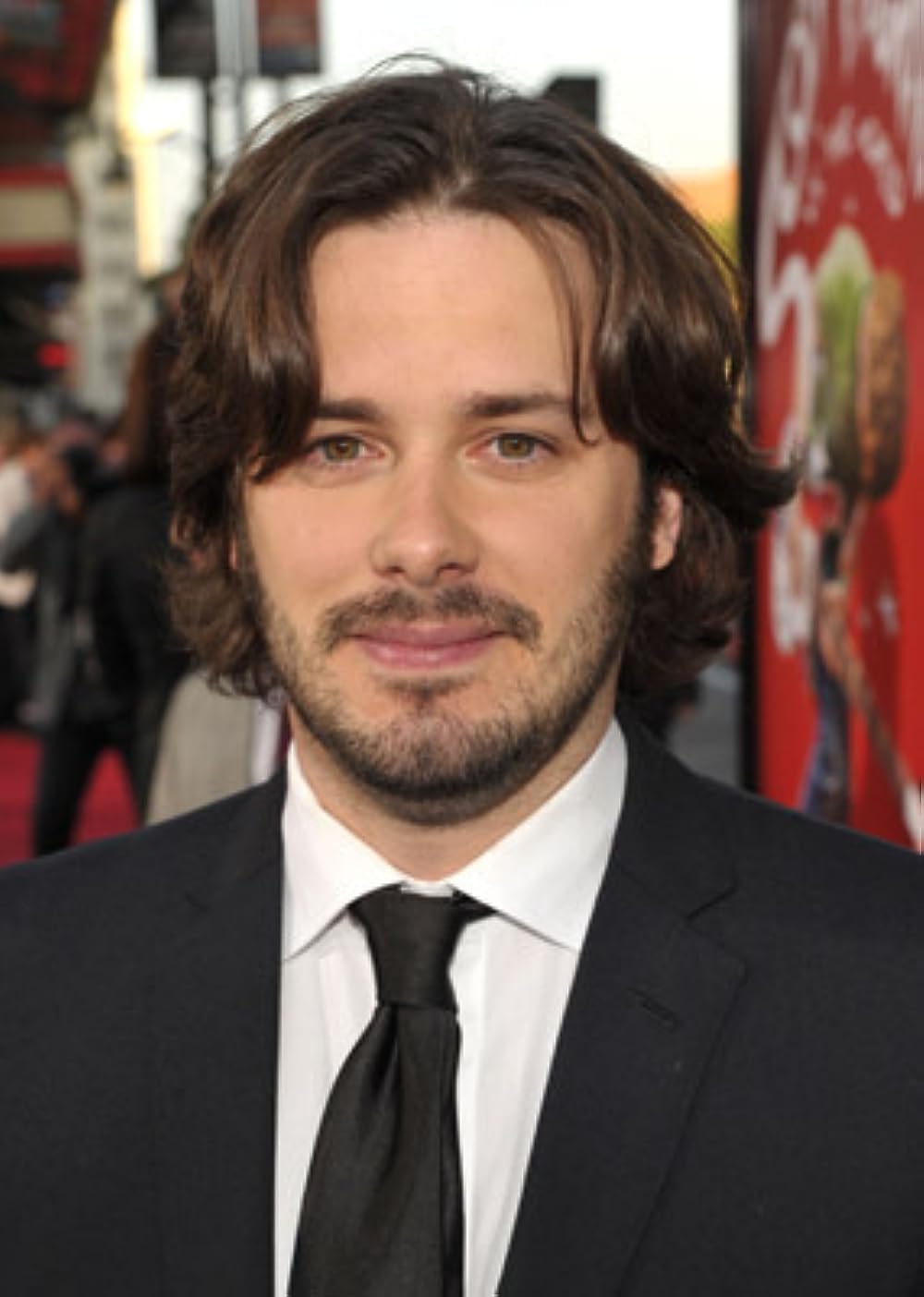
Edgar Wright
Filmmaker
12
APPEARANCES
10
PODCASTS
Sep 21, 2026


Edgar WrightGUEST
I, I think it just, um, you know, hopefully the film will do the same, but I think the books just kind of speak to a lot of people.
Edgar WrightGUEST
Like, I think, you know, there's a lot of kind of crazy stuff going on in the books, but I think most people would recognize themselves in one of the characters, whether it's Scott Pilgrim or, you know, one of his friends and stuff.
Edgar WrightGUEST
I mean, it's, it's very, as kind of insane as the film is, like, it's very relatable to, like, anybody's experiences of young love.
Melissa CarterHOST
Now Edgar, is it true that you consulted with Quentin Tarantino about the length of time to train your actors to do these fight scenes?
Edgar WrightGUEST
I, I, I've, I've been li- lucky enough to be, become friends with Quentin over the last couple years.
Edgar WrightGUEST
I, I think it just, um, you know, hopefully the film will do the same, but I think the books just kind of speak to a lot of people.
Edgar WrightGUEST
Like, I think, you know, there's a lot of kind of crazy stuff going on in the books, but I think most people would recognize themselves in one of the characters, whether it's Scott Pilgrim or, you know, one of his friends and stuff.
Edgar WrightGUEST
I mean, it's, it's very, as kind of insane as the film is, like, it's very relatable to, like, anybody's experiences of young love.
Melissa CarterHOST
Now Edgar, is it true that you consulted with Quentin Tarantino about the length of time to train your actors to do these fight scenes?


Alec CummingHOST
And Edgar, if you could talk a little bit about the song that's coming up, but also about the briefly, because I know you could talk a lot about Sparks.
Edgar WrightGUEST
because they weren't smiling and they were staring right down the camera and so as a five-year-old i felt like i'd done something wrong um and then on one of those ktel albums i had lucky number by lena lovitch probably went straight into this next track by sparks but what's interesting about this it's funny you were saying about the potential last days of disco in 1979 they in 1978 had sort of reached an impasse with what they've been doing with bands and then session musicians And they loved Giorgio Moroder, the German producer's work with Donna Summer, who had done two of the all-time disco tracks with her, particularly I Feel Love.
Edgar WrightGUEST
And they did an interview with a German journalist where they lied and said that they were doing, they said, what are you doing next? And they said, we're doing an album with Giorgio Moroder.


Ben MankiewiczHOST
So when you shoot that, though, it's a fairly mundane thing to shoot.Right? But then there's a s- or, or is it not? But in the p- there's a huge payoff when you see it in the movie.
Edgar WrightGUEST
They are difficult to do, and usually they're always the things that are difficult to justify, or people start asking, "Do you really need these shots?" And on Shaun of the Dead, I, it was always the thing that would always fall off the schedule, and I'm the kind of person who's quite sort of like OCD in terms of, you know, you could have 40 shots to do in a day, but if I was like, "You did 39," it's like, "Ah, I didn't get that shot of the shoelaces." It will bug me until the end of the shoot.
Edgar WrightGUEST
But on Shaun of the Dead, what we ended up doing to do those sequences, to ki- I had to sort of prove that they were really important.
Edgar WrightGUEST
We ended up on the, some of our days, it was a low budget film, we had an A and B camera, and we would stagger the lunchtime of, like, B camera, and I would stay with them over lunch and said, "Okay, we'll shoot these close-ups." And then we edited them together and showed them to, you know, the executive producers and they were like, "Oh, okay.
Edgar WrightGUEST
Now I get it." But usually what happens is at the end of a film you end up just doing all of the inserts.
Edgar WrightGUEST
So on most films, Hot Fuzz and Baby Driver being two great examples, and The Running Man for that matter, [laughs] is usually the end of the shoot is you're not ending in some kinda, like, triumph of like, "This is the last shot.
11 MINS LATER

speaker_3HOST
Yeah.
Edgar WrightGUEST
But it, it is, it's interesting you mentioned The Revolution Will Not Be Televised because actually in the film we had to...
Edgar WrightGUEST
The original v- uh, it's actually on the end credits of Paul Thomas Anderson's One Battle After Another, the original version.
Edgar WrightGUEST
We had to construct an instrumental of that, so Steve Price actually basically did an instrumental version of the track, and the reason why is because obviously it's a, a spoken word, uh, vocal, and in, in the scene it was very difficult to have that song playing and also have the dialogue that's in the scene.
Edgar WrightGUEST
And it's interesting you say about vocals, because in choosing songs for movies, sometimes it, things work perfectly in terms of, like, the lyrics are sort of either thematic to the, to the scene or it's an overall vibe, but then sometimes there's songs that I've wanted to use and then I've not used because I find myself distracted by the lyrics, and I find sometimes if songs have very specific lyrics, they might be...
Edgar WrightGUEST
For example, there was – and it's funny 'cause I ended up making a documentary about them – but in an, in Hot Fuzz at one point we tried This Town Ain't Big Enough for the Both of Us in a scene, which of course I adore that song.
31 MINS LATER

Edgar WrightGUEST
... media in every way, and they haven't managed to actually create art themselves.


Chris HewittHOST
but i will do my best to make sure it doesn't come mid we are delighted to be joined on the running man spoiler special by the film's director and of course co-writer edgar wright how are you sir i'm good obviously people are listening for a running man uh spoilers here but i want to start off by talking about a 1972 film called sky jack oh yes so which is in your film
10 MINS LATER

Edgar WrightGUEST
And it's like, "Where did, where did this list come from?" And I, I got in touch with the guy who made it, and I said, "Hey, I have a question.
Edgar WrightGUEST
Where did you get this list? It's like somebody had been in my brain." And he said, "Oh, it's, it's every film you've ever mentioned liking in an interview." And I was like, "Holy shit!" And then I said, "Can I, like, edit it and change some things?" So I just, uh, like, se- [laughs] se- sent...
Edgar WrightGUEST
But I- it's difficult to do that, 'cause there is also, the problem about doing that is that then when you have friends with films out, they're like, "Oh, so my movie doesn't make your top 1,000." [laughs]
9 MINS LATER

Doug BensonHOST
I just saw it, uh, the other day, and it's, uh, it's really, it's really something.
Edgar WrightGUEST
All I like about it is, I mean, I have not seen the TV show that it's a spin-off from, and I...

speaker_10UNKNOWN
With over 10 million new dollars in prizes won, the best audience in the world remains undefeated.
Edgar WrightGUEST
The thing that's interesting about The Running Man, Stephen King is not the man he was when he wrote that book.
Edgar WrightGUEST
He wrote The Running Man in 1973 in a very sort of desperate time for him and his family where they were really struggling.
Edgar WrightGUEST
I'd say in all of the Richard Backman books that were written around that time, he is the angry young man that you read in the books.
Edgar WrightGUEST
Now obviously things are different now, and it's interesting in terms of the adaptation.
Edgar WrightGUEST
The Running Man novel has a sort of famously nihilistic ending, and that was something that we didn't want to sort of do in the new adaptation.


Edgar WrightGUEST
So I always like felt that there was another movie in that book and had always thought about doing it, and had even looked into the rights years and years ago.

Scott AukermanHOST
Didn't you sh- shoot your shot where you're just like, "Hey, I'd like to do The Running Man," and then it all kind of came together, or?
Edgar WrightGUEST
Well, it's one of those questions that comes up-... you know, on websites or like, "If you could remake any film, what would you remake?" So I answered The Running Man.

Edgar WrightGUEST
It was actually before I'd started doing TV, but after I'd done my first film, which I did straight out of art college, a very low-budget film.
Edgar WrightGUEST
And I saw him backstage at this comedy gig, and I had seen him on TV doing standup.
50 MINS LATER
Sam FragosoHOST
When you think back on that kid and now the current filmmaker you are, has the reason why you wanted to make movies, the reason you still continue to make movies, how has it changed?


Edgar WrightGUEST
Was, did, did, did that, how, were you guys close when you were young? And did he have the same love that, uh, that you had for movies and stuff? Yeah, very much.
Edgar WrightGUEST
I think we went through that difficult period as teenagers where I think from the ages of, like, 14 to 17 we hated each other's guts.
Edgar WrightGUEST
And then we'd be, and then we got thick as thieves again immediately afterwards.
34 MINS LATER