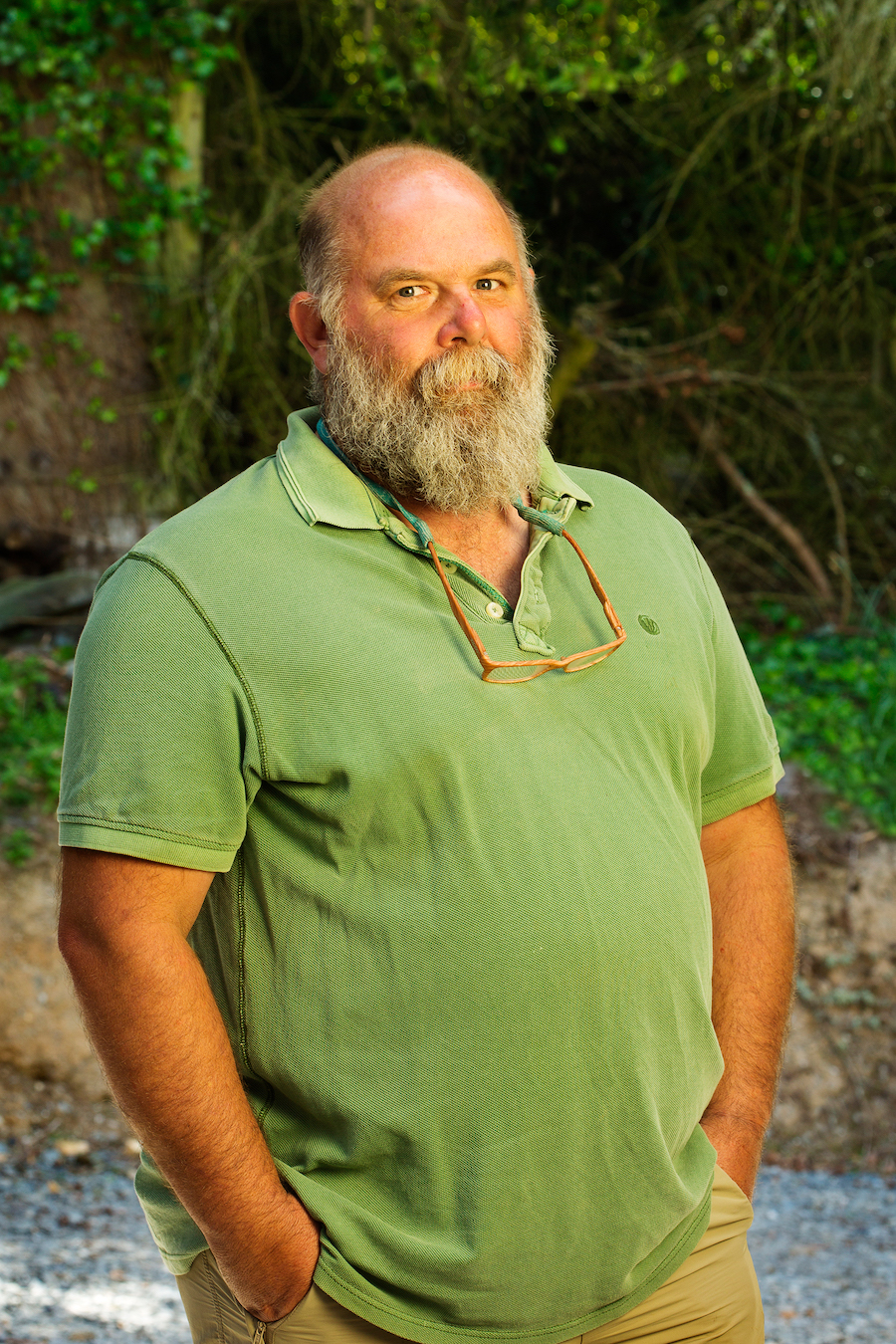
Derek Gow
Farmer and author
7
APPEARANCES
6
PODCASTS
Sep 1, 2026


Isabella TreeHOST
And so when was the collapse of these great populations of bison? Because we know that the last bison disappeared relatively recently, I mean, in living memory, in the wild at least.

Derek GowGUEST
So the collapse of the European bison in its different forms is something that has occurred over many thousands of years.
Derek GowGUEST
And I was saying to Charlie last night, there's this magnificent carving of a European bison head.
Derek GowGUEST
which again i'm pretty sure is syria it's in the met and you can see this wonderful top knot on it it's lost its horns it's got a lovely big like a hairy curve in its front face it's the only thing it could be but interestingly now modern studies of bison remains from that part of the world suggests that european bison went so far so it's into iran iraq and everything else And then there's a large area that was just really not traversable by them.
Isabella TreeHOST
But the bison we have left in Europe went down to a relict number of individuals, a tiny number that were left in zoos, is that right?


Derek GowGUEST
So I mean, if you look at, you know, the, the, the landscapes he, he portrays where deer are, red deer in particular, are commonly kept in, in very high numbers to ensure that stalking as a sport, um, is, is, is practiced because it's so economically valuable for the estates, then they've g- in their own right, commonly these environments retain very many more deer than the land can sustain.
Derek GowGUEST
And, and you can't get woodland re-regeneration because things like red deer are there in such high numbers that at the end of it all the trees can't grow.
9 MINS LATER
George WallaceAUDIENCE
Why, if at all, would rewilding be important to those people? Thanks very much.
24:41
... and trapping water, but in a way that surely at that scale, at the scale which would be most beneficial for nature and water systems, food production industry would be taking a notable hit.
Derek GowGUEST
At the end of it all, what you do is you look at, you know, the landscape as we're perfectly capable technically of doing and saying, "Right, the areas where we want to store water are here, here, and here.
Derek GowGUEST
This is what we should do." And it makes more sense to, to do that than to ensure Flossy the worthless sheep and its two pointless lambs have their feet dry.
11 MINS LATER
36:43
Now, what are some of the challenges, changes, tensions that you've had to deal with personally as you went along that journey?


Derek GowGUEST
He had an old yellow JCB that he went round with, and so anything that came up, he just sorted it.
Derek GowGUEST
So now if there's a wet patch in the fields, I just found another one yesterday, we're just digging down, smashing those drains and put ponds in.
Derek GowGUEST
Because at the end of the day, if you put ponds in, water is the genesis of life.
Derek GowGUEST
If you bring water to the surface, then the frogs, the, the dragonflies, the damselflies, the water beetle, all the things that feed everything else start to reform around water.
Derek GowGUEST
So, and of course, when you look at the landscapes where, that we live in, you know, we never th- if you go to Eastern Europe and you cross a, a ridge in the land and come down the other side, the first thing you will see are the wetlands and the valley bottoms.
Derek GowGUEST
And Britain has something in the region of about 1% of the, of, of, of its wetlands left and, and, and the water is still there, but the water's all running underground.
11 MINS LATER


Derek GowGUEST
Well, the project in the South Downs National Park is one of, of one or two we've been working on to, to basically see if we can restore populations of this species.
Derek GowGUEST
At one point in time, they were a very common animal in the countryside, and there were some lovely little poems, um, you know, about them twinkling in the dark.
Derek GowGUEST
They were commonly, you know, b- b- basically repeated by, by adults to children right the way through, you know, the southern range of, of the species.
Derek GowGUEST
But because of tidying the countryside, because of mowing hedges, pesticides, light pollution, trimming verges, this once common little creature which used to really delight people is fading from the, the, the landscape.
Derek GowGUEST
So what we're trying to do is look at whether we can capture breed these insects in some numbers and then restore them back into landscapes where they're either highly fragmented or no longer exist at all.


Derek GowGUEST
No, they're not destructive from, from, from kind of point of view what I want to do.
Derek GowGUEST
Because what they've done is we had them for a number of years, now there's only two, and they are very tame ones that come, you know, when you rattle a bucket.
Derek GowGUEST
But what they do is in pastures that are flat, that have been flattened by plows, flattened by people, de-rockedYou put the wild boar in, and the boar basically are plows.
speaker_5UNKNOWN
Are they kind of not taking as much of a responsibility as maybe farming does for these issues that we've got?