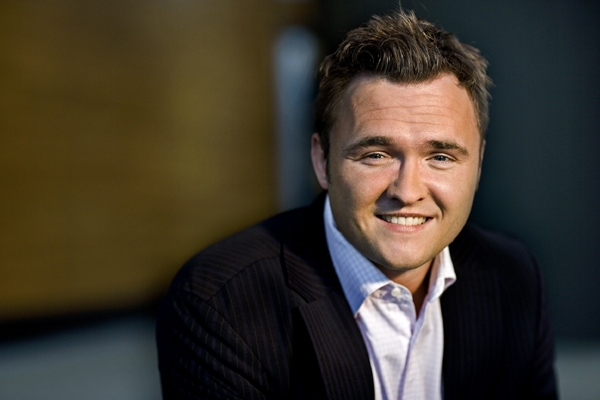
Dan Jørgensen
European Commissioner for Energy and Housing
7
APPEARANCES
5
PODCASTS
Oct 1, 2026

Maria Lind-ArlodHOST
I want to ask both, what worries you and what excites you about the space we're in now compared to 10 years ago?

Dan JørgensenGUEST
so what worries me um is the same things that worried me when i started studying this issue when i was in yeah probably 16 17 years old or something like that i remember Reading, I think it was Al Gore's first book, one of the first ones I read, Earth, Other Balance, that terrified me.
Dan JørgensenGUEST
Is this real? Is it not? Is it man-made? How bad is it? But then, as years have gone by, the science has just become more and more conclusive.
Dan JørgensenGUEST
And every time the IPCC, United Nations Climate Panel, they put out their reports, really it's a sobering read because it shows us that we are on a trajectory to more than temperature increase of 1.5 which is what we've been fighting to stay below that that will no longer be possible maybe even two and if we get on the other side of two then self-enhancing effects will set in and then who knows if we can even do something anymore so i am very worried about this On the other hand, there are also a lot of things that are going in the right direction.


Sarah WheatonHOST
... and other vacation-type rentals, what does this act allow my city to do that it could not do before?
Dan JørgensenGUEST
So we have a situation where many of these platforms that offer short-term rentals are suing cities and member states if they try to impose measures, and we want to give the legal basis so that it is clear that member states can indeed act.
Dan JørgensenGUEST
And the way we do it is that we say that if you have a, a stressed housing area, is, is the terminology.
Dan JørgensenGUEST
This means an area where indeed prices have gone up and the ratio between the rent and how much you have in income has reached a level that's unacceptable, which unfortunately is many, many cities across Europe.
Dan JørgensenGUEST
Like for instance, saying there's only a number of nights that you can rent out your, your house, uh, as a short-term rental, or that in a certain area there's only a limited number of residents that can be short-term rental, or measures in that nature that will make it possible for cities and local communities to, to address what has become a real problem many places.


Dan JørgensenGUEST
But we are in a very serious situation, and, uh, I'm not telling, uh, people or companies or businesses or decision-makers not to be worried.
Dan JørgensenGUEST
One of the things that, uh, I am arguing, that we in the Commission are arguing, and, and that Fatih Birol is, is, uh, supporting is we really need to do whatever we can to electrify our economies as fast as we can.


Rory StewartHOST
... maybe let's start from the question of why you think the European public is not convinced that our policy is delivering cheap energy.
Dan JørgensenGUEST
So first of all, I think probably we need to acknowledge also that there's big differences between countries here.
Dan JørgensenGUEST
And I think the situation, I'm not an expert in British politics, but I think it's probably a little bit different here than in many European countries.
Dan JørgensenGUEST
I think if you go to Spain, I don't think you'll have a problem selling the point that renewables are, are cheaper because they see that with their own eyes.
Dan JørgensenGUEST
They were a country very, very hard hit in '22 because they were dependent on gas.
Dan JørgensenGUEST
Now they've really managed to transition away and primarily, uh, renewables now, and that has lowered their bills significantly.
13 MINS LATER


Dan JørgensenGUEST
But if we dive into an analysis of what is actually happening, it's quite different.
Dan JørgensenGUEST
One of the reasons it's different is that we are better situated now to dealing with the crisis.
9:19
Might Greenland have changed? Could this be the trigger for it to come and join the European Union, where at least it has some degree of security and safety in numbers?


Annmarie HordernHOST
LNG.So Commissioner, do you see a reason to try to step in and stave off some of the increases in price, or do you think that this will right-size itself because ultimately the EU isn't as dependent on, uh, Iran and, and sort of some of the regional supplies?
Dan JørgensenGUEST
So I, I, I saw earlier that you compared the, this crisis to, uh, the crisis in '22 when Russia, uh, started its full-scale invasion, uh, in, in Ukraine, and I understand why, because this is the worst crisis we've had since.
Dan JørgensenGUEST
But it's also important to say that it, it, we are, we are not close to the level of, of crisis that we have in '22.
Dan JørgensenGUEST
Number two, we are also much better situated to dealing with these price increases.
Dan JørgensenGUEST
We have a more diversified, uh, energy system, meaning that for instance on gas, we get the gas from more different sources.
Annmarie HordernHOST
Commissioner, have you had any conversations, uh, with, uh, Chris Wright over in the United States about potentially increasing liquified natural gas exports to Europe in order to stave off any output from Qatar that is interrupted?