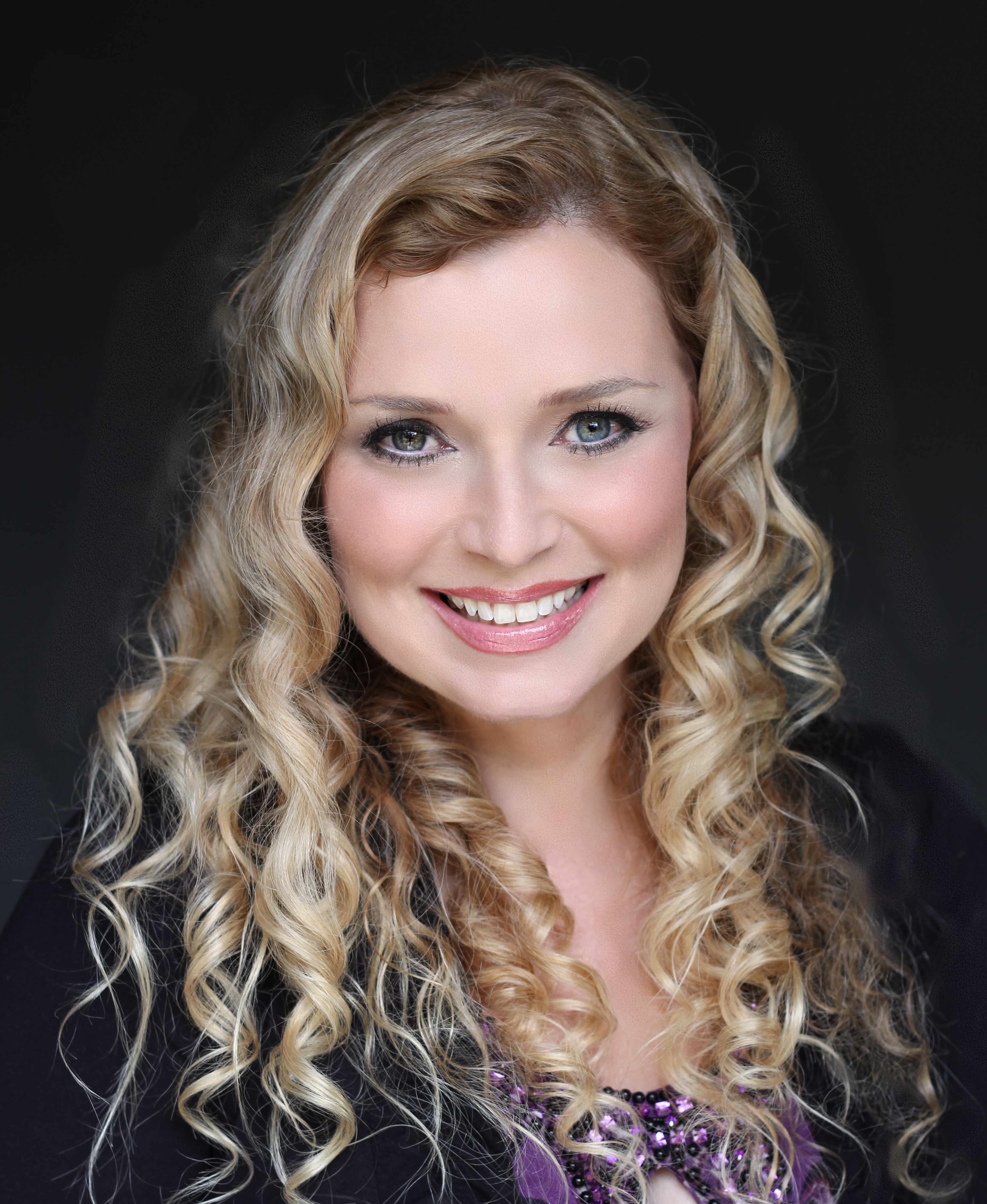
CeCe Moore
American genealogist
12
APPEARANCES
8
PODCASTS
Aug 3, 2026


Brian EntinHOST
What do you think is happening behind the scenes with that process in particular?

CeCe MooreGUEST
You know, I think that makes sense that they have performed some genetic genealogy already, but it led to people who didn't turn out to be suspects.
CeCe MooreGUEST
When you are collecting DNA from a crime scene like that, that's very likely going to happen.
CeCe MooreGUEST
It is disappointing to hear that it's four or more people with the most latest information.
CeCe MooreGUEST
interviews that the sheriff has given, because that is going to make it extremely difficult.
Brian EntinHOST
CeCe, how quickly is the technology changing? And is there any new tech on the horizon that you know about that could come online that could really change everything with this case?

DaneHOST
We were speaking about DNA and really trying to understand, okay, well, how does it work in, in policing terms? So I asked CeCe about this, how this same technology has become one of the most powerful tools in modern policing.
CeCe MooreGUEST
When we first started using genetic genealogy, the idea was to identify long-dead ancestors, like who is your great-great-grandfather that you can't identify through the paper trail.
CeCe MooreGUEST
And then a very small number of us turned our attention to trying to identify recently living or living ancestors, meaning people's birth parents.
CeCe MooreGUEST
So that i- really is where I Kind of broke away from the crowd and started working on a different goal, and developing techniques to identify, uh, biological parents, whether someone was adopted, donor conceived, or if someone took one of these direct consumer DNA tests and made the unexpected discovery that their father was not their biological father or their grandfather was not their biological grandfather, which has happened to millions of people.
CeCe MooreGUEST
And so those techniques that, uh, a very few of us started developing back in 2011 are the ones that now are used to identify violent criminals and Jane and John Does, unidentified human remains.
CeCe MooreGUEST
So it's the exact same process, but instead of trying to identify someone's birth parent or parents, we are going one step further down the tree and actually identifying them.
7 MINS LATER
DaneHOST
And I wanted to know from CeCe where she believes the technology, along with AI input, can be in another 10 to 20 years.


Meshel LaurieHOST
CeCe Moore is one of the world's leading genetic genealogists, using DNA and family tree analysis to solve cases that once seemed impossible.
CeCe MooreGUEST
What we're doing is reverse engineering an unknown person from their DNA, so whether that DNA is left behind at a crime scene, a violent crime, we do, we work with homicides and rapes, um, or if it's a person who dies without their identification, a Jane or John Doe, or un- unidentified human remains is the more formal term.
CeCe MooreGUEST
And so it doesn't really matter, uh, which it is, because it's the exact same process.
CeCe MooreGUEST
It is taking that DNA, creating what we call the snip profile that has hundreds of thousands of genetic markers across the genome, and then that is uploaded to the genetic genealogy databases that we're allowed to use on these types of cases, and we get a list of people who share significant amounts of DNA with that unknown person.
CeCe MooreGUEST
So there are over 54 million people who have taken direct-to-consumer DNA tests now.
CeCe MooreGUEST
The biggest database is Ancestry DNA, and then 23andMe, and then MyHeritage is a very close third now.
CeCe MooreGUEST
Well, what we're doing is reverse engineering an unknown person from their DNA, so whether that DNA is left behind at a crime scene, a violent crime, we do, we work with homicides and rapes, um, or if it's a person who dies without their identification, a Jane or John Doe, or uno- unidentified human remains is the more formal term.
CeCe MooreGUEST
And so it doesn't really matter, uh, which it is because it's the exact same process.
CeCe MooreGUEST
It is taking that DNA, creating what we call a SNP profile that has hundreds of thousands of genetic markers across the genome, usually about 700,000, and then that is uploaded to the genetic genealogy databases that we're allowed to use on these types of cases, and we get a list of people who share significant amounts of DNA with that unknown person.
CeCe MooreGUEST
Now, typically, because we're limited to the smallest databases, we are getting very distant cousins, second, third, fourth, fifth, sixth cousins and beyond.
CeCe MooreGUEST
We are not very often working with close relatives, so that means that each of those individuals who shares DNA with the unknown suspect might share only 1% of their DNA.
26 MINS LATER
Meshel LaurieHOST
I mean, I don't want you to, I don't want you to sell us on not doing it, but yeah, I am fascinated.
Meshel LaurieHOST
I don't have a graphics department, so I need you to explain how you do what you do.
CeCe MooreGUEST
Well, what we're doing is reverse engineering an unknown person from their DNA, so whether that DNA is left behind at a crime scene, a violent crime, we do, we work with homicides and rapes, um, or if it's a person who dies without their identification, a Jane or John Doe, or uno- unidentified human remains is the more formal term.
CeCe MooreGUEST
And so it doesn't really matter, uh, which it is, because it's the exact same process.
CeCe MooreGUEST
It is taking that DNA, creating what we call the SNP profile that has hundreds of thousands of genetic markers across the genome, usually about 700,000, and then that is uploaded to the genetic genealogy databases that we're allowed to use on these types of cases, and we get a list of people who share significant amounts of DNA with that unknown person.
CeCe MooreGUEST
Now, typically, because we're limited to the smallest databases, we are getting very distant cousins, second, third, fourth, fifth, sixth cousins and beyond.
CeCe MooreGUEST
So that means that each of those individuals who shares DNA with the unknown suspect might share only 1% of their DNA, and from 1%, we can predict that they likely share great-great-grandparents.
8 MINS LATER


CeCe MooreGUEST
I opened them out of respect for Carol, 'cause I thought if she had to look at what had been done to her daughter, I should be able to do that as well.
CeCe MooreGUEST
It just really had a deep impact on me, and made me even more determined to find a way to help Carol and help Idaho Falls Police Department.
CeCe MooreGUEST
The idea is to build trees and find commonalities between the people who are sharing DNA with the unknown suspect.
CeCe MooreGUEST
You find common ancestors, and once I am able to do that, I know there's promise.


Chanley PainterHOST
And for those listening who may not be familiar with this case, because it did happen in 1991 in Austin, just lay the background out for our listeners about what happened to four young girls.
CeCe MooreGUEST
In December 1991 in Austin, Texas, four young girls were at a yogurt shop late at night.
CeCe MooreGUEST
And someone that was unknown for decades, who that person was, sexually assaulted them and murdered them and then set the place on fire and so when there was a fire reported initially no one knew that there were these young girls in there and so they flooded the crime scene with water to put out that fire which made it very difficult to collect forensic evidence and to solve the case in the long run and it's easy to understand right if you've got dna at a crime scene and then you flood it with water when you go to collect that dna or that physical evidence you're not going to have the same amount of forensic evidence that you would have had otherwise so that was one of the big challenges on this case and one of the reasons it took so long to solve so the sister-in-law of the youngest victim amy airs airs had reached out to me when she had seen a lot of the cases that I had to help solve.
CeCe MooreGUEST
From 2018 on, so she reached out and said, can I help on the case and around the same time, the assistant district attorney mindy Montfort also reached out to me.
CeCe MooreGUEST
to advise Austin PD on what they might be able to do in the genetic genealogy arena.


CeCe MooreGUEST
I didn't expect I'd find common ancestors because of the distance, but I did find that they were all converging on this small town in Southern Italy.
CeCe MooreGUEST
And so that was really interesting to me, because it was clear that the person who left their DNA behind on Lindy Sue, so her killer, or alleged killer at this point, um, had all of his ancestral roots go back to this one small area in South Italy.


CeCe MooreGUEST
I know it is a very difficult process, which is why it was believed for so long to not even be possible.
CeCe MooreGUEST
I have waited months for that SNP profile to be created from rootless hair on some of my cases, and so I know they've had to try multiple times on some pieces of hair.
CeCe MooreGUEST
Some hair is more SNP rich, more DNA rich than others, and so, you know, you kind of have to get lucky as well that there is a lot of DNA to be extracted on any given hair.
CeCe MooreGUEST
Whether it's gone through a chemical process can affect it, whe-- you know, whether it's been dyed, that can have an effect, and so we're-- we've got to hope for a little bit of luck here.
CeCe MooreGUEST
If they're sending one single hair out to Astrea, you're right, it puts a huge burden on them.
CeCe MooreGUEST
He certainly would've made sure he wasn't leaving DNA behind, but he must have handled that knife sheath earlier when he didn't have gloves on.
CeCe MooreGUEST
But I also wanna point out that they don't have to reveal everything they have in the affidavit, and you know that, of course.


Erin MoriartyHOST
CeCe Moore is a DNA expert and genetic genealogist whom we asked about the case and the role of Y-STR DNA in criminal cases.
Erin MoriartyHOST
It was just Y-STR, the male portion of DNA, and it was not a very detailed sample, having just 16 markers.
CeCe MooreGUEST
These are guidelines, they are suggestions, and so if a federal employee is the one doing the genetic genealogy or if an agency is getting federal funds, they are supposed to follow that.
CeCe MooreGUEST
And so the FBI decided that this was a big enough threat to public safety and that there was an urgency, and so they got clearance to upload to the MyHeritage database surreptitiously.