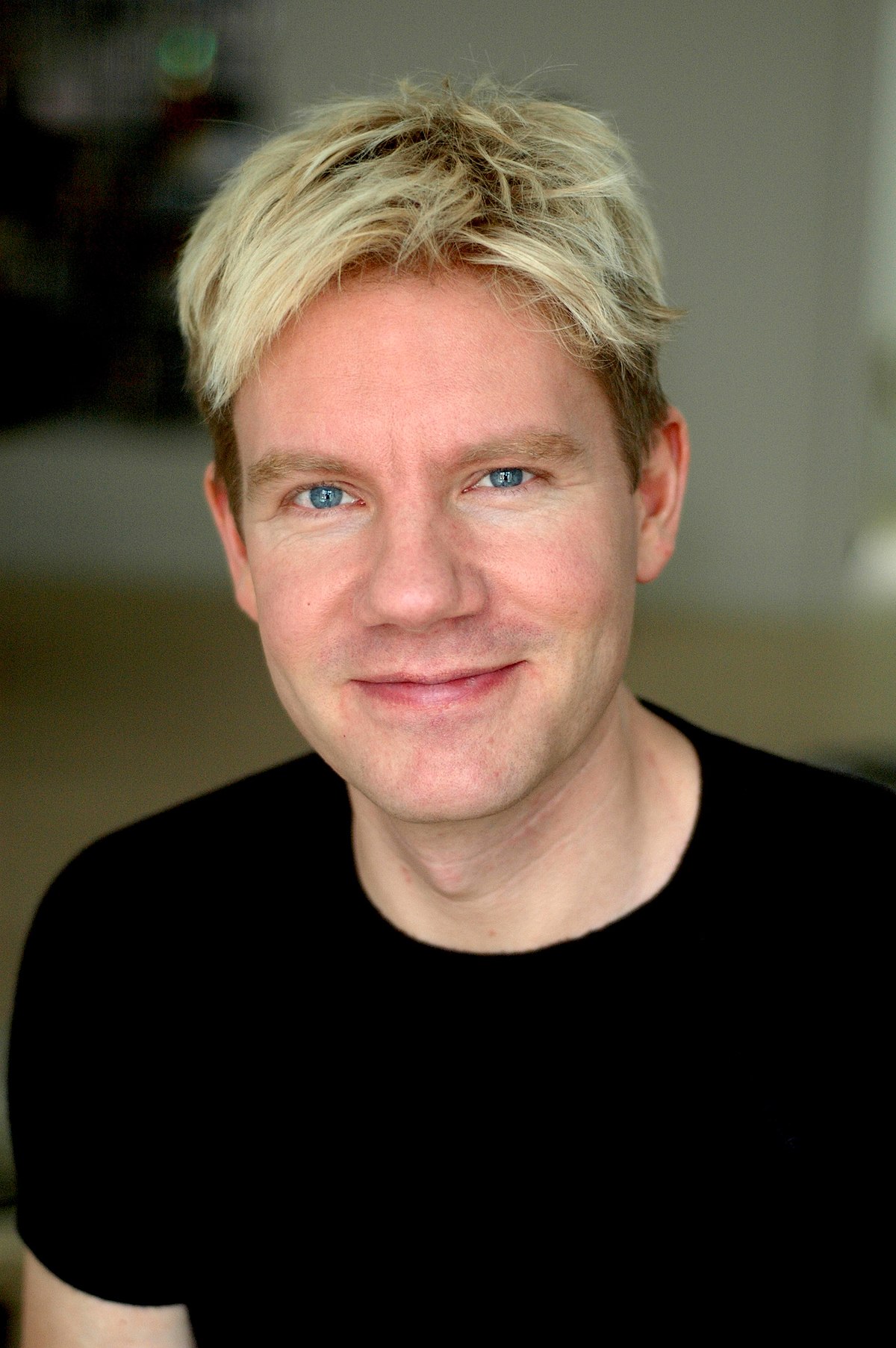
Bjørn Lomborg
Danish political scientist
16
APPEARANCES
13
PODCASTS
Oct 15, 2026


Bjorn LomborgGUEST
yes, I explained it and I started off to say, you know, we have like, We separate our garbage into 10 different categories.
Bjorn LomborgGUEST
And obviously not all of those garbage cans are everywhere, but you really have to sort of sit there and say, where does my waste wrapper from this ice cream go? And of course, look, this is well-intentioned.
Bjorn LomborgGUEST
And there's something to be said about recycling because it's a good idea to not just throw everything away and just throw it certainly into the ocean and throw it into an unguarded garbage camp or something.
JohnAUDIENCE
state

Bjorn LomborgGUEST
Oh, there's certainly a lot of realization that going net zero or even doing a lot about climate change is phenomenally expensive.
Bjorn LomborgGUEST
It was easy for politicians to make all these promises 10, 20 years ago when it was 10, 20 years ahead.
Bjorn LomborgGUEST
But across Europe, when you have focused a lot on climate, you get very high electricity and energy prices.

Nigel FarageHOST
So how do we balance the fact that net zero for countries like mine is absolute lunacy, is deindustrialising us and ruining us and making us poor? How do we balance that with concerns about emissions and concerns about rising temperatures? Because somehow there's a balance there that has to be struck, isn't there?
Unknown podcast
Why Young People Try To aveThe World Before Understanding It ~ Jordan B Peterson
Sep 2 · 9m
Bjorn LomborgGUEST
So every year for the last 25 years, we could have had a headline in every paper in the world everywhere around telling us yesterday 138,000 people were lifted out of poverty.


Chris KennyHOST
So, overall, a warmer planet, not to downplay it, but a warmer planet actually reduces the death toll from weather.
Bjorn LomborgGUEST
So this is one of the great examples of how we're being misled by only hearing the bad side.
Chris KennyHOST
Surely nuclear energy is the sensible, dense and proven technology that can underpin our economies and our societies without devastating large areas of landmass.

speaker_7UNKNOWN
[laughing]
Bjorn LomborgGUEST
We live on ranges that are much grander than anything climate can throw at us, and that's because we already adapt.
Bjorn LomborgGUEST
So we have good studies that show that we adapt to all of the negative impacts from climate change, so both for heat waves, for droughts, for s- storms, and for floods.
24 MINS LATER

Kaveh MadaniGUEST
So I would look at, at the total return on your investment, and mitigation is it.


Lazar BermanHOST
Is net zero the answer? Should we be trying to bend our energy policies to get to that by 2050? What is the benefit of net zero and what are the risks here?
Bjorn LomborgGUEST
So absolutely if you want to fix climate change, the only way to do that in the long run is to cut carbon emissions dramatically and essentially go to net zero, which is just a fancy way of saying that we won't be emitting any more, uh, greenhouse gases in the long run.
Bjorn LomborgGUEST
If you're just looking at the problem of climate change, we should go net zero.
Bjorn LomborgGUEST
But of course the real problem is there's a significant cost involved in this.
Bjorn LomborgGUEST
And so, uh, th- surprisingly, as you say, a lot of governments have promised, uh, to go net zero.
9 MINS LATER

Lazar BermanHOST
Should we move away from it? And is it ultimately something that is good or bad? So
Bjorn LomborgGUEST
But of course, what you have to remember, and I think we've started forgetting this, is that you have to ask, what am I giving up to avoid this problem, right? Because obviously if you can solve the problem of global warming for very little resource loss, that's great.
Bjorn LomborgGUEST
If it ends up costing you a lot, maybe you've actually made a really bad bargain.
12 MINS LATER
Lazar BermanHOST
Should that be the way that people that are concerned about emissions and climate change should be advocating for?


Cabot PhillipsHOST
So do you think the media is intentionally giving people the impression that wildfires are on the rise? And if so, what is their motive?
Bjorn LomborgGUEST
You never see a journalist say, hi, I'm here and there's nothing burning, right? You just don't see that.
Bjorn LomborgGUEST
So the point is, we constantly see stuff that has a problem, but we're not well informed if we don't also have news media telling you.
6 MINS LATER
Cabot PhillipsHOST
So even if the West does achieve a carbon neutral economy or environment, how much of an impact would that actually have on the global climate? And what are we seeing from China and others in the East?


Bjorn LomborgGUEST
Now, the reason why climate change is a problem almost everywhere- Is because our infrastructure is not adjusted to anything but what it was in the past.
Bjorn LomborgGUEST
So both if it g- got colder or warmer, you would have a substantial cost because you actually have to retrofit your house.
Bjorn LomborgGUEST
But remember, most people live, uh, or a very large s- uh, part of people live below Spain, so closer to the equator.
Bjorn LomborgGUEST
You know, if you live in Ethiopia, it's mostly just not a good thing that it gets warmer.

Bjorn LomborgGUEST
Who's still panicking about climate catastrophe? The Davos crowd? European Commission President Ursula von der Leyen didn't mention the climate even once in her 2026 annual address, unlike in the past.
Bjorn LomborgGUEST
U.S. voters? Americans rank climate change at number 28 of 30 problems, and according to the Searchlight Institute, voters in battleground states are prioritizing pocketbook issues over climate.
Bjorn LomborgGUEST
Canada? Prime Minister Mark Carney once championed radical climate policies, but now wants to increase oil production.
Bjorn LomborgGUEST
The Europeans? After worrying intensely about climate change for years, they have other things to worry about.
Unknown podcast
Ep.407 ~ Debunking the Myth of Limited Resources - Bjørn Lomborg ~ Jordan B Peterson
Aug 2 · 12m
Bjørn LomborgGUEST
The 12 solutions that we come up with, they will in total cost about – I'm giving you a rough estimate here because there's different ways to measure.
Bjørn LomborgGUEST
It will need about $35 billion a year in funding, and that funding could come from from rich people like Elon Musk and Bill Gates.
Bjørn LomborgGUEST
We're spending $175 billion in development aid every year, so surely we could afford $35 billion.
Unknown podcast
Ep.131 ~ Why Young People Try To aveThe World Before Understanding It ~ Jordan B Peterson
Jul 8 · 9m
Bjorn LomborgGUEST
I, I, I think it's a very good metaphor for, you know, how, how the world, uh, in, in many ways have come to work.

Bjorn LomborgGUEST
And that's exactly why it is so important to keep the worry turned up to max or even 11.
Bjorn LomborgGUEST
But there are many things that are problems and we fix them typically by being smart.

Ian CollinsHOST
What was the tipping point that we went from common sense to all-out madness on this? And who decided? Where was this collective of individuals, of brains, that said, if we don't do this, we're all going to die? Was there a moment?


Douglas MurrayGUEST
but the Labor government and others, as you know, just say, "Shut up, don't talk about it." And if you even speculate on the motives, uh, you'll go to prison, uh, much faster than the killer.
Bjørn LomborgGUEST
One is that we need to recognize that people will tell you that solar and wind is incredibly cheap, and that's technically true.
Bjørn LomborgGUEST
So everybody has seen this graph of, you know, over time, how solar and wind has just come down in price, and they're very cheap right now.
Bjørn LomborgGUEST
So people will tell you, "Solar and wind, some of the cheapest electricity on the planet." But what they don't tell you is, yeah, when the sun is shining and the wind is blowing, but-
Bjørn LomborgGUEST
... otherwise, it's the most expensive power on the planet because it's infinitely costly.


Bjorn LomborgGUEST
Uh, and, and actually, uh, in, in some sense, uh, bizarrely as it may sound, uh, you know, the world is, is built, all our infrastructure is built to live at the temperature that we've had for the last 100 or 200 years.
Bjorn LomborgGUEST
That's true in Los Angeles, that's true in, uh, Boston, uh, it's true everywhere in the world.
Bjorn LomborgGUEST
So there is an issue here, but obviously it's vastly exaggerated when people then talk about the end of the world.
11 MINS LATER

Dave RubinHOST
Right. What countries are doing better at this now? What countries are incorporating some of the policies and, and solutions that you've been talking about?
Bjørn LomborgGUEST
So unfortunately, I think we're not quite there yet. I think Trump's intuition can be very, very good that, you know, get rid of a lot of the crap, as he would probably say, and then let's start doing smart stuff. So very clearly, you want to make sure that there's a lot more fracking, that there's a lot more gas. Gas is both cheap, it's available, it can help a lot of countries around the world, and it also has a lo- much lower CO2 emissions. So this is absolutely the way to go in the short run. This is why the US has been leading the world in cutting its carbon emissions. Not because of Obama, not because of Trump either, but because of a lot of gas producers have just simply made gas much cheaper than coal. You need to do that also for Europe, also for the rest of the world. Obviously, Europe has put itself in a very precarious situation. We got all addicted on Russian gas.
Bjørn LomborgGUEST
Not, not a lot, a lot not in the sense that it's really... Everything is big in China. Uh, but yes, they are building more, uh, nuclear power than anywhere else in the world in China. And again, China can actually make this fairly cheaply. But everywhere else, because we do it in start-stop fashion, you know, uh, we, we don't design it as an industrial product but, but rather like this one unique opera house that we're building and, you know, it all has to be perfect and then, of course, the costs escalate to the point where third generation nuclear, the current generation, is just not commercially com- uh, viable. And so what you really need is to get fourth generation nuclear power going. So the idea is, and this is still a sales pitch, I'm not totally sold on it, uh, but it's, you know, make these modular small nuclear power plants that you just simply you get them signed off on, on the, uh, on the, uh, uh, factory level and then you just churn out 100,000 of them. You sell them everywhere and you just plug them into existing networks and they run. They're built to be inherently safe and there's no nuclear proliferation issue. You can't make a weapon out of it.