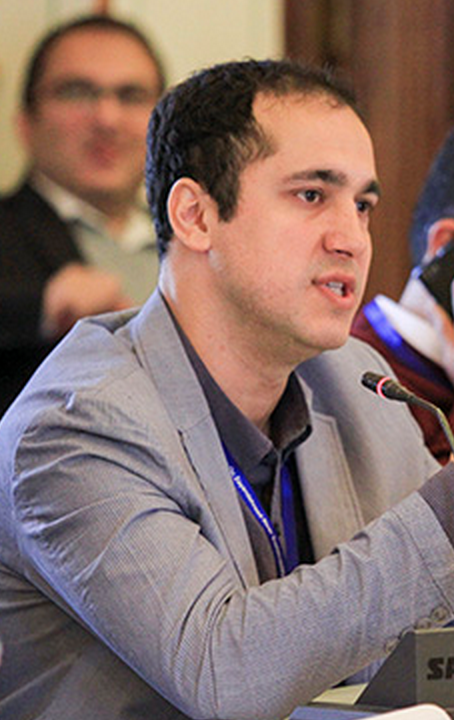
Kaveh Madani
Former Deputy Vice President of Iran
16
APPEARANCES
12
PODCASTS
Sep 25, 2026


Kaveh MadaniGUEST
When, when you exhaust the checking, you go to the savings, and then not only your surface water systems are in a bad shape, not only we see rivers shrinking, reservoirs, um, empty, s- cities hitting day zeros, wetlands dying, but also we see groundwater declining, aquifers collapsing, land subsidence happening, sinkholes appearing, desertification, sand and dust storms-

Dani NierenbergHOST
Can you talk about places in the world that have been resilient and able to add to their savings account?
Kaveh MadaniGUEST
The, the report says that the planet has entered the era of global water bankruptcy.


Kaveh MadaniGUEST
So I'm probably one of the very few people in the opposite camp of, of typ- the, you know, typ- typical discussions that Bjorn gets into who, who agrees with a lot of points he says, and that, that, that's costly for me and my community.
Kaveh MadaniGUEST
But when it comes to conclusions, my conclusion is, is different because my field of study is different.
Kaveh MadaniGUEST
I use math to, to model the, the systems that involve humans and nature to advise policy, tell the decision-makers what to do, how to deal with trade-offs, what, how to avoid the unintended consequences.
30 MINS LATER

Kaveh MadaniGUEST
So Iran had a, a long drought, multi-year drought And then the reservoirs had been exhausted.
Kaveh MadaniGUEST
So essentially, you build reservoirs to carry over some water between th- years.
Kaveh MadaniGUEST
Uh, water years start October, the beginning of the October, that's the beginning of fall in Iran, and they end in, in September.
Kaveh MadaniGUEST
So when Iran had started the current water year, still w- we had a very dry year.
Kaveh MadaniGUEST
So it had not rained, and the reservoirs were empty, so Iranians were mostly relying on groundwater back then.
21 MINS LATER

Roland OliphantHOST
Just how bad could this get? 'Cause it sounds like you're predicting almost a global apocalypse, cities being evacuated left, right, and center.

Katie ChambersHOST
And do you think that to that end, governments of the countries that are in the worst states with water bankruptcy, do you think they are taking this seriously enough?
Katie ChambersHOST
What message do you hope to portray ahead of that conference? Is the timing of this report quite deliberate in trying to get nations to listen to the urgency of this?

14:34
In a special interview with Nathalie Minard from the United Nations News, Madani said that governments, technology companies and users should all have a role to play in reducing the growing environmental footprint of artificial intelligence and ensuring the benefits outweigh costs.
Kaveh MadaniGUEST
AI operations is associated with massive infrastructure and major material flows.
Kaveh MadaniGUEST
attached to this and that physics comes with a lot of environmental footprint.
Kaveh MadaniGUEST
From the moment we extract the critical minerals in the mines to the point of manufacturing semiconductors and AI, essentially hardware, to the point of construction of the data centers and then the operations of the data centers, the energy they need and the resources needed for producing that energy and the water needed for cooling And later on, we need to deal with the electronic waste.


Nathalie MinardHOST
Could you briefly remind our audience of the key tipping points identified in your recent report?
Kaveh MadaniGUEST
AI operations is associated with massive infrastructure and major material flows.
Kaveh MadaniGUEST
There is physics attached to this, and that physics comes with a lot of environmental footprint.
Kaveh MadaniGUEST
From the moment we extract the critical minerals in the mines to the point of manufacturing semiconductors and AI, essentially hardware, to the point of construction of the data centers, and then the operations of the data centers, the energy they need, and the resources needed for producing that energy, and the water needed for cooling.
Kaveh MadaniGUEST
So behind every prompt there is something going on, and that's what something we wanted to remind the world about.
6 MINS LATER

Kaveh MadaniGUEST
Thanks for having me and thanks for your interest in this very important topic.
Kaveh MadaniGUEST
So what we know is that we are facing the fourth industrial revolution that is changing our lifestyle, the way we work and we live.
Kaveh MadaniGUEST
And when it comes to AI, most people understand AI as a digital technology, as a virtual thing, as something that is in the clouds and up somewhere out there.
Kaveh MadaniGUEST
What we tried to do in this report was to remind people that there's some physics to all of this and there is a massive infrastructure and material supply chains that back this service or this innovation.
Kaveh MadaniGUEST
And if we want to understand our impact, we have to think about that very long supply chain that starts with the extraction of critical minerals in the poor areas of the world lead to The manufacturing of all the technologies and the hardware, then construction of the data centers and other infrastructure, then operations of that infrastructure that requires massive amounts of energy and has... major footprints, and then at the end of the life cycle, we have to deal with the e-waste.
Kaveh MadaniGUEST
In this particular report, we focus very much on the operations and the massive energy use of the operations, meaning that our day-to-day interactions with AI tools result in A lot of energy use and producing energy, as we know, not only comes with carbon footprint, but as we remind in this report, also with water and land footprint and other ecological impacts that often we don't pay attention to, especially when we keep talking only about the carbon element.

Kaveh MadaniGUEST
Thanks for having me and thanks for your interest in this very important topic.
Kaveh MadaniGUEST
So what we know is that we are facing the fourth industrial revolution that is changing our lifestyle, the way we work and we live.
Kaveh MadaniGUEST
And when it comes to AI, most people understand AI as a digital technology, as a virtual thing, as something that is in the clouds and up somewhere out there.
Kaveh MadaniGUEST
What we tried to do in this report was to remind people that there's some physics to all of this and there is a massive infrastructure and material supply chains that back this service or this innovation.
Kaveh MadaniGUEST
And if we want to understand our impact, we have to think about that very long supply chain that starts with the extraction of critical minerals in the poor areas of the world lead to The manufacturing of all the technologies and the hardware, then construction of the data centers and other infrastructure, then operations of that infrastructure that requires massive amounts of energy and has... major footprints, and then at the end of the life cycle, we have to deal with the e-waste.
Kaveh MadaniGUEST
In this particular report, we focus very much on the operations and the massive energy use of the operations, meaning that our day-to-day interactions with AI tools result in A lot of energy use and producing energy, as we know, not only comes with carbon footprint, but as we remind in this report, also with water and land footprint and other ecological impacts that often we don't pay attention to, especially when we keep talking only about the carbon element.

Kaveh MadaniGUEST
found.Thanks for having me, and thanks for your interest in this very important, um, topic.
Kaveh MadaniGUEST
Um, so what, uh, we know is that we are, um, facing the fourth industrial revolution that is changing our lifestyle, the way we work and we live.
Kaveh MadaniGUEST
And when it comes to, to AI, most people understand AI as a digital technology, as a virtual thing, as, as, um, something that, that, uh, is in the clouds and up, you know, somewhere out there.
Kaveh MadaniGUEST
What we tried to do in this report was to remind, uh, people that, um, there's some physics to all of this, and there's a, a massive infrastructure and material supply chains that back, um, this, um, service or this innovation.
Kaveh MadaniGUEST
And if we want to understand our impact, we have to think about, um, that very long supply chain that starts with the extraction of critical minerals in, in the poor areas of the world, uh, leads to, uh, the, um, manufacturing of all the technologies and the hardware, then construction of the, um, um, the, um, data centers and other infrastructure, then operations of that infrastructure that requires massive amounts of energy and, and has major footprints.

Amy GoodmanHOST
If we keep judging AI sustainability by carbon alone, we might think that renewables make AI infrastructure clean, but that's solving one problem while creating other problems, often in places that didn't ask for it." Can you expand on this?

Kaveh MadaniGUEST
found.Thanks for having me, and thanks for your interest in this very important, um, topic.
Kaveh MadaniGUEST
Um, so what, uh, we know is that we are, um, facing the fourth Industrial Revolution that is changing our lifestyle, the way we work, and we live.
Kaveh MadaniGUEST
And when it comes to, to AI, most people understand AI as a digital technology, as a virtual thing, as, as, um, something that, that, uh, is in the clouds and up, you know, somewhere out there.
Kaveh MadaniGUEST
What we try to do in this report was to remind, uh, people that, um, there's some physics to all of this, and there's a, a massive infrastructure and material supply chains that back, um, this, um, service or this innovation.
Kaveh MadaniGUEST
And if we want to understand our impact, we have to think about, um, that very long supply chain that starts with the extraction of critical minerals in, in the poor areas of the world, uh, leads to, uh, the, uh, manufacturing of all the technologies and the hardware, then construction of the, um, um, the, um, data centers and other infrastructure, then operations of that infrastructure that requires massive amounts of energy and, and has major footprints.
Amy GoodmanHOST
If we keep judging AI sustainability by carbon alone, we might think that renewables make AI infrastructure clean, but that's solving one problem while creating other problems, often in places that didn't ask for it." Can you expand on this?

Katie ChambersHOST
What are we as everyday users doing when we use AI that really puts pressure on water sources, land sources?
Kaveh MadaniGUEST
The interaction you have with the AI, the interaction that even we have right now talking over an, an online tool, is using a lot of energy.
Kaveh MadaniGUEST
Because for us to be able to successfully interact with each other, data must be transferred and then must be processed and so on.
Kaveh MadaniGUEST
So the information must be taken from you, processed somewhere, and these processes for transfer of data, for processing of data requires energy.
Kaveh MadaniGUEST
For that energy to be produced, you need to use water, you need to use some land somewhere.
Katie ChambersHOST
Do you think there should be limits on AI use or more regulation, es- especially around, you know, those high-energy tools that lots of us are using these days, you know, like video generation?

Amy MartinHOST
Can you tell us more about what that is and why you think it's important for ordinary people to understand how water bankruptcy is different from water stress or water crisis?
Kaveh MadaniGUEST
The framing, the use there is a product of two decades of thinking and, and working and research and also, uh, experiencing things in a very painful way in, in Iran.
Kaveh MadaniGUEST
One is stress, uh, water stress, and that means that, like, you're withdrawing a lot of water from your system.
Kaveh MadaniGUEST
Uh, you can be very stressed, like as human being, like, you know, you can be very stressed, but, but still functional.
9 MINS LATER
Amy MartinHOST
I'm, I'm wondering, how is the current conflict in Iran affecting the water issues there? Or vice versa, how are the water issues that were preexisting there connected to this, this ongoing conflict?
Amy GoodmanHOST
Can you respond to Trump threatening to blow up more civilian infrastructure, including Iran's desalination, he calls them desalinization plants, what exactly that would mean?
Kaveh MadaniGUEST
[chuckles] First, I should say I'm not gonna share my award, uh, with, with him.
Kaveh MadaniGUEST
Uh, but, um, you know, I think that that's, that's the, um... that's really scary, I mean, from multiple standpoints.
Kaveh MadaniGUEST
Uh, first thing is, is, um, that, that we know the inter-- there-- the war started with the violation of international law.
Kaveh MadaniGUEST
Uh, but even if, if, if, um, the enemies of the, the Islamic Republic consider that justified, wars have-- even wars have rules, and there are w-rules to, to follow even during the wars.
Kaveh MadaniGUEST
Um, attacking civilian infrastructure is a violation of international humanit-humanitarian law, and that's, that can be a war crime.
Amy GoodmanHOST
Um, and if you can talk about these climate impacts, and you have, uh, you have said, "We always blame the oil-producing states for gas emissions, but we don't blame the buyer." Put those two things together.
Amy GoodmanHOST
Can you respond to Trump threatening to blow up more civilian infrastructure, including Iran's desalination, he calls them desalinization plants, what exactly that would mean?
Kaveh MadaniGUEST
[chuckles] First, I should say I'm not gonna share my award, uh, with, with him.
Kaveh MadaniGUEST
Uh, but, um, you know, I think that that's, that's the, um... that's really scary, I mean, from multiple standpoints.
Kaveh MadaniGUEST
Uh, first thing is, is, um, that, that we know the inter-- there-- the war started with the violation of international law.
Kaveh MadaniGUEST
Uh, but even if, if, if, um, the enemies of the, the Islamic Republic consider that justified, wars have-- even wars have rules, and there are w-rules to, to follow even during the wars.
Kaveh MadaniGUEST
Um, attacking civilian infrastructure is a violation of international humanit-humanitarian law, and that's, that can be a war crime.
Amy GoodmanHOST
Um, and if you can talk about these climate impacts, and you have, uh, you have said, "We always blame the oil-producing states for gas emissions, but we don't blame the buyer." Put those two things together.
Amy GoodmanHOST
Can you respond to Trump threatening to blow up more civilian infrastructure, including Iran's desalination, he calls them desalinization plants, what exactly that would mean?
Kaveh MadaniGUEST
[chuckles] First, I should say I'm not gonna share my award, uh, with, with him.
Kaveh MadaniGUEST
Uh, but, um, you know, I think that that's, that's the, um... that's really scary, I mean, from multiple standpoints.
Kaveh MadaniGUEST
Uh, first thing is, is, um, that, that we know the inter-- there-- the war started with the violation of international law.
Kaveh MadaniGUEST
Uh, but even if, if, if, um, the enemies of the, the Islamic Republic consider that justified, wars have-- even wars have rules, and there are w-rules to, to follow even during the wars.
Kaveh MadaniGUEST
Um, attacking civilian infrastructure is a violation of international humanit-humanitarian law, and that's, that can be a war crime.
Amy GoodmanHOST
Um, and if you can talk about these climate impacts, and you have, uh, you have said, "We always blame the oil-producing states for gas emissions, but we don't blame the buyer." Put those two things together.


Kaveh MadaniGUEST
We gotta be careful about calling Alberta a water bankrupt system because we're lucky in Canada to begin with.
Kaveh MadaniGUEST
We are very, very rich compared to the rest of the world, but we are seeing these signs.
Kaveh MadaniGUEST
When farmers are struggling, when we are seeing increased wildfire frequency, and we are seeing fights am-among, among stakeholders or, or, or struggles to get permits and so on, that means that something is wrong with, uh, with the, with the system.