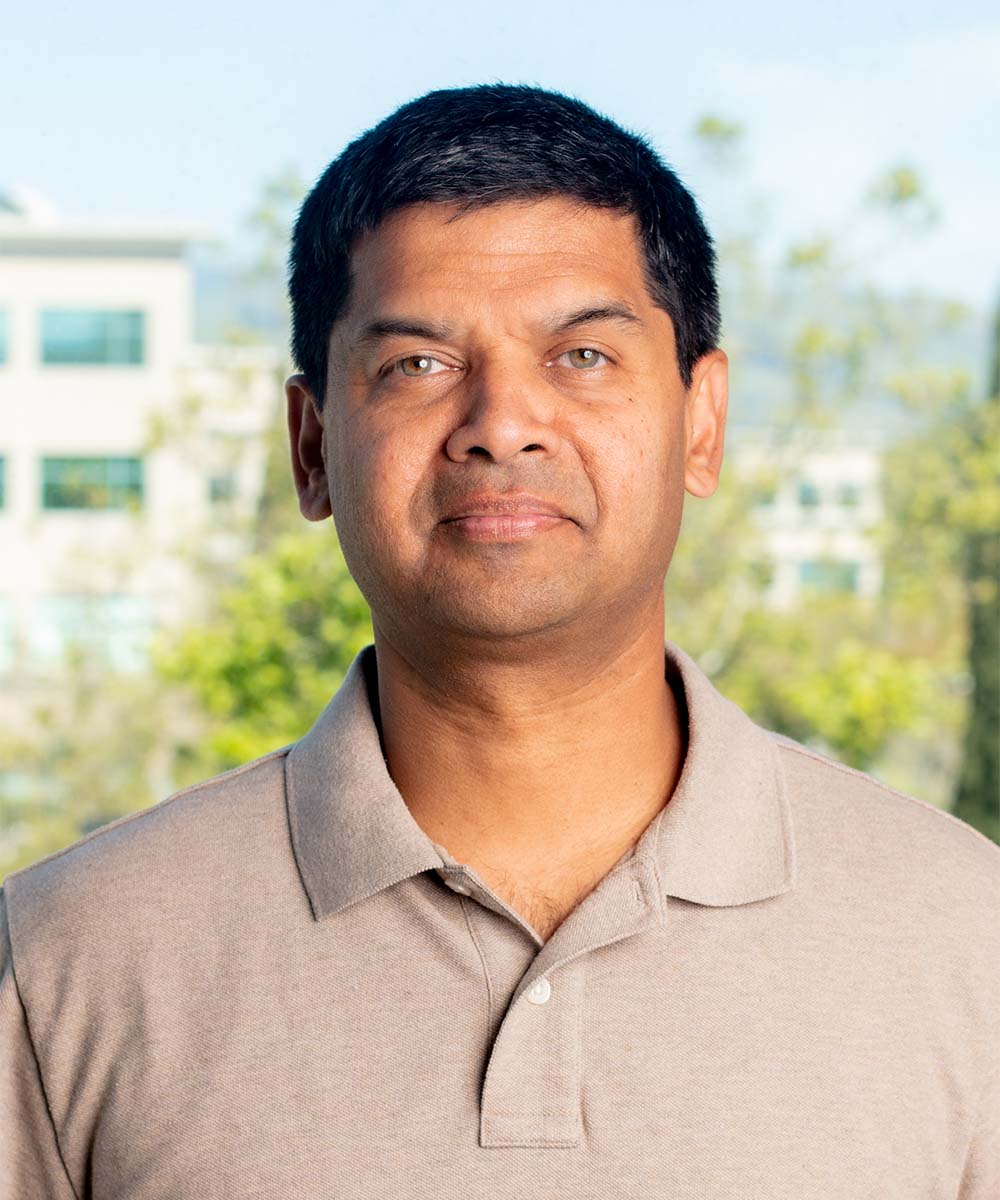
Bhaskar Jayakrishnan
5
APPEARANCES
3
PODCASTS
Oct 17, 2026


Sam CharringtonGUEST
But now we're talking about very dynamic alerts from systems that are always on, always busy, and if you get large enough, are always experiencing failures.

Bhaskar JayakrishnanGUEST
So if I were to pivot to an example of what we see with Cisco and Cisco's customers, you can think about things like agent TikTok, where with models becoming stronger and stronger, they are also being leveraged to attack infrastructure.
Bhaskar JayakrishnanGUEST
When attacks are coming at you at machine speed, You cannot rely on AI ops or where you had like an alert where you're acting on it.
Bhaskar JayakrishnanGUEST
When you have like humans reacting to alerts, for instance, right, you're not going through all of them.
Bhaskar JayakrishnanGUEST
But with things like what's happened with Mythos and how it talked about it, right, it can chain medium severity issues to exploit your infrastructure.
7 MINS LATER
Jack HampsonHOST
take us back to the beginning for an IT leader who's thinking about setting out in this journey, right? We've touched on a lot of topics so far, but what are some of the most sort of important foundational things that they should be thinking about, Bhaskar?

Bhaskar JayakrishnanGUEST
So now, what if we limit the knowledge of these models to a certain area? Because you know that you're going to be asking a question about the penal code.
Bhaskar JayakrishnanGUEST
And that model doesn't necessarily need all the knowledge from all the medical literature out there, right? There are some elements that are common, constructs of language, et cetera, but then the domain could be very different.
Bhaskar JayakrishnanGUEST
The other way to think about it is, maybe you still have you train somebody on a little bit of everything we all know that law exists we all know that medicine exists and we all cover some elements of it right that's another way where we have we know just about the basics of everything that's another way to think about it so you you can build a domain specific model which embodies information about that specific domain but the overall knowledge is constrained or you can build a model which knows a bit about everything but again it's constrained the depth of the knowledge is constrained so typically something which is about 10 billion parameters or less is considered what is called a small language model Broadly speaking, lesser the number of parameters, the cost, the runtime cost for inference tends to be lower.
Bhaskar JayakrishnanGUEST
You asked a question about when do you have to use it? Now, the thing about small language models is you could use it in different places.
6 MINS LATER
Chad HarveyHOST
So I'm not sure if I've got a question in there so much as I'm just kind of throwing this out on the table and saying, any other thoughts from you about that as CFOs in particular looking at this?

Bhaskar JayakrishnanGUEST
If you think about the historical context, uh, when cases came in, the quality of service you got depended on where it landed.
Bhaskar JayakrishnanGUEST
If you got, uh, if a ticket was handled by a veteran, the quality of service you got was pretty high.
Bhaskar JayakrishnanGUEST
If it was a junior level engineer that was just getting started, there was a learning curve.
18 MINS LATER
Bhaskar JayakrishnanGUEST
People are doing pilots, but then they are unable to take it to production for very many reasons.
Bhaskar JayakrishnanGUEST
But the general trend that you observe is a lot of people obsess over a model's performance, how well a model does.
Bhaskar JayakrishnanGUEST
For the last three decades, any piece of software, irrespective of the language that we used to develop it, there was one thing that you could be certain.
10 MINS LATER

Eric KnippHOST
So, I mean, what's the answer? I mean, how do we not limit it and turn it into just basic scripting? But how do we make sure that, again, we don't have, I guess, chaos as well? What's the answer, Bhaskar?


Neil C. HughesHOST
So how has this changed the way Cisco thinks about cyber security? And where are organisations still relying on processes that just simply cannot keep up with the pace of today's environment?
Bhaskar JayakrishnanGUEST
Anybody that's managing infrastructure, they are dealing with what we call yesterday's debt, which is aging infrastructure with its own set of issues.
Bhaskar JayakrishnanGUEST
Today's reality where you have models like Mythos and there are going to be many models after that, which are going to attack infrastructure at machine speed.
Bhaskar JayakrishnanGUEST
They are mapping infrastructure at machine speed and they are going to exploit any vulnerabilities.
Bhaskar JayakrishnanGUEST
And while we are paying attention to all of this, you have quantum computing around the corner, which is what we call tomorrow's fight, where you have to start preparing for defense against things like harvest now, decrypt later attacks.
8 MINS LATER
Neil C. HughesHOST
But for those that still see Q-Day as a distant problem, that harvest now, decrypt later, for example, what are they potentially underestimating? And why should organisations be thinking about crypto agility today rather than waiting for that problem that may or may not appear in the future?