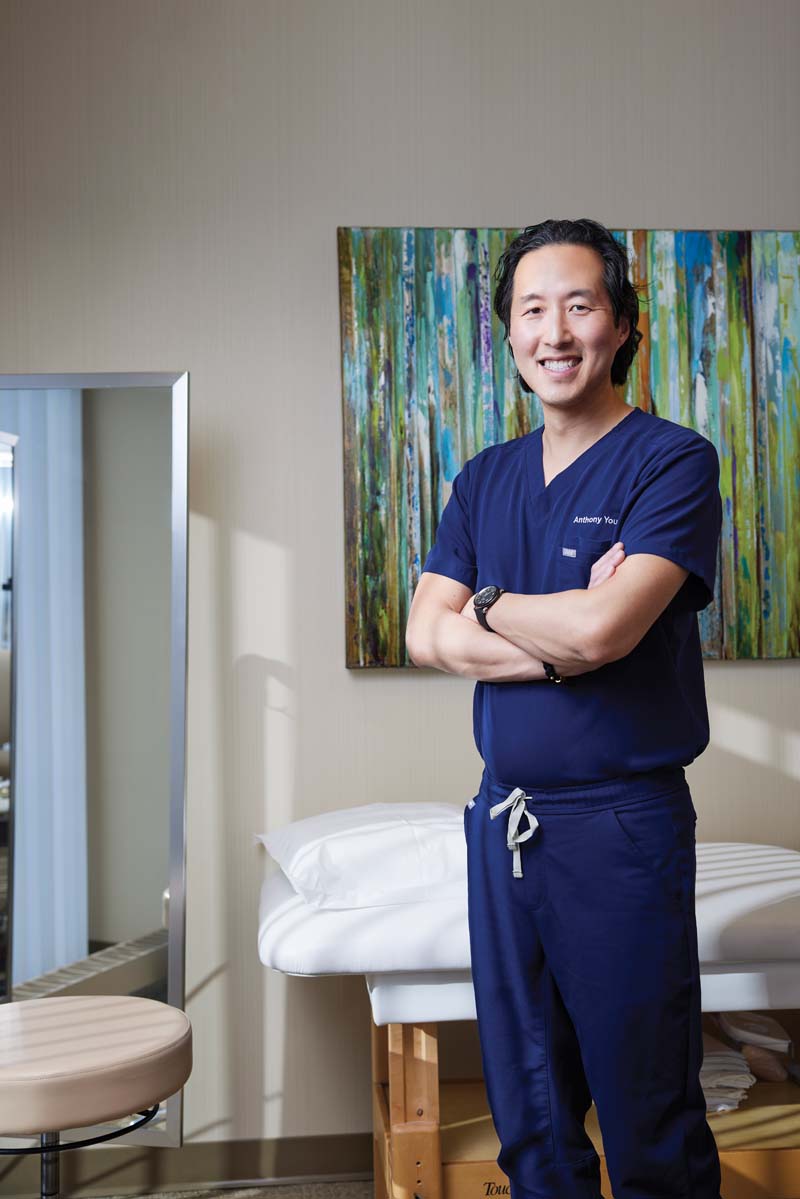
Anthony Youn
TV personality
11
APPEARANCES
10
PODCASTS
Aug 13, 2026

Tyna MooreHOST
Uh, what is going on? What is the difference between a deep plane and a SMAS, and w- what, what do I need to know?

Anthony YounGUEST
The traditional facelift, essentially, what you do is you make incisions in front of and behind the ears, you elevate the skin, pull the skin back, and cut it off.
Anthony YounGUEST
Um, in probably the '90s or so, doctors started realizing that, hey, that doesn't work so well because the skin stretches.
6 MINS LATER
Tyna MooreHOST
... are trained to do what you're doing, and then cosmetic surgeons, it's a, uh, l- ta- can you talk about that? Are you comfortable talking about that?


Tony YounGUEST
It was unfortunately for me a lot more traumatic, and the, kind of the conversion.
Tony YounGUEST
So, you know, for many years, Cynthia, I practiced as a board-certified plastic surgeon performing a ton of surgery.
Tony YounGUEST
And in general, the bigger and more complicated operations that you do, the better you feel as a surgeon.
Tony YounGUEST
So if you're a general surgeon, that operation that you long to do and to be successful at is the Whipple.
Tony YounGUEST
And this is a 10-hour massive cancer operation, uh, that if you're so lucky as a resident that you can scrub into a Whipple, then you really have made it.
54 MINS LATER

Anthony YounGUEST
Yeah, so the way I look at aging of the skin, there are five main causes of aging of the skin, and the diet can impact all five of those.
Anthony YounGUEST
So kind of just briefly, the first main cause of aging of the skin is nutrient depletion.
Anthony YounGUEST
There's a belief in holistic medicine circles, and it actually has been proven in studies, that our food, the fruits and the vegetables that we eat nowadays, and possibly the meats as well to an extent, are not as nutritious as they used to be and the belief is that our industrial farming practices have actually damaged the soil and have caused it so it does not grow fruits and vegetables that are as nutritious and healthy as they were let's say 50 years ago and studies are actually showing that this is the case so that's the number one cause of aging of the skin is nutrient depletion Second cause is collagen degradation.
Anthony YounGUEST
Our skin is composed 70 to 80% of collagen, and that's what causes our skin to feel nice and tight and look smooth and youthful.
29 MINS LATER

Anthony YounGUEST
And he-- of his opinion, and he says it's wrong." So what does the science say about collagen supplements? You know, we, uh, take collagen supplements.
Anthony YounGUEST
People take it for the health of their hair, their skin, their nails, their bones.
Anthony YounGUEST
Uh, I mean, people may say that they're not, but if you actually look at the studies, there are so many studies that support the use of collagen supplements.

Shawn StevensonHOST
So if you could, for everybody, just kind of across the board, what are some of the recommendations as far as a skincare routine? Just some basic things that we could all do to have healthier, younger, fresher-looking skin.

Anthony YounGUEST
There's the d- there's the SMAS facelift where you make the incisions around the ears, you elevate the skin, you reshape the fat, and then you tighten the muscle up.
27 MINS LATER


Tony YounGUEST
So chemical peels will do it in, in a different way, but essentially what you're doing then is you're applying an acid to the surface of the skin, and it will essentially just burn the surface of the skin, and, and it will go to a certain depth.
12 MINS LATER
Tony YounGUEST
... that, let's say, if you have a history of basal cell carcinomas o- on your face, that I recommend all my patients who have a history of skin cancer to apply then tretinoin afterwards.
Tony YounGUEST
You're not gonna know what it prevents, because it may take some cells that are maybe a little dysplastic and, and, you know, essentially slough them off before they become cancer, they just never show up that way.
Tony YounGUEST
Um, so really it's a jack of all trades when you're talking about truly anti-aging.
Tony YounGUEST
You know, when I was in medical school, my wife and I were having issues with acne, and back then, you know, I didn't think about what was the cause of it.
Tony YounGUEST
Well, it was probably being up at night taking call, eating the fry bar at the hospital at night, the deep-fried apple wedges and all that type of stuff, and God knows what my microbiome was doing at that time.
33 MINS LATER

Vonda WrightHOST
So if you have the 40-ish perimenopausal, menopausal woman in your office, what do we start with? Like the basics, if we do not want 26 bottles on our cabinets because we're busy people.
Anthony YounGUEST
Okay, so the basics basically is gonna be what I call a two minutes, five years younger skincare routine, okay? And so this is something we actually tested on people who had quote unquote normal skin.
Anthony YounGUEST
This won't work with you of losing five years after two minutes a day, because your skin looks really good as it is.
Anthony YounGUEST
But the average person, let's say, who hasn't been taking great care of their skin and they want to start something, this is the way to start.
Anthony YounGUEST
The first thing every morning, you want to cleanse your skin with a cleanser appropriate for your skin type.
Anthony YounGUEST
What does that mean? It means that if you have oily skin, then going for a more foaming cleanser can help with that oil control.
Anthony YounGUEST
If you have more sensitive or drier skin, then going for a more milky or gentle cleanser would be the way to go.
Vonda WrightHOST
But what do we do at night, right? Besides take our makeup off, which my daughter yells at me about.


Darin OlienHOST
How, how is that embraced? Uh, uh, h- have people embraced that, and are they willing to do foundational work?
Anthony YounGUEST
I think the hard thing is, is when you see patients in the office, there is a limited amount of time.
Anthony YounGUEST
And so, you know, I feel for family doctors, uh, where they literally s- have 10 minutes for their patient, you know? And some d- family doctors, uh, very few family doctors are still in their own private practices, where they can call the shots themself and say, "Hey, look, you know what? I'm gonna spend 45 minutes to help this patient with all of their health concerns." You know, now the vast majority of primary care physicians are in, uh, either multi-specialty groups or they're employees of massive hospital systems, where they have controls over how many patients they need to see per hour, per day, uh, otherwise they don't get paid, or they get docked in their pay.
Anthony YounGUEST
And this makes them have to see so many patients so frequently, it doesn't give them the time to go over a lot of the necessary things that patients need to learn to improve their health.
Anthony YounGUEST
And so for me, you know, you mentioned earlier social media, one of the ways that I try to get that to my patients is, you know, I can sit down with a patient for 40 minutes and talk to them about their skin, about their lifestyle, and all of that, or I can make a video, put it on my YouTube channel, and s- and have hundreds of thousands of people watch it, and impact them in that way, and give them that same information.
Darin OlienHOST
Did you feel like when you were in medical school, did you see that early on, and you decide to go a route that you had a little more control over, or did you realize that later? And then the second part to that question is, what the hell can we do about that? [chuckles] Like, I know that's a massive question, but I'd love to go more-


George NooryHOST
And when, when a surgery is botched, does the surgeon know that? I mean, what happened? What went wrong?
Tony YounGUEST
Well, oftentimes the surgeon, if it's, if it's due to poor technique, the problem is, is that surgeons sometimes have no idea why because it's their poor technique [laughs] and they're unaware that that's what causes it.
Tony YounGUEST
Uh, unfortunately right now, plastic surgery, as I mentioned, you know, it's the Wild West of medicine, not only overseas, but here in the United States it's the Wild West as well, where there are doctors who are performing plastic surgery who literally learn it On a weekend course.
Tony YounGUEST
You know, you have doctors who are ER doctors, who are family doctors, who are gynecologists.
Tony YounGUEST
They take weekend courses on breast augmentation, on tummy tucks, on facelifts, and then they perform these operations in their offices.
Tony YounGUEST
You can perform any procedure that you want on any patient if you're a physician, as long as they sign on the dotted line.

Doug BopstHOST
And so do you ever like outsource or recommend people have a conversation with like a therapist or a mental health professional, like before making some of these decisions? Yeah.
Anthony YounGUEST
So, you know, technically as plastic surgeons, we're psychiatrists with scalpels, is pretty much what we are.
Anthony YounGUEST
You know, I'm fortunate in that my practice, you know, when I see new patients, we schedule about half hour to 45 minutes with each of the new consultations.
Anthony YounGUEST
You compare that to, let's say, a dermatologist who has patients scheduled every three to five minutes, you know, where they don't have the time, unfortunately.
Anthony YounGUEST
So for me, and one reason why I have such a long waiting list is because I do spend a lot of time with each new patient to make sure that we get to know each other, that I know what their motivations are, so that we're hopefully on the same page.
Anthony YounGUEST
The problem comes is when you do have a patient where you're not on the same page.
9 MINS LATER
Doug BopstHOST
I mean, has your perspective on what to eat changed since we last spoke or is it still like eat whole foods, limit ultra processed foods if you're trying to maximize your skin health?