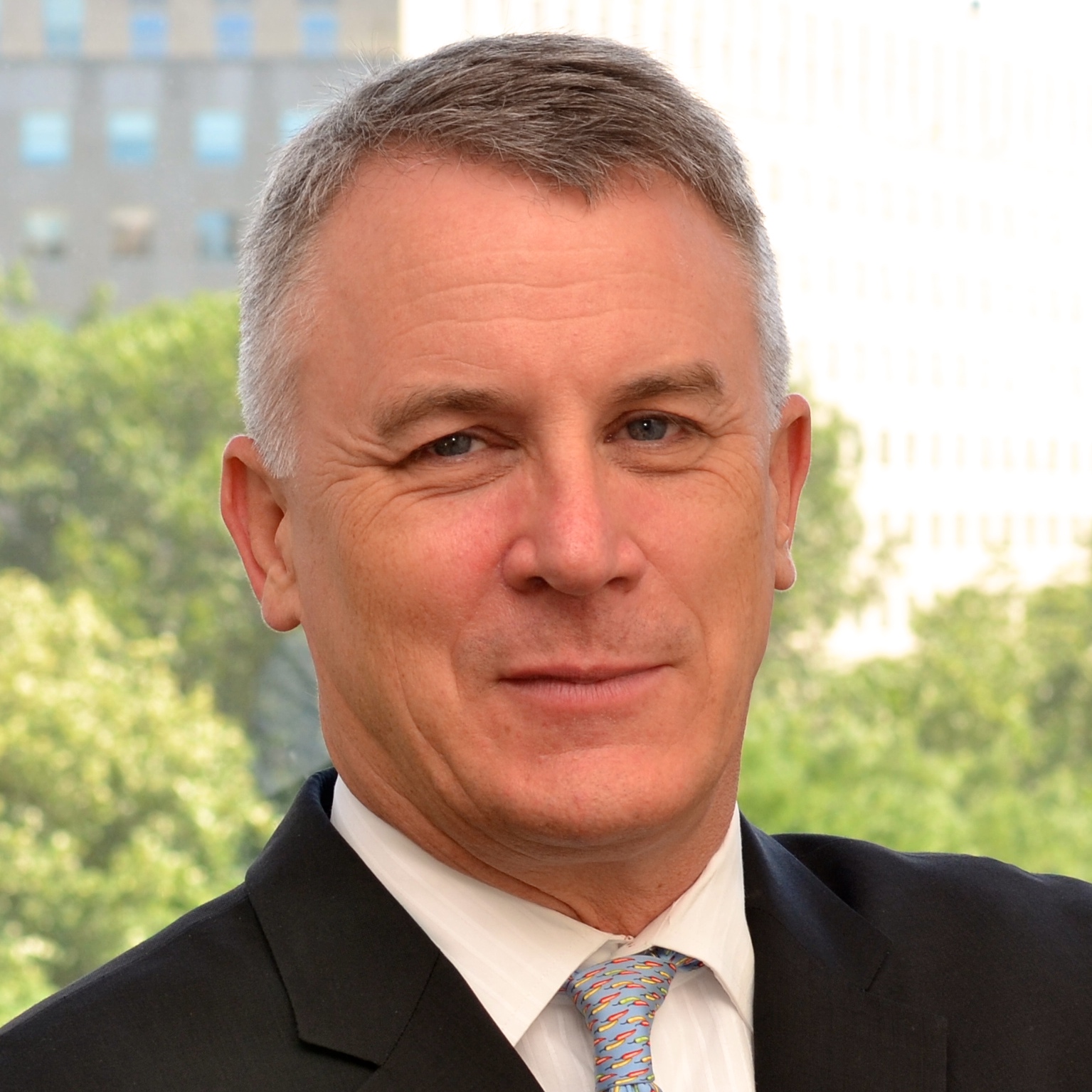
Michael Scott Doran
American commentator
31
APPEARANCES
16
PODCASTS
Sep 25, 2026


Michael DoranGUEST
Uh, and thank you, Hay, for, uh, writing this, uh, very, uh, provocative essay.
Michael DoranGUEST
Um, first of all, I, I can't d- uh, disagree with, uh, some of the central findings of Hay.
Michael DoranGUEST
Uh, for example, um, that since October 7th there's been a, a major, uh, change in tone, uh, that the Turkish government is, uh, increasingly describing Israel as, uh, um, a strategic threat and, and I would say even the strategic enemy, uh, to, to be countered.
34 MINS LATER


Ludovic HoodHOST
Um, how would you grade, um, the administration's performance over the last six months, um, on this latest effort by this latest US president to deal with Iran?
Michael DoranGUEST
[laughs] The, um, uh, let me, let me discuss the metric first, and then I'll, I'll get to the, to, uh, the, the grade.
Michael DoranGUEST
The, um, there, I, I think there's been a failing of, uh, a general American failing in terms of de- dealing with Iran.
Michael DoranGUEST
Um, I think it probably goes back before Obama, but you see it most starkly in the Obama administration because they, uh, uh, Obama, uh, cut the, the nuclear deal, uh, and then, um, delivered to Iran an enormous amount of, uh, uh, an enormous amount of cash, and turned a blind eye basically to the proxies and the, and the missiles and drones.
Michael DoranGUEST
Uh, and, uh, we can forgive him, uh, I think, not foreseeing the rise of the, the, the missiles and drones, all these, uh, disruptive military capabilities.
Michael DoranGUEST
Nobody in, in 2015, I think, uh, understood how significant this was gonna be, and I think it's really, really significant.
39 MINS LATER

1:20

For anyone hearing about tax ed for the first time, how would you describe what you do?
Michael DoranGUEST
So TaxEd's been in business for over 20 years, and it's a specialty kind of advising house for not-for-profit and government.
Michael DoranGUEST
So that's why it exists, to support that sector, recognising, I suppose, that they have particular kind of issues, tax issues, and therefore kind of need a dedicated service provider.
Michael DoranGUEST
The business is effectively... a membership model where organisations join as a member and that gives them the opportunity to both ask tax-related questions and also gives them access to some kind of dedicated not-for-profit tax information, newsletters, webinars that we run, specific training programs that we operate.
Michael DoranGUEST
particularly in and around things like fringe benefits tax, which is a kind of a key kind of issue for the not-for-profit sector.
10 MINS LATER


Michael DoranGUEST
Our expertise, American governmental expertise on the Middle East, comes originally from the Protestant missionaries who were serving in the, in the Middle East.
Michael DoranGUEST
When the Cold War began, we didn't have experts on, uh, all of these, uh, parts of the globe where we suddenly had, uh, a, a need to counter the Soviet Union, and in the Middle East, we turned to Presbyterian, um, Presbyterian, uh, missionaries who were Protestant modernists.
Michael DoranGUEST
These were not evangelical m- uh, uh, missionaries, but modernist missionaries, which means they went ...
Michael DoranGUEST
They saw themselves as ambassadors for Christianity, not as, not as people who were preaching the gospel of Jesus Christ.
41 MINS LATER
Michael DoranGUEST
So, a- and Protestant modernists believe in, in, in, in deeds rather than dogma.
Michael DoranGUEST
Uh, and so th- they, they found a ready outlet for those impulses with, um, um, with the, uh, effort to build an alliance with the Muslims.
Michael DoranGUEST
Um, they felt, though, that as they were building this alliance w- with the, with the Muslims, that they were being undermined by the Jews who, because of Zionism.
Michael DoranGUEST
So American missionaries go to the Middle East and, and they would encounter hostility to America because of its association with the Zionist, uh, with the Zionist project.
Michael DoranGUEST
Um, a- and so they felt that it was good for their project to, uh, oppose, uh, Zionism.
Michael DoranGUEST
Then, um, when they became experts for the US government, when they were brought into the US government-

Michael DoranGUEST
Well, the, what's fundamentally changed is that Iran's nuclear program has been, uh, destroyed for all intents and purposes, and they're not enriching uranium.
Michael DoranGUEST
And I think the, the most important, uh, clause of the memorandum of understanding is that the s- the nuclear status quo will remain in place as long as the MOU is in place.
Michael DoranGUEST
That's a fundamentally different charac- uh, quality that we've had with Iran since they started enriching uranium in 2006.
Michael DoranGUEST
I, I think this is really basically, in essence, a deal to open up the strait, uh, and to relieve, s- uh, to allow the Iranians to sell some oil, get some, uh, um, frozen assets returned to them, um, a- in return for allowing us to get all of our allies oil, oil out.

Michael DoranGUEST
Well, what's fundamentally changed is that Iran's nuclear program has been destroyed for all intents and purposes, and they're not enriching uranium.
Michael DoranGUEST
And I think the most important clause of the memorandum of understanding is that the nuclear status quo will remain in place as long as the MOU is in place.
Michael DoranGUEST
That's a fundamentally different quality that we've had with Iran since they started enriching uranium in 2006.
Michael DoranGUEST
I think this is really basically, in essence, a deal to open up the strait and to allow the Iranians to sell some oil, get some frozen assets returned to them in return for allowing us to get all of our allies' oil out.

Michael DoranGUEST
Well, what's fundamentally changed is that Iran's nuclear program has been destroyed for all intents and purposes, and they're not enriching uranium.
Michael DoranGUEST
And I think the most important clause of the memorandum of understanding is that the nuclear status quo will remain in place as long as the MOU is in place.
Michael DoranGUEST
That's a fundamentally different quality that we've had with Iran since they started enriching uranium in 2006.
Michael DoranGUEST
I think this is really basically, in essence, a deal to open up the strait and to allow the Iranians to sell some oil, get some frozen assets returned to them in return for allowing us to get all of our allies' oil out.


Brian KilmeadeHOST
But that could also allow some of the opposition to galvanize and organize, couldn't it?
Michael DoranGUEST
Well, I think what the administration is hoping is that the, is that the, uh, once the, once the emergency is lifted and people begin talking to each other, uh, then the IRGC will have to explain, to some extent, to the Iranian people why they have suffered so much, uh, for this, for the proxies, uh, that they are supporting externally and for the nuclear, uh, and for the nuclear program.
Michael DoranGUEST
Now, who knows? The, the IRGC has been, shown itself as totally willing to ride roughshod over the populace and its concerns be damned.
Michael DoranGUEST
But the level of problems that they have just in managing that country now has increased exponentially.
Michael DoranGUEST
So the administration is hoping that that will put pressure on them and move them toward, uh, uh, um, ma- make them more inclined to cut a deal on the nuclear file.
Brian KilmeadeHOST
So I wonder why they still feel as though they're vulnerable, unless we didn't do anything to protect Saudi Arabia, Bahrain, Kuwait, and the UAE, which I know the UAE has taken measures.
Michael DoranGUEST
Yeah, I, I think it's, I think it is, it's, it's possible, but I think it's hard, very hard.

Michael DoranGUEST
I don't wanna diminish the staying power of the Iranians and, let's say, their grit, you know, the seriousness with which the, uh, Revolutionary Guard is approaching this challenge, and I don't wanna diminish the severity of the threat that they represent.
Michael DoranGUEST
But it is worth remembering, uh, Baghdad Bob, who was proclaiming victory even as the Americans were occupying Baghdad.
Michael DoranGUEST
To admit a weakness is to invite rebellion at home, and they're very worried about rebellion at home.
Michael DoranGUEST
the, the Iranians, Hamas, Hezbollah, they, they use our own, um, civilized instincts against us.
Michael DoranGUEST
We don't like to see civilians killed, so they put civilians between themselves and, um, uh, and us and rely on our own morality to, uh, to allow them to win.

Geoff BennettHOST
How wide is the divide between the two sides at this point in this fragile ceasefire?
Michael DoranGUEST
These two sides haven't even sat down to begin negotiations, and there's indications that there's lots of confusion.
Michael DoranGUEST
Uh, you look at the idea of, uh, uranium enrichment, the White House explicitly, uh, saying that Iran cannot enrich uranium.
Michael DoranGUEST
And you look at the Strait of Hormuz, Iran is demanding a new protocol to ensure safe passage, saying they wanna charge fees for ships and tankers.
Geoff BennettHOST
Uh, what about that, Michael? The fact that the, the US and Iran, the negotiations are so far apart, what are the prospects that, that they can come together?


Michael DoranGUEST
He, he's, he's saying he didn't know about it in order to, in order to protect his escalation option so that he... uh, which is what he put out in a, in a Truth Social posting to the Iranians, that if, if you continue, they're the ones that...
Michael DoranGUEST
It actually wasn't an American escalation 'cause the, the Iranians have hit, they've hit, um, uh, water desalinization plants, they've hit hotels, they've hit airports, and they've hit energy infrastructure.
Michael DoranGUEST
I mean, it's, they're, they're, we're, we're, we're now hitting the kinds of targets that the Iranians have hit and it's signaling that we can go, we can do more if we want.
5 MINS LATER
Brian KilmeadeHOST
Uh, what has been the biggest surprise for you, a guy that knows this region as well as anyone?
Michael DoranGUEST
I was, uh, a little surprised by the, uh-- First of all, uh, thanks for having me back.
Michael DoranGUEST
I was a little surprised by the, uh, uh, the, uh, decision on both sides, on the Iranian side and then on the coalition side, uh, to hit the energy infrastructure.
Michael DoranGUEST
I, I was expecting, um, uh, like, like everyone, you, you analyze the coming war according to the way the last war went, and both sides last June were careful to avoid, uh, those targets.
Michael DoranGUEST
The other thing that, uh, I'm, uh, surprised by, n-not totally surprised, but I, I'm, I'd say in a way almost impressed, is the staying power of these missile and drone teams of the Ira- the Iranians.
Brian KilmeadeHOST
And I guess we're gonna see if they're able to reconstitute, or are they just going after their current stocks?
Brian KilmeadeHOST
Uh, what has been the biggest surprise for you, a guy that knows this region as well as anyone?
Michael DoranGUEST
I was, uh, a little surprised by the, uh-- First of all, uh, thanks for having me back.
Michael DoranGUEST
I was a little surprised by the, uh, uh, the, uh, decision on both sides, on the Iranian side and then on the coalition side, uh, to hit the energy infrastructure.
Michael DoranGUEST
I, I was expecting, um, uh, like, like everyone, you, you analyze the coming war according to the way the last war went, and both sides last June were careful to avoid, uh, those targets.
Michael DoranGUEST
The other thing that, uh, I'm, uh, surprised by, n-not totally surprised, but I, I'm-- I'd say in a way almost impressed, is the staying power of these missile and drone teams of the Ira- the Iranians.
Brian KilmeadeHOST
And I guess we're gonna see if they're able to reconstitute, or are they just going after their current stocks?


Michael DoranGUEST
I w-- Uh, to be honest with you, Brian, I, I, I, I was concerned about that until I saw that.
Michael DoranGUEST
Um, it gave me a very good feeling, uh, because I, I, I think he is under much more pressure, uh, than he's letting on.
Michael DoranGUEST
Uh, because the-- this interceptor issue of, of, of forcing the, um, alliance to run through its interceptors is a serious one.

Jonathan SilverHOST
If that threat is now neutralized as a result of joint American and Israeli action, does it undermine the Abraham Accords or strengthen them and make them more likely?
Michael DoranGUEST
This is like a kaleidoscope and you turn it just a little bit and all of the elements in relationship with each other changes dramatically.
Michael DoranGUEST
I was just thinking, as Secretary Pompeo was talking, by the way, I agree with everything that he said.
Michael DoranGUEST
When I said I'm reminding everyone that there's gravity, I think that we are in a better place automatically.
Michael DoranGUEST
I still am trying to understand where this is going to go and how good of a place we're going to be in.
11 MINS LATER


Paul GigotHOST
Of course, the, just the numbers that you described and the many fewer interceptors does really buttress the case, in my view, for acting now, as US and Israel did, and not wait until Iran could get a thousand missiles, five thousand missiles, ten thousand missiles and, and a thousand launchers.
Michael DoranGUEST
That's one-- the key calculation certainly of the Israelis, I assume also of, uh, of the Americans.
Michael DoranGUEST
You know, back in October of twenty twenty-four, the Israelis took out the production capacity of the Iranians to produce medium-range solid fuel propellant ballistic missiles.
Michael DoranGUEST
They took out these mixers that are crucial to building the, the missiles, and they told me at the time that they believed that they had taken production offline for at least a year, but that wasn't what happened.
Michael DoranGUEST
What happened is the Chinese stepped in and gave the Iranians the equipment that they needed to reconstitute their program very quickly, and then the Iranians determined not only were they gonna go back to producing missiles, but they were gonna produce many more, and they were gonna double or triple the size of their, uh, of their arsenal, so that for the Israelis at that point, the ballistic missile, uh, program also became an existential threat in addition to the nuclear program.
Paul GigotHOST
Well, uh, so what do you think the I-Iranian thinking is here, and is it backfiring?

Michael DoranGUEST
But there is a method here in that one of the-- one element of the, uh, regionalization strategy of the Iranians is just to force the United States to burn through, and its allies, to burn through interceptors.
Michael DoranGUEST
There's a global, you know-- Uh, there's a finite number of interceptors, and the, the Iranians have more missiles than we have interceptors to, uh, uh, to take them down.
Michael DoranGUEST
And a-as part of their strategy of waiting out the Americans, they wanna put pressure on them.
Michael DoranGUEST
And so they're, they're doing this on, uh, uh, to a certain degree, on purpose.
Michael DoranGUEST
They also wanna bring maximum, uh, diplomatic and political pressure to bear on Donald Trump.

Mark DavisHOST
I-How do you explain the fact that it's almost-- that, that the Chinese seem very nearly compliant, a-a-apparently willing to offer to sort of negotiate a, a lowering of the temperature? What is going on in China?


Michael DoranGUEST
he, he didn't, he didn't really understand what the game was, uh, uh, because he's a decent guy, because he's known Tucker for 30 years.
Michael DoranGUEST
Um, and, and, uh, for many other reasons, he thought this was gonna be a normal interview where he as the guy who's at the center of this storm right now, I mean, the, the, this war, potential war with Iran.
Michael DoranGUEST
Uh, Huckabee's there in all the meetings between the president and the prime minister of, of Israel.
Michael DoranGUEST
Huckabee thought that Tucker would ask him questions, give him time to answer, would be genuinely interested in what his answers were.
Michael DoranGUEST
But what, what really happened is that Tucker staged a little, uh, political theater, and he cast Huckabee in a particular part, and he wouldn't let Huckabee break out of that part.
5 MINS LATER
Michael DoranGUEST
It's a dictatorship, but yet there is, um, an open public debate about where Iran should go and what should it do.
Michael DoranGUEST
And there's a clear, uh, alternative view among the Iranian elite about how Iran should approach the, the set of problems that it has.
Michael DoranGUEST
You know, the water shortages, electra- electrical shortages, the collapse of its currency, the collapse of its economy.
Michael DoranGUEST
Uh, a- and, and the answer that the other element of the elite, other than the Supreme Leader, um, is putting forward, is that they should cut a deal with the Americans, uh, and, and come toward the Americans, uh, and stop supporting terrorism, uh, a- all around the, uh, all around the region.
5 MINS LATER
Brian KilmeadeHOST
Do you sense that there'll be a joint-- this will be virtually a joint operation?
Michael DoranGUEST
Uh, l- look, I think that, uh, if we want this to resolve, uh, in a way that we get what we, uh, what every president has said since Clinton, we, we have to have, uh, then use of force is almost inevitable unless they, unless they buckle.
Michael DoranGUEST
The president assumed after the, the bloody nose we gave the Iranians in June, uh, that this would, um, make them more amenable to negotiations.
Michael DoranGUEST
I don't think another limited strike is going to convince them, uh, that we're, we're serious.
Brian KilmeadeHOST
But isn't the IRGC-... and the Basijis, aren't they the ones, uh, killing people in cold blood and shooting people in the hospital beds? Uh, don't- doesn't that show you that they believe what the Ayatollah believes?
Michael DoranGUEST
Uh, yeah, they certainly, they certainly believe that, that if the regime, uh, uh, if the regime goes down, they're gonna be slaughtered by their, their own people.

Meredith HodnotHOST
Instrument makers were on the front lines of that international coordination, and even today, Michael wrote in to us to say that he still thinks about different tunings in his work.
Michael DoranGUEST
"One of the interesting aspects that comes up in my work is that some symphonies, notably San Francisco and Boston, are tuning to a sharper A.
Michael DoranGUEST
Then sometimes the soloist will turn, you know, one hertz sharper to get a little extra power and projection over the orchestra.
Michael DoranGUEST
I made a cello for the principal of the BSO, and I had to make sure it sounded good at A four forty-four or even four forty-five.
Michael DoranGUEST
He wanted higher tension strings as well, so all that adds up to more stress on the instrument.
Michael DoranGUEST
But it really is amazing just how a tiny bit sharper can give a lot more projection and brilliance, and it's an interesting puzzle for makers.
Michael DoranGUEST
Lastly, I do my best to protect my hearing, but I do have occasional short-term tinnitus where things will go quiet, and I'll hear a pure tone in one ear for a few moments, and the one in my right ear is a perfect A four forty, and the left ear is slightly sharp, maybe more like A four forty-two.
17 MINS LATER
Meredith HodnotHOST
[laughs]


Mark LevinHOST
What do you mean by shadow bank accounts? Where are these shadow bank accounts, and what do they have in these shadow bank accounts?
Michael DoranGUEST
So back in, uh, in twenty nineteen, the Trump administration, the first Trump administration, uh, designated the Central Bank of, uh, I- Iran as a terrorist finance financier.
Michael DoranGUEST
And this, uh, this forced the Iranians to move all of their foreign currency transactions offshore, uh, to externalize them.
Michael DoranGUEST
Now, selling oil to China, which is how their, their primary export, they s-- they, they export, um, ninety-five percent, something like ninety-five percent of their oil to China, but that is also a designated, uh, designated as a, uh, by the United States.
Michael DoranGUEST
Um, so that forces them to, uh, engage in a clandestine sales, because no, no reputable bank wants to work with the, with the Iranians to help sell the oil or any re-reputable transport company, because then they'll be, through the secondary sanctions, they'll be sanctioned by the United States.
Michael DoranGUEST
So what the Iranians did is they set up a shadow banking network, and it, it, it begins with the fact that they set up shell companies, hundreds of shell companies, um, around the world that pretend not to be, uh, to be engaged in activities other than selling Iranian, uh, Iranian oil.
Michael DoranGUEST
And they'll often be fronted by third, uh, um, third parties from other nations, you know, like Indians, for example, or, or, uh, uh, or, or, or Pakistanis, and so on.
Scroll for more appearances