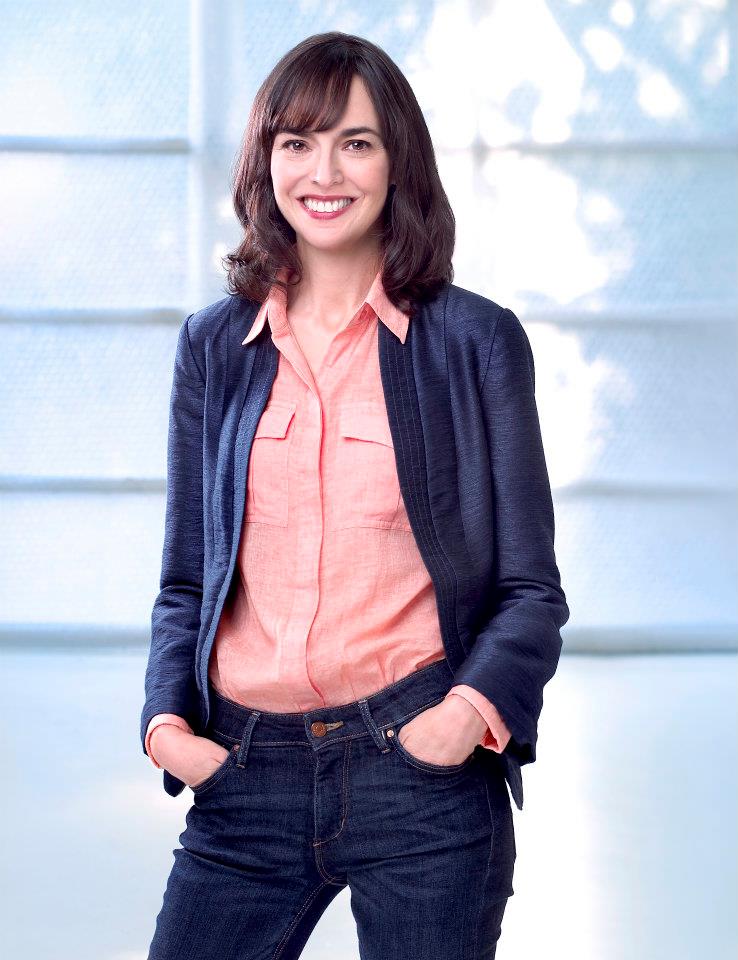
Lenore Skenazy
American blogger
17
APPEARANCES
15
PODCASTS
Sep 29, 2026


Lenore SkenazyGUEST
A woman named Carrie Ann Parkinson, eight months pregnant, takes a walk in the morning, actually a bike ride in the morning with her five-year-old son, Sam, around their gated community.
Lenore SkenazyGUEST
So gated that there are guards everywhere, and they're surrounded by three golf courses, you know, leafy and quiet.
Lenore SkenazyGUEST
And then when they get home, it's about lunchtime, and her son says, well, Mom, can I go back and collect some more goose feathers? It's the favorite thing for him to do.
15 MINS LATER
Michael RameyHOST
So then why is this case important to all families? And can kids really handle this kind of freedom?

21:13

There are these inherent risks of young children being on their own, aren't there?
11 MINS LATER
32:38
And so these are kids that need some supervision when outside and shouldn't be on their own.


Lenore SkenazyGUEST
And it's because, frankly, if you watch TV for three minutes, you will see a kid.
Lenore SkenazyGUEST
Kidnapped certainly if you're watching law and order SVU, you will see a kid kidnap within three minutes But the reality is that it is the rarest of crimes Okay, so so the only thing but my statistics will not move the needle what the only thing that moves the needle is Literally sitting with your anxiety for half an hour while you let your kid walk to the store ride their bike climb a tree go to a friend's house and And it's the same thing as exposure therapy.
6 MINS LATER

Lenore SkenazyGUEST
Uh, uh, to be concerned and worried, I think, is the human condition, and actually, I think one of the reasons that childhood has become so strange is because parents think that they can avoid worry and anxiety by simply being with their kids all the time, which is just not something that works for either generation.
Lenore SkenazyGUEST
But worst-first thinking is actually a phrase I coined, and I'm so happy to hear somebody else use it.
Lenore SkenazyGUEST
Um, but I was trying to counter the idea of stranger danger, and stranger danger, it, it just, it sounds so true, in part because it rhymes.
19 MINS LATER

Chuck MarohnHOST
Lenore, uh, what would, what would normal look like to you in a, in a healthy way?

11 MINS LATER

JeffHOST
Mm-hmm.
Lenore SkenazyGUEST
And the majority of parents, even of 14-year-olds, will not let them leave the block.
Lenore SkenazyGUEST
[laughs] That's, that's... 14 years old, they're like, in two years they're gonna be driving.
Lenore SkenazyGUEST
And, and I, because I've been studying this issue so long, how children lost their independence, I, I have a, a wonderful reference book from 1981.
Lenore SkenazyGUEST
It was part of a whole child development book series, and this was, uh, the book for parents of six-year-olds, and it was called Your Six-Year-Old: Loving and Defiant.
Lenore SkenazyGUEST
And it has a checklist of what neurotypical six-year-olds should be able to do before starting first grade.
JeffHOST
... uh, is, is going through, has gone through as well.

Lenore SkenazyGUEST
And the majority of parents, even of 14-year-olds, [laughs] will not let them leave the block.
Lenore SkenazyGUEST
[laughs] That's, th- 14 years old, they're like, in two years they're gonna be driving.
Lenore SkenazyGUEST
And, and I, because I've been studying this issue so long, how children lost their independence, I, I have a, a wonderful reference book from 1981.
Lenore SkenazyGUEST
It's part of a whole child development book series, and this was, uh, the book for parents of six-year-olds, and it was called Your Six-Year-Old: Loving and Defiant.
Lenore SkenazyGUEST
And it has a checklist of what neurotypical six-year-olds should be able to do before starting first grade.


Lenore SkenazyGUEST
[laughs] And a guy named Peter Gray, who's a professor at Boston College, professor of psychology, who studies the importance of play.
Lenore SkenazyGUEST
Just kids playing with each other, different ages, just goofing around, making things happen.
Lenore SkenazyGUEST
And then Danielle Shuckman, who used to be the chairman of FIRE, which fights for free speech on campus.
Lenore SkenazyGUEST
And we were all concerned exactly about what you're saying, that kids were, um, fragile, right? We'd been treating them as fragile, and that gradually made them fragile.
Lenore SkenazyGUEST
Treat them as incompetent, and gradually they don't realize h- not that they are incompetent, but how competent they could be.
Lenore SkenazyGUEST
And trying to change kids at, you know, when they turn college age, which is what the, uh, my co-founders were originally concerned about, um, is a late-stage intervention.

speaker_4UNKNOWN
... crippled and paralyzed in parenting?
Lenore SkenazyGUEST
parenting?That's, um, basically you've just asked the question that gets me up every day.
Lenore SkenazyGUEST
[laughs] You know, the, the nine-year-old who rode the subway is 27 and married at this point, so it's been a, a long time perseverating [laughs] on that question.
Lenore SkenazyGUEST
Parents have always wanted their kids to survive and thrive and go on to live, you know, happy and productive lives, and also love them and, you know, and, and have joy in their lives as well.
Lenore SkenazyGUEST
And that has not changed, I don't think, since the beginning of time, and probably since the beginning of our species.
6 MINS LATER
speaker_7UNKNOWN
Yeah.


Lenore SkenazyGUEST
So when we started let grow, I didn't want to be a thought leader anymore because people would always nod along.
6 MINS LATER
speaker_10ADVERTISER
of...

Nick GillespieMODERATOR
Mm-hmm
Lenore SkenazyGUEST
But there was a book called Your Six-Year-Old: Loving and Defiant, and it just has a checklist of what normal six-year-olds were doing back in 1981.
Lenore SkenazyGUEST
And it was, "Can you tell your right foot from your left foot? Can you," you know, uh, I don't know, "Have you lost a baby tooth?" And one of the things was, "Does your child go four to eight blocks in any direction to school, to the store, to a friend's house?" So a six-year-old was going eight blocks, and now a 14-year-old is not allowed off their block.

Lenore SkenazyGUEST
Secondly, we're not talking about the experience of race, and it is very important to talk about the experience of both race and class.
Lenore SkenazyGUEST
You know, for our film, we interviewed this, this mother, Nadia, who lived in a predominantly white neighborhood.

Hunter Clarke-FieldsHOST
Um, so you've been talking about this for years, kids n- needing, uh, independence, and so tell us about kinda what's going on right now that feels different culturally and politically.
Lenore SkenazyGUEST
Okay, I can tell you the great stuff, and I can tell you the stuff that makes me go, "Ah, I can't believe it." [chuckles] The, the great stuff, uh, start with that, is that, um, since 2018, excuse me, Let Grow! has helped pass what we call reasonable childhood independence laws, and at this point it's 13 states.
Lenore SkenazyGUEST
You can't let your three-year-old hitchhike home from preschool along, you know, I-85.
Lenore SkenazyGUEST
But there's a difference between real neglect, which is bad, and trusting your kids with some unsupervised time.
24 MINS LATER
Hunter Clarke-FieldsHOST
Right?

LaylaHOST
Again, that's learningtomompodcast.com slash makeup for my go-to staples of clean makeup that I can wear without any worry of transferring harmful chemicals to my kids.
Lenore SkenazyGUEST
But these are the only choices we give them, right? So many kids' lives these days are so structured because we're so worried that our kids will be hurt or fall behind if there isn't an adult with them or if they aren't inside.
8 MINS LATER
LaylaHOST
Yeah.

Whitney Pennington RodgersHOST
Richard R., for instance, says, uh, "Do you have any suggestions on how to constructively help our children let their own children grow without risking undermining their trust in us as caregivers?"
Lenore SkenazyGUEST
caregivers?"I feel for grandparents, 'cause a lot of us can remember, uh, this free range childhood and then we see the kids scheduled within an inch of their lives.
Lenore SkenazyGUEST
You know, Peter Gray had a great TEDx talk about how free play is just so formative for kids.
Lenore SkenazyGUEST
And so maybe if you help the parents see without lecturing them that, like, this free time is not stupid wasted time, interstitial time between the important time of, you know, chess, soccer, and school, but it's when they're learning how to make a friend, how to compromise, how to explain an idea, how to be creative.
Lenore SkenazyGUEST
You know, parents are very concerned about every aspect of their kids' lives, and if they see that free play, unsupervised free play is actually educational and will get their kids ahead, um, then it becomes something that's sort of speaking their language.
Whitney Pennington RodgersHOST
Mm-hmm

speaker_2SOUNDBITE_SPEAKER
[laughs]
Lenore SkenazyGUEST
But, but the upshot is that we are spending way more time with our kids than our parents spent with us, usually helping them do things that they could do on their own.
Lenore SkenazyGUEST
And the, call it the adult takeover of childhood because it, it's so vast that the, uh, what is it? University of Michigan did a study two years ago, and they found that parents want to give their kids independence.
Lenore SkenazyGUEST
They recognize its importance, but the majority of parents of kids age nine to 11, which is tweens, right, kinda old, um, will not let them play at the park with a friend, will not let them walk to a friend's house.
Lenore SkenazyGUEST
And if they're at the, you know, the store shopping together, only 50% will let their kid go to another aisle.
26 MINS LATER
speaker_3UNKNOWN
[laughs]
Lenore SkenazyGUEST
You got, especially if you got, like, a, a bunch of kids of different ages, like, like, the Peanuts gang.
Lenore SkenazyGUEST
Well, they have to decide what they're gonna play, and then they have to make the teams kinda even, a lot of negotiating, and then you have to keep the game going even when there are arguments, which there will be.
Lenore SkenazyGUEST
So along the way, they're learning, hmm, how to make something happen, [laughs] how to get by, and executive function, focus, compromise, you know, communication, just all the skills they need to be a functioning human being.
Lenore SkenazyGUEST
And if, if, like, a, a 12-year-old ends up pitching to a five-year-old, which would never, ever happen in adult organized sports, well, there's, there's no glory in striking out [laughs] a kindergartner, right? So the older kid throws the ball kinda gently, and the little kid taps it, and the older one goes, "My God, it's a home run." [laughs] You know, okay? A- a- and the little kid is so ecstatic, right? But the older one is, too, 'cause he's doing something new.
Lenore SkenazyGUEST
He is learning how to empathize and how to be generous, how to be an adult, and that's the most teachable moment of all.
speaker_3UNKNOWN
[applause]

Lenore SkenazyGUEST
But it wasn't every single second of the day that the kid was not in school.
Lenore SkenazyGUEST
And by the way, schools beam all the information out to parents all the time throughout the day too, so they know exactly what the kid got on their Spanish test, and if they're in preschool, they know if they ate all their orange segments or all their nuggets.
Lenore SkenazyGUEST
So- so the three worlds got mashed together, and the result is, once again, these depressed kids 'cause they have no autonomy, no agency, and the depressed parents 'cause they're always with their kids.
Lenore SkenazyGUEST
And- and Wendy Mogel said it best, she wrote The Blessings of a Skin Deep, and she wrote that when you look at anything close up, you see the flaws, right? And now we're so close to our kids that we see everything they're doing that's unsafe, or mean, or slow, or suboptimal, and so then we jump in to fix it, at which point they don't fix it, and so they are sitting back.
Lenore SkenazyGUEST
They're sort of the passengers in their lives, and the parents are taking control.
9 MINS LATER

Yascha MounkHOST
They panic and they think, "But what if? You know, what if the risk is higher than she said? What if some, th- th- you know, the risk is really low but something, some other horrible thing happened to me? What if there's no external risk but the cops will be called and, and I'll have to answer to them, and CPS is gonna be on my back?" For the people who perhaps rationally say, "Look, absolutely I wanna go do this," and have trouble getting themselves there because it's such an emotive issue, what would you say to them?