Oct 3, 2026 · 50 min · 14 segments
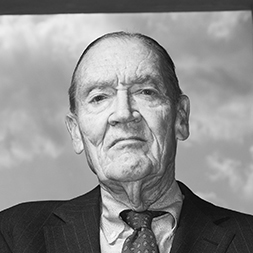
**In this 2012 interview Vanguard’s legendary founder John “Jack” Bogle shared his journey to transform mutual funds to make investing cheaper and better for individual investors, as well as the key…
John C. BogleGuestConsuelo MackHostAnd you talk about the distinction in the book that you talk about this clash of cultures is that there's an investment state of mind and an investment profession and that you're saying that profession has now become a business and it's become one of speculation.
So what's happened? Take us through the evolution because, again, you started in 1951 when it was small and it was fiduciary and it was a professional investment business.

Okay, run by professionals with marketing divorced from, Wellingham happened to own a subsidiary that did the distribution.

But many funds, big funds in the business, had nothing to do with distribution.

It was an outside distributor working on its own, making money off sales commissions and sales loads in those days by selling the fund.

And to just moderate the phrase you mentioned a minute ago, in those days it was a profession with aspects of a business.

It was a great big industry run by not investment professionals, but by corporate managers, and in far too great an extent.

And it also happens along the way that instead of one fund, you now have a large fund complex, may have 200, 250, even 300 different funds.

How can a fund director have fiduciary duty to 300 different funds? Indeed, a little bit tongue-in-cheek, how many mutual funds directors can name all the funds their directors have? And I will tell you the answer to that question is zero.

How many fund directors can tell you the number of funds that they're a director of? And I guess the answer to that might be a tenth of one percent.

So the idea of fiduciary duty has been superseded by this idea of marketing, making things that will sell rather than selling what we make is the way I phrase it.

And so a bunch of investors seem to want some new kind of a leveraged thing or a short-term focused fund.

What is marketing? Marketing, the classic definition is finding out what the public wants and giving it to them.

I could spend a hundred years trying to find a better definition of what a mutual fund company should not be.
So what should a mutual fund company be? And you founded Vanguard, which is now a very large mutual fund company, and it has many different funds.
And you talk about the distinction in the book that you talk about this clash of cultures is that there's an investment state of mind and an investment profession and that you're saying that profession has now become a business and it's become one of speculation.
So what's happened? Take us through the evolution because, again, you started in 1951 when it was small and it was fiduciary and it was a professional investment business.

Okay, run by professionals with marketing divorced from, Wellingham happened to own a subsidiary that did the distribution.

But many funds, big funds in the business, had nothing to do with distribution.

It was an outside distributor working on its own, making money off sales commissions and sales loads in those days by selling the fund.

And to just moderate the phrase you mentioned a minute ago, in those days it was a profession with aspects of a business.

It was a great big industry run by not investment professionals, but by corporate managers, and in far too great an extent.

And it also happens along the way that instead of one fund, you now have a large fund complex, may have 200, 250, even 300 different funds.

How can a fund director have fiduciary duty to 300 different funds? Indeed, a little bit tongue-in-cheek, how many mutual funds directors can name all the funds their directors have? And I will tell you the answer to that question is zero.

How many fund directors can tell you the number of funds that they're a director of? And I guess the answer to that might be a tenth of one percent.

So the idea of fiduciary duty has been superseded by this idea of marketing, making things that will sell rather than selling what we make is the way I phrase it.

And so a bunch of investors seem to want some new kind of a leveraged thing or a short-term focused fund.

What is marketing? Marketing, the classic definition is finding out what the public wants and giving it to them.

I could spend a hundred years trying to find a better definition of what a mutual fund company should not be.
So what should a mutual fund company be? And you founded Vanguard, which is now a very large mutual fund company, and it has many different funds.
The rest of this transcript — segmented and speaker-labeled, so you land on the exact moment something was said
Search every transcript — by keyword, by phrase, or by meaning, across every show Radar indexes
Trends — what is surging across podcasts, measured against its own baseline
Alerts — when a name you follow appears in a newly indexed episode
No account is needed to search Radar.