Oct 9, 2026 · 15 min · 12 segments
Crew-13 has arrived at the International Space Station, Crew-12 is back on Earth, and astronomers have traced a fast radio burst whose signal travelled for more than ten billion years before reaching…
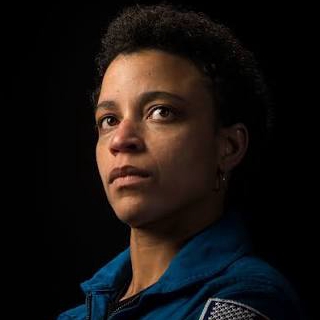
Onboard were NASA astronauts Jessica Watkins and Luke Delaney, Canadian astronaut Joshua Kutryk, and Russian cosmonaut Sergei Teryatnikov.
Their journey from Florida to the International Space Station took less than eight hours.
Eight hours sounds like a fairly ordinary length of time.
You could sleep for eight hours, spend eight hours at school, or fly from London most of the way across the Atlantic.
But these astronauts spent those hours chasing something traveling at roughly 28,000 kilometers per hour.
That is the strange thing about docking in orbit.
You do not simply fly upward until you reach the station.
You have to reach the right altitude, at the right speed, on the right orbit, at exactly the right time.
The station is not waiting for you.
So, an orbital rendezvous is a little like trying to jump onto a train that never stops and is traveling several kilometers every second.
Except the train is in space.
And while Crew 13 was beginning its stay, another crew was preparing to leave.
Jessica Mayer, Jack Hathaway, Sophie Adonat, and Andrey Fedyaev climbed into their Dragon spacecraft, undocked from the station, and began the long fall home.
And I do mean fall.
It simply has so much sideways speed that the curved Earth keeps falling away beneath it.
That changes the shape of its orbit.
And eventually its path intersects the atmosphere.
Then everything changes very quickly.
The spacecraft goes from the vacuum of orbit to atmospheric friction.
The rest of this transcript — segmented and speaker-labeled, so you land on the exact moment something was said
Search every transcript — by keyword, by phrase, or by meaning, across every show Radar indexes
Trends — what is surging across podcasts, measured against its own baseline
Alerts — when a name you follow appears in a newly indexed episode
No account is needed to search Radar.