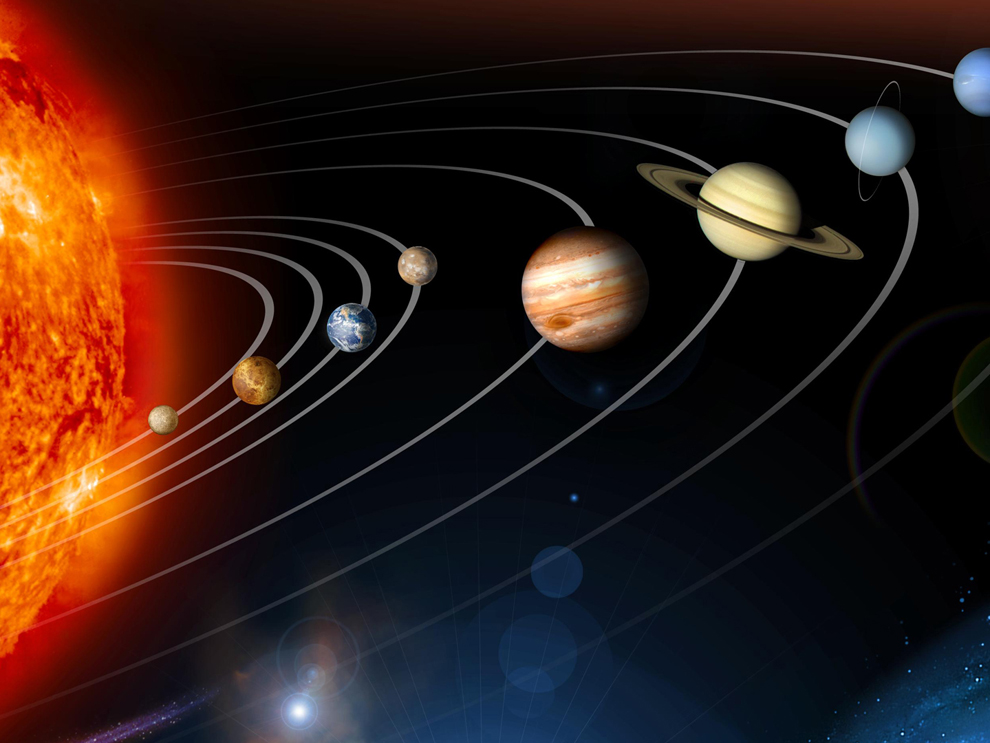
Solar System
Star systemWikipedia
1.6k
MENTIONS
133
EPISODES
70
PODCASTS
Search complete. 1628 mentions across 133 episodes found for "Solar System".
Nov 22, 2026

Hannah WakefordGUEST
I'm British, so I actually love clouds, which is quite helpful.
Hannah WakefordGUEST
But actually every single planet in our solar system, which has a stable atmosphere, has clouds of some kind.
Hannah WakefordGUEST
Now that can be from sulfuric acid clouds of Venus, which would melt your skin and it's not a very nice place to go, all the way out to Jupiter's ammonia clouds swirling around and creating storms that we can see through our telescopes.
Hannah WakefordGUEST
And even Pluto, the second largest dwarf planet in our solar system, which the New Horizons spacecraft flew by in 2015 and saw that it had an atmosphere, and in that atmosphere there were clouds.
Hannah WakefordGUEST
So it comes as no surprise that there are clouds absolutely everywhere.
Hannah WakefordGUEST
Our question then comes to exoplanets.
Hannah WakefordGUEST
We have clouds in every atmosphere, so why don't they? Now, the difference between our planets and some of the planets that we're looking at is that they're very, very alien indeed.
Hannah WakefordGUEST
Now, one of these planets that we look at is called a hot Jupiter.

Chris McKayGUEST
And I'll give two reasons.
Chris McKayGUEST
One is that If we find evidence of what I call a second genesis of life here in our solar system, that will allow us for the first time to be able to do comparative biochemistry.
Chris McKayGUEST
As you know, all life on Earth has the same biochemistry, the same genetics.
Chris McKayGUEST
We only have one example of life.
Chris McKayGUEST
If we found another example, we'd be able to compare and contrast our life with another type of life.
Chris McKayGUEST
Also, philosophically, it would tell us that life is common in the universe.
Chris McKayGUEST
If right here in our own little solar system, life started twice independently, then we'd be pretty sure that life is widespread in the universe.
Chris McKayGUEST
And this is interesting, and I've added my own little editorial comment.

LuetinHOST
We also need to consider the general region of space we are in.
LuetinHOST
Are we considering somewhere like Badab, Necromunda, a broader area such as Ultramar? What about the Sol system itself? The possibilities are innumerable.
LuetinHOST
But to keep things moving today, I likely would play it safe and choose somewhere like Ultramar, which is pretty stable, holds you the highest possibility of being pretty well ordered.
LuetinHOST
And while this could mean, again, problems blending into the existing order of a world, it's likely preferable to one where you could fall into trouble as part of some randomly sparked conflict or other localized complication.
1 HR 1 MIN LATER
LuetinHOST
Amidst vast, thronging crowds, you could disappear.
LuetinHOST
You could immerse yourself in those whose souls have been pulled across the galaxy in this wish to see, even fleetingly, the golden towers of the palace.
LuetinHOST
But if you also want to have an opportunity to witness this marvel, the jewel in the crown of the Imperium, you would need to ensure that you arrived somehow upon Terra itself, and not become trapped on a pilgrim ship waiting for its arrival into the Sol System, because for many, that arrival may never come.
LuetinHOST
Most pilgrims to Terra die during the warp journey, or they die of old age, or through the loss of their ships in the void.
LuetinHOST
which is considerably advantageous if you're wanting to ignore the disruptions caused by those in the warp.
LuetinHOST
You could imagine that if the Imperium had had any kind of technology similar to this, the end of the Heresy could have been significantly different because the Ultramarines would have simply been able to travel straight to the Sol System.
LuetinHOST
So essentially, the Pharos is a device designed to give the Necrons a means by which to travel faster than light and communicate throughout the galaxy.
LuetinHOST
The device manipulates the fundamental laws of physics to connect multiple parts of reality together, enabling FTL creating a portal to a distant location in space that is keyed into the mind of its user.
Skyler PalatnickGUEST
It's about 1.03 solar masses and 0.99 solar radii.
Skyler PalatnickGUEST
So this is really cool because we have a warm Neptune orbiting a sun-like star, which is, there's no warm Neptunes in our solar system.
Skyler PalatnickGUEST
So that makes it exciting.
Skyler PalatnickGUEST
And finally, for number three, the observability.
David KippingHOST
It has the same mass, the same radius, the same temperature.
David KippingHOST
It lives in the same part of the galaxy and is a single star, just like us.
David KippingHOST
So one can't help but wonder, how did it end up so different? And so when we look at this planet that has the same mass and radius as that of Neptune, it's reasonable to postulate that it presumably formed in the outskirts of its solar system, just like Neptune did.
David KippingHOST
I mean, that's where all the ices and gas are to form these ice giants after all.

speaker_0HOST
Occorrono esattamente 33 anni solari affinché la Luna e il Sole tornino a occupare la medesima posizione relativa sulla volta celeste, ristabilendo la sincronizzazione perfetta delle fasi lunari e degli allineamenti planetari.
speaker_0HOST
Nella serie, la macchina temporale portatile ideata da Tannhaus integra questo allineamento cosmico attraverso risonatori al cesio-137, legando l'apertura del varco alla configurazione gravitazionale macroscopica del sistema solare.
speaker_0HOST
Dark trascende il genere della fantascienza classica trasformando l'ansia deterministica in un dramma cosmico dove il libero arbitrio si dissolve nell'infinita geometria di un cerchio senza principio né fine.
speaker_0HOST
Se ti interessano solo alcuni degli argomenti di The Digital Worlds, puoi cercare istantaneamente tra tremila monografie audio o scorrere i singoli articoli, immagini e video su microsmeta.com.

Alex McColganHOST
It has taken Voyager 1 49 years, 2 months, 11 days, and an epic list of firsts to reach this distance of roughly 26 billion kilometres.
Alex McColganHOST
That's about 64,000 times further than the maximum distance from the Earth to the Moon, a distance that is big enough to comfortably line up every planet in the solar system side by side.
Alex McColganHOST
And along the way, Voyager 1's colossal journey completely transformed our understanding of the solar system.
Alex McColganHOST
So before we find out what it's doing today, let's take a quick look back at its greatest hits.
Alex McColganHOST
The universe is full of awe-inspiring views, and Voyager has brought us some great images.
speaker_1ADVERTISER
Enjoy Coca-Cola.
Alex McColganHOST
Voyager 1's unfathomably long journey began on the 5th of September 1977 at Cape Canaveral in Florida.
Alex McColganHOST
Along with its twin spacecraft, Voyager 2, which had launched two weeks earlier, Voyager 1 had been tasked with a hugely ambitious mission, to explore the outer planets and the very edge of the solar system.

speaker_0NARRATOR
It was the first.
speaker_0NARRATOR
It sent back a handful of blurred pictures and many measurements, and it went on its way out of the solar system.
speaker_0NARRATOR
A year later came Voyager 1, and nine months after that its twin, Voyager 2.
speaker_0NARRATOR
The Voyagers changed everything.
speaker_0NARRATOR
Scientists have made similar shapes in the laboratory in spinning tanks of water, where a fast current running between slower water breaks into a polygon of regular sides.
speaker_0NARRATOR
But on Saturn, it has lasted for at least 40 years, and it is wider than two Earths.
speaker_0NARRATOR
The Voyagers flew past and went on out of the solar system.
speaker_0NARRATOR
They are still traveling today, but that is a story for another night.

TessHOST
Hello, and welcome to Time Across the Solar System.
TessHOST
And yes, it's me, Tess.
TessHOST
I finally managed to return to work on my podcast after a rather busy spell dealing with other things here on Earth.
TessHOST
We will also explore the factories building tomorrow's rockets, the mysteries of dark energy, and the difficult question of how many satellites we really need above our heads.
TessHOST
Ten stories, one universe, and plenty to discover.
TessHOST
I'm Tess, and this is Time Across the Solar System.
TessHOST
Let's begin.
TessHOST
Our first story takes us to the smallest planet in our solar system.

Michael T. WilliamsNARRATOR
Water expands as it freezes, causing ice to float and form a protective, heat-preserving crust.
Michael T. WilliamsNARRATOR
This same effect also occurs well beyond Earth, in the far reaches of the solar system.
Michael T. WilliamsNARRATOR
Among the gas giant planets Jupiter, Saturn, Uranus, and Neptune, may reside several moons that harbor vast subsurface oceans, such as Europa, Enceladus, Ariel, and Triton.
Michael T. WilliamsNARRATOR
Could one of these also host life? Currently en route to Europa are two planetary missions that scientists hope will address that very question.
Michael T. WilliamsNARRATOR
As we know it, life takes millions to billions of years to develop, if the right initial conditions arise and stabilize.
Michael T. WilliamsNARRATOR
Humanity may arrive too soon or too late for Europan life.
Michael T. WilliamsNARRATOR
For now, let's keep our tackle boxes on Earth and see what future missions may tell us about alien oceans in our solar system.
Michael T. WilliamsNARRATOR
Music written and produced by Kenny Mihelich.
123 more episodes mention Solar System.
Create an account to see the whole feed, search across every transcript, and follow the entities you care about.