Aug 16, 2026 · 49 min · 8 segments
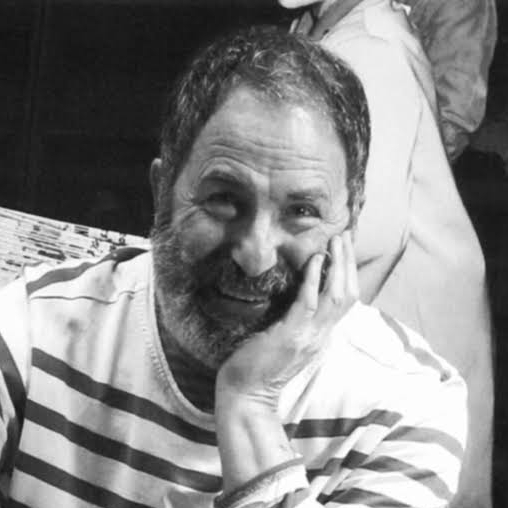
In today's episode Roland-Philippe Kretzschmar meets with design legend Michele De Lucchi. Born an identical twin, he grew up being treated, as he remembers it, almost as half of the same child. At…
Michele De LucchiGuest
Roland-Philippe KretschmarHostbut then you also grew up in a time and age where let's say there was maybe a counter movement to to against romanticism and there was a lot of rationality and you know different sorts of revolutions taking place at different parts of society and when you were a young student let's say did you already form a radical mindset did you have it with you or was it something that developed later and where did that come from

it's very funny because i'm thinking to these topics just in this time of my life i'm not i'm not old i'm but another young.

So in some way, I'm thinking very much how artistic thinking is coming up.

The opposites, the extremities of everything are very important to decide the span in which you are free to express yourself.

And opposites, I mean, light and dark, right and wrong, nice and bad, tasty and unsalted, all these extremities are in some way the energy of life.

These extremities, they are dealing each other in a way that they produce energy.

And coming back to rationality and to rationalism and radical time in the 70s, I think that in some way it was something like that.

Because at school I was just learning and studying what is rational, what is functional, clear surface, very simple and understandable shapes.

Not to use extra languages at all, because extra languages can can create a distortion about the perception of objects and buildings.

So I thought, but which can be the alternative, the opposite of this rational thinking? And I came out with, we can say, love for radical approach with something more provocative, as you said, something that has an intellectual...

provocation inside and it can help you to understand more clearly where is coming the shape of the world.
I mean, I'm born in 1977, so of course I have no recollection of the 70s other from what I can read about it.
My own perception is that the whole decade, and of course also the 1960s, were very radical decades.
There was a lot of shifts in society taking place, from the civil rights movement to how one viewed relationships to... political you know restructurings etc etc so for me the the 1970s were by default radical but how does one how is one radical during a decade that is by default radical

no in some way we were fighting very much against that conventionality in that time it was very very

very dense and heavy fog of conventionality because it was really was the time of bourgeois and bourgeois have specific roles that now we're no longer speaking about bourgeois at all but we have always in some way the feeling that when something is conventional is not fully right because it is not the conventionality the right way to to to activate a cultural energy.
speaking about the Marxist bourgeoisie? How did you define the bourgeoisie?
but then you also grew up in a time and age where let's say there was maybe a counter movement to to against romanticism and there was a lot of rationality and you know different sorts of revolutions taking place at different parts of society and when you were a young student let's say did you already form a radical mindset did you have it with you or was it something that developed later and where did that come from

it's very funny because i'm thinking to these topics just in this time of my life i'm not i'm not old i'm but another young.

So in some way, I'm thinking very much how artistic thinking is coming up.

The opposites, the extremities of everything are very important to decide the span in which you are free to express yourself.

And opposites, I mean, light and dark, right and wrong, nice and bad, tasty and unsalted, all these extremities are in some way the energy of life.

These extremities, they are dealing each other in a way that they produce energy.

And coming back to rationality and to rationalism and radical time in the 70s, I think that in some way it was something like that.

Because at school I was just learning and studying what is rational, what is functional, clear surface, very simple and understandable shapes.

Not to use extra languages at all, because extra languages can can create a distortion about the perception of objects and buildings.

So I thought, but which can be the alternative, the opposite of this rational thinking? And I came out with, we can say, love for radical approach with something more provocative, as you said, something that has an intellectual...

provocation inside and it can help you to understand more clearly where is coming the shape of the world.
I mean, I'm born in 1977, so of course I have no recollection of the 70s other from what I can read about it.
My own perception is that the whole decade, and of course also the 1960s, were very radical decades.
There was a lot of shifts in society taking place, from the civil rights movement to how one viewed relationships to... political you know restructurings etc etc so for me the the 1970s were by default radical but how does one how is one radical during a decade that is by default radical

no in some way we were fighting very much against that conventionality in that time it was very very

very dense and heavy fog of conventionality because it was really was the time of bourgeois and bourgeois have specific roles that now we're no longer speaking about bourgeois at all but we have always in some way the feeling that when something is conventional is not fully right because it is not the conventionality the right way to to to activate a cultural energy.
speaking about the Marxist bourgeoisie? How did you define the bourgeoisie?
The rest of this transcript — segmented and speaker-labeled, so you land on the exact moment something was said
Search every transcript — by keyword, by phrase, or by meaning, across every show Radar indexes
Trends — what is surging across podcasts, measured against its own baseline
Alerts — when a name you follow appears in a newly indexed episode
No account is needed to search Radar.