Jul 8, 2026 · 24 min · 13 segments
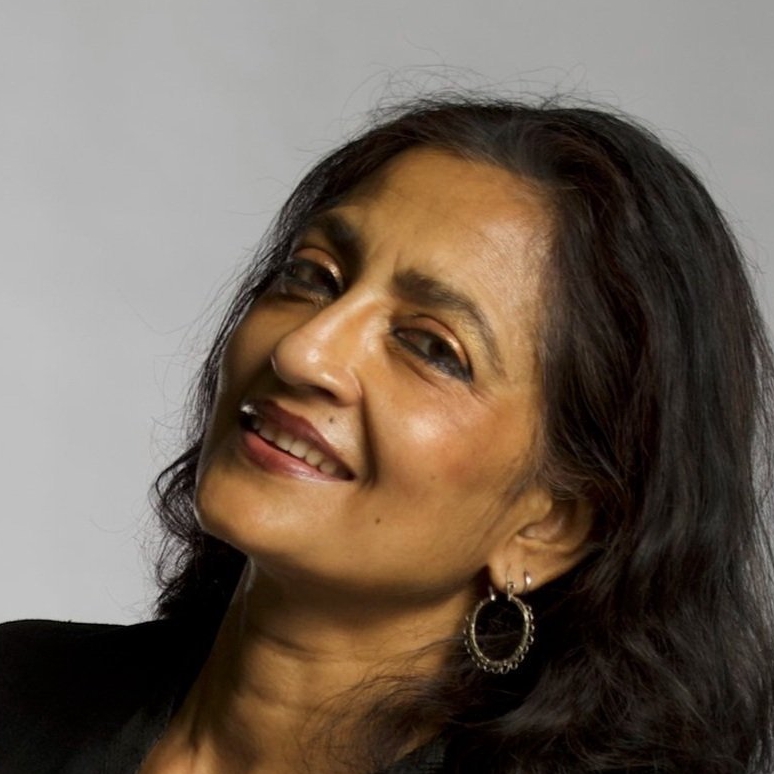
When you dance in protest, or to ask for justice, you’re putting your body itself on the line. And our guest on this episode says if you can move, you can dance. Ananya Chatterjea is a choreographer…
Ananya ChatterjeaGuest
Michelle Tyreen JohnsonHostSo you created a justice and community-oriented methodology of choreography.

So, you know, this idea of making dance as a thing in itself, separate from the people, did not appeal to me.

So I wanted to know what are the stories of these black and brown women and femme people from around the world? What are our stories? How do we feel like sharing our stories, our dreams, our hopes? our struggles and our joys.

So that's how it came to be like listening to people, chatting with people became the source material for making work.

So the methodology of dance making began by sort of story weaving, by collecting, talking to each other, weaving together our story fragments.

which is both about our, you know, both about our dreams and about, you know, so the present condition of injustice and about the justice streams we have.
Man, you sound like you're very thoughtful in how you do all of that.
So let me just speak for myself when I say that when I think of protest or social justice, art, I don't typically think of dance.
So I would love it if you could tell me why I am completely short-sighted on that one.

So our bodies right at the center of all the experience of injustice is also our bodies experiencing it.

The moment we look at each other, we recognize the, you know, we recognize things about the body on which there are layers of stereotypes and there are layers of experience, right? We experience the world differently as black and brown peoples.

We experience the world differently because of our gender, because of our sexual orientation, because of ability, all these issues.

The body's at the center, at the center of all these ways, all these sort of vectors of identity that we have and the way in which experience shapes us.

You know, I was thinking the other day that if you can't see someone's face clearly, you you can usually get an idea of what their age is by how they move.
whether you're walking behind somebody or seeing someone on the side.
So you created a justice and community-oriented methodology of choreography.

So, you know, this idea of making dance as a thing in itself, separate from the people, did not appeal to me.

So I wanted to know what are the stories of these black and brown women and femme people from around the world? What are our stories? How do we feel like sharing our stories, our dreams, our hopes? our struggles and our joys.

So that's how it came to be like listening to people, chatting with people became the source material for making work.

So the methodology of dance making began by sort of story weaving, by collecting, talking to each other, weaving together our story fragments.

which is both about our, you know, both about our dreams and about, you know, so the present condition of injustice and about the justice streams we have.
Man, you sound like you're very thoughtful in how you do all of that.
So let me just speak for myself when I say that when I think of protest or social justice, art, I don't typically think of dance.
So I would love it if you could tell me why I am completely short-sighted on that one.

So our bodies right at the center of all the experience of injustice is also our bodies experiencing it.

The moment we look at each other, we recognize the, you know, we recognize things about the body on which there are layers of stereotypes and there are layers of experience, right? We experience the world differently as black and brown peoples.

We experience the world differently because of our gender, because of our sexual orientation, because of ability, all these issues.

The body's at the center, at the center of all these ways, all these sort of vectors of identity that we have and the way in which experience shapes us.

You know, I was thinking the other day that if you can't see someone's face clearly, you you can usually get an idea of what their age is by how they move.
whether you're walking behind somebody or seeing someone on the side.
The rest of this transcript — segmented and speaker-labeled, so you land on the exact moment something was said
Search every transcript — by keyword, by phrase, or by meaning, across every show Radar indexes
Trends — what is surging across podcasts, measured against its own baseline
Alerts — when a name you follow appears in a newly indexed episode
No account is needed to search Radar.