Sep 1, 2026 · 23 min · 10 segments
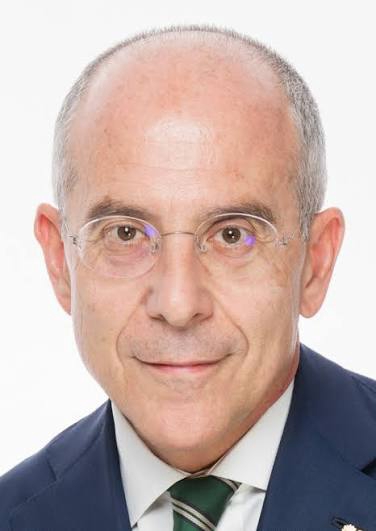
In a 40-year career, Francesco Starace has become one of the leading figures in the energy transition – first as CEO at Enel Group, and now as a Partner at specialist investment EQT Group. In a…
Francesco StaraceGuest
Trevor GardnerHost
I can say I'm an optimist on this transition because it's something that has been going on forever.

The transition is intrinsic in the energy field since its inception because technology drives it and technology is evolving.

The difference is that this time the transition is fast enough for us to realize it in almost real time.

So we can appreciate the change year after year after year, rather decades after decade after decade, and we see this in an accelerated way.

One is the improvement in computing power which enabled designers to simulate and refine their products fantastically and increasingly better and the other force is the improvement in material science and the combination of these two things explain deep down why certain things got competitive all of a sudden that were not competitive before and why this change and that change and that change, all of a sudden becomes economically possible, easy to implement, less risky, and therefore is adopted by everybody.

So why am I optimistic? Because I see these forces at work now, not just in the energy field but in other fields in general in the industry and the economy in fact everybody is always surprised by the speed at which this thing happens it's it's it's never linear it's a constant of this it's not linear and therefore it gives you a lot of uncertainty and keeps you on the edge but at the end it improves performance it makes everything more efficient less energy hungry and that's why i'm i'm optimistic

I can say I'm an optimist on this transition because it's something that has been going on forever.

The transition is intrinsic in the energy field since its inception because technology drives it and technology is evolving.

The difference is that this time the transition is fast enough for us to realize it in almost real time.

So we can appreciate the change year after year after year, rather decades after decade after decade, and we see this in an accelerated way.

One is the improvement in computing power which enabled designers to simulate and refine their products fantastically and increasingly better and the other force is the improvement in material science and the combination of these two things explain deep down why certain things got competitive all of a sudden that were not competitive before and why this change and that change and that change, all of a sudden becomes economically possible, easy to implement, less risky, and therefore is adopted by everybody.

So why am I optimistic? Because I see these forces at work now, not just in the energy field but in other fields in general in the industry and the economy in fact everybody is always surprised by the speed at which this thing happens it's it's it's never linear it's a constant of this it's not linear and therefore it gives you a lot of uncertainty and keeps you on the edge but at the end it improves performance it makes everything more efficient less energy hungry and that's why i'm i'm optimistic
The rest of this transcript — segmented and speaker-labeled, so you land on the exact moment something was said
Search every transcript — by keyword, by phrase, or by meaning, across every show Radar indexes
Trends — what is surging across podcasts, measured against its own baseline
Alerts — when a name you follow appears in a newly indexed episode
No account is needed to search Radar.