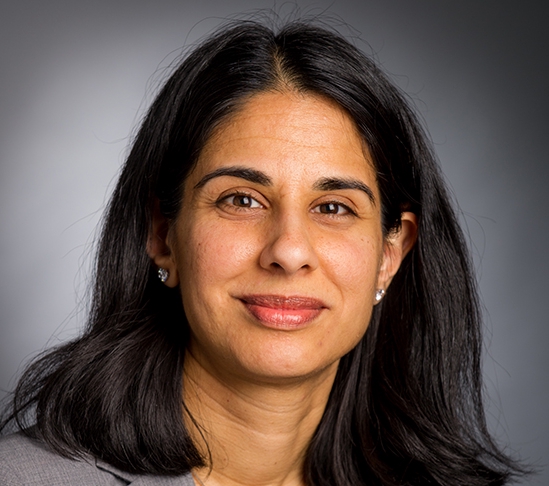
New First-Line Treatment: Metastatic Triple-Negative Breast Cancer with Dr. Sara Tolaney
Aug 19, 2026 · 32 min · 11 segments
This episode is sponsored by Gilead Sciences. Gilead had no involvement or input in the podcast content. Gilead is working to transform how cancer is treated. We are innovating with next-generation…
This episode is sponsored by Gilead Sciences. Gilead had no involvement or input in the podcast content. Gilead is working to transform how cancer is treated. We are innovating with next-generation therapies, combinations, and technologies to deliver improved outcomes for people with cancer. From antibody drug conjugates and small molecules to cell therapy-based approaches, our portfolio and pipeline assets are creating new possibilities for people with cancer. Dr. Sara Tolaney, Chief of the Division of Breast Oncology at Dana-Farber Cancer Institute, returns to Patient From Hell to explain the ASCENT-04/KEYNOTE-D19 study, the phase 3 trial she led as principal investigator, and what it changes for people living with metastatic triple-negative breast cancer.For years, the most effective drugs for metastatic TNBC were only available after first-line chemotherapy had already failed. The problem, as Dr. Tolaney puts it plainly, is that many patients never reach a second line of treatment at all. ASCENT-04 asked whether moving an antibody-drug conjugate to the front, paired with immunotherapy, would change that. Median progression-free survival improved from 7.8 months to 11.2 months, and treatment responses lasted significantly longer. UPDATE: Since this recorded conversation, the FDA has acted on the data discussed in this episode. On May 22, 2026, Datopotamab Deruxtecan (Datroway) was approved for first-line metastatic TNBC in patients who are not candidates for immunotherapy. On June 24, 2026, Sacituzumab Govitecan (Trodelvy) was approved for first-line use both as a single agent and in combination with pembrolizumab for PD-L1-positive disease (CPS ≥10). Consult with your care team for the most recent indications and availability of these treatment options. 00:00 The trial that moves the best drugs first 00:31 Welcome back, Dr. Sara Tolaney 00:40 What ASCENT-04 set out to solve 02:00 Why many patients never reach second-line treatment 02:50 What PD-L1 status means for your treatment 04:12 The result: 7.8 to 11.2 months 05:29 What is an antibody-drug conjugate (ADC)? 06:33 Why TROP-2 is the target in triple-negative breast cancer 07:24 How immunotherapy works: taking the brakes off the T cell 09:01 Who was eligible for the trial 10:05 What "controlling" cancer actually means 11:44 Progression-free survival vs. duration of response 13:37 Dr. Tolaney reconsiders: what ASCENT-03 showed 15:51 How trial data reaches your oncologist's office 18:21 The testing checklist after a metastatic diagnosis 19:59 First-line treatment options today 22:27 The new paradigm: ADCs as the first-line backbone 23:51 What comes second line 25:29 Why tumor sequencing matters: somatic BRCA, TMB, trials 27:24 Twenty years of change in triple-negative breast cancer 29:28 Advice for a newly diagnosed patient Sara M. Tolaney, MD, MPH is Chief of the Division of Breast Oncology and Associate Director of the Susan F. Smith Center for Women's Cancers at Dana-Farber Cancer Institute, and Associate Professor of Medicine at Harvard Medical School. She trained at Princeton University, UC San Francisco, Johns Hopkins University, and Dana-Farber Cancer Institute, and holds a Masters in Public Health (MPH) from Harvard University. She serves on the National Cancer Institute (NCI) Breast Cancer Steering Committee and is Vice Chair for Late-Stage Development in Breast Cancer for the Alliance for Clinical Trials in Oncology. She was principal investigator of ASCENT-04. 🔗 Connect with Patient From HellWebsite: https://www.mantacares.comDisclaimerThis podcast is intended for educational and informational purposes only and should not be considered medical advice. Always consult a qualified healthcare professional regarding diagnosis, treatment, or medical decisions.
This episode is sponsored by Gilead Sciences. Gilead had no involvement or input in the podcast content. Gilead is working to transform how cancer is treated. We are innovating with next-generation…