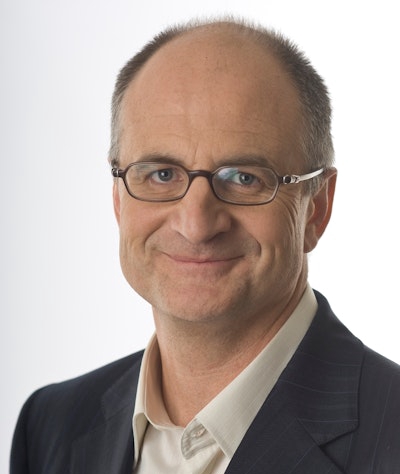
James O'LoghlinHost
There's this interesting thing of fake claiming, like I guess as I understand it, you said you've got a chronic anxiety disorder, but you don't sound like you do at all.

And then there is the, we'll perhaps leave the last part of her question, which is about self-diagnosing.
Now, James, I had to go and seek advice about this because I've had trouble getting my head around it as to what exactly it is.
So apparently, I hope I've got this right, Lots of people self-diagnose, as you said.
Then they post that online on their own social media, their own particular things.
And as a consequence of that, expect others to to respond to it in a positive way.
They accept to take it at face value and then treat them differently as a consequence of the disorder that they have self-diagnosed based on those things.
So the fake claiming is the person seeking to undermine the self-diagnosis of the other and therefore create, in the terrible world that we're now in, this sort of conflict in social media online.
I think this is where we get into those areas where people are so concerned about the negative effects of social media and these kind of interactions between young people.
I'm claiming on the basis, not a professional, but of self-diagnosis because I diagnosed myself a certain thing.
And now this other person or group of people is beating that person up and saying they're fake claiming.
And that then leads to a whole lot of third party, again, people then taking on the person who is seeking to undermine the person in the first party.

There's this interesting thing of fake claiming, like I guess as I understand it, you said you've got a chronic anxiety disorder, but you don't sound like you do at all.

And then there is the, we'll perhaps leave the last part of her question, which is about self-diagnosing.
Now, James, I had to go and seek advice about this because I've had trouble getting my head around it as to what exactly it is.
So apparently, I hope I've got this right, Lots of people self-diagnose, as you said.
Then they post that online on their own social media, their own particular things.
And as a consequence of that, expect others to to respond to it in a positive way.
They accept to take it at face value and then treat them differently as a consequence of the disorder that they have self-diagnosed based on those things.
So the fake claiming is the person seeking to undermine the self-diagnosis of the other and therefore create, in the terrible world that we're now in, this sort of conflict in social media online.
I think this is where we get into those areas where people are so concerned about the negative effects of social media and these kind of interactions between young people.
I'm claiming on the basis, not a professional, but of self-diagnosis because I diagnosed myself a certain thing.
And now this other person or group of people is beating that person up and saying they're fake claiming.
And that then leads to a whole lot of third party, again, people then taking on the person who is seeking to undermine the person in the first party.
The rest of this transcript — segmented and speaker-labeled, so you land on the exact moment something was said
Search every transcript — by keyword, by phrase, or by meaning, across every show Radar indexes
Trends — what is surging across podcasts, measured against its own baseline
Alerts — when a name you follow appears in a newly indexed episode
No account is needed to search Radar.