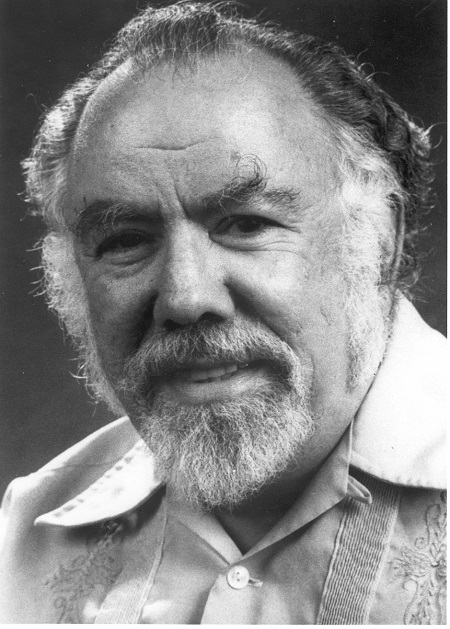
Catherine Compton-LillyGuestfrom kindergarten all the way to high school, what traditional conceptions and practices need debunking or rethinking.
But let's dive into the most controversial part, which has to do with how young kids are taught to read.
In an article you wrote with two co-authors a couple years ago in the journal Reading Teacher, you wrote, continuing to focus only on phonics is educational malpractice.
Now, you say this at a time when there is a juggernaut known as the science of reading that is focusing explicitly on the idea that kids have been sold short because they haven't gotten enough phonics.
I think the primary problem with the claim is that kids are all different and we need to respond to the children who are in front of us.
I think one of the problems with the whole idea of the science of reading is that it's being defined differently by different people.
and that we have to be really clear on what we mean by a science of reading.
And once we understand that, we also have to think about, based on that full body of science, what do we need to do for particular children or for particular groups of children? Because as all of us are different, all of us go through life in different ways and we all learn to read a little bit differently, I think we need to have instruction that's responsive to the children that are there.
And even kids who struggle with reading struggle in different ways, suggesting different approaches, right? It's not just some struggle and some don't.
Are you saying that a diet of phonics of the kind that most of the so-called science of reading people talk about is appropriate for some kids but not all? Or do you have concerns about a phonics-heavy approach for any kid?
I think having taught many, many different children over many, many years, and particularly intervention programs, I believe that different children learn in different ways and that there are some children who may need lots of repetition and practice and just going back and doing things over and over again in order to understand those different phonetic elements.
I think some children come to phonics pretty easily and fluidly, and within the first three or four months of first grade, they've mastered the constructs that they need, and they're well off to becoming skilled readers.
Other children take more time, and I think that's the mastery of being a good teacher, is figuring out who needs what.
What I worry about with this new rendition of The Science of Reading is that in some cases we're mandating the same thing for all children.
that one way of doing things is only going to be just right for a very small portion of the children in any given classroom.
Every kid needs to break the code at some point in order to learn to read, right? So is it mostly a matter of how phonics is taught rather than just how much?
from kindergarten all the way to high school, what traditional conceptions and practices need debunking or rethinking.
But let's dive into the most controversial part, which has to do with how young kids are taught to read.
In an article you wrote with two co-authors a couple years ago in the journal Reading Teacher, you wrote, continuing to focus only on phonics is educational malpractice.
Now, you say this at a time when there is a juggernaut known as the science of reading that is focusing explicitly on the idea that kids have been sold short because they haven't gotten enough phonics.
I think the primary problem with the claim is that kids are all different and we need to respond to the children who are in front of us.
I think one of the problems with the whole idea of the science of reading is that it's being defined differently by different people.
and that we have to be really clear on what we mean by a science of reading.
And once we understand that, we also have to think about, based on that full body of science, what do we need to do for particular children or for particular groups of children? Because as all of us are different, all of us go through life in different ways and we all learn to read a little bit differently, I think we need to have instruction that's responsive to the children that are there.
And even kids who struggle with reading struggle in different ways, suggesting different approaches, right? It's not just some struggle and some don't.
Are you saying that a diet of phonics of the kind that most of the so-called science of reading people talk about is appropriate for some kids but not all? Or do you have concerns about a phonics-heavy approach for any kid?
I think having taught many, many different children over many, many years, and particularly intervention programs, I believe that different children learn in different ways and that there are some children who may need lots of repetition and practice and just going back and doing things over and over again in order to understand those different phonetic elements.
I think some children come to phonics pretty easily and fluidly, and within the first three or four months of first grade, they've mastered the constructs that they need, and they're well off to becoming skilled readers.
Other children take more time, and I think that's the mastery of being a good teacher, is figuring out who needs what.
What I worry about with this new rendition of The Science of Reading is that in some cases we're mandating the same thing for all children.
that one way of doing things is only going to be just right for a very small portion of the children in any given classroom.
Every kid needs to break the code at some point in order to learn to read, right? So is it mostly a matter of how phonics is taught rather than just how much?
The rest of this transcript — segmented and speaker-labeled, so you land on the exact moment something was said
Search every transcript — by keyword, by phrase, or by meaning, across every show Radar indexes
Trends — what is surging across podcasts, measured against its own baseline
Alerts — when a name you follow appears in a newly indexed episode
No account is needed to search Radar.