Booktalking - All about StoryGraph!
Aug 26, 2026 · 36 min · 12 segments
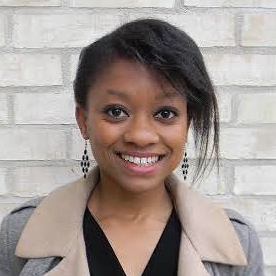
Nadia Odunayo didn't set out to create the leading competitor to social reading app GoodReads. But somewhere along the way while building her website & app…
Aug 26, 2026 · 36 min · 12 segments
Nadia Odunayo didn't set out to create the leading competitor to social reading app GoodReads. But somewhere along the way while building her website & app…
 Nadia OdunayoGuest
 Michael TamblynHost
 Nathan MaharajHost
Was there a moment where it went from being a companion app to being essentially a full-fledged replacement where you had to decide that you were going to take that step over and start replicating a whole bunch of functionality that otherwise you didn't have to do before? Was there a deep breath where you went, okay, I guess we're in this now?

So one of the reasons for the longest time I didn't want to say that I am building an alternative to Goodreads, and I didn't for years, is because I didn't want to fall into the trap of just trying to do Goodreads but better.
So even people years before I said it were saying, this is an alternative to Goodreads.
I didn't want to say, well, then I'm not just going to be innovative and think about what people actually need.
And I'm just going to look at Goodreads and do, how do I do that better? And that was not enough of a differentiator, but also.
If I started calling us an alternative to Goodreads, people would sign up to the app with the expectation that we would have all this functionality we didn't have, and then they'd be disappointed and leave.
So for the longest time, I just was like, we're a reading, tracking, and recommendations app.
In my mind, I was like, in some years, we might be seen as that, but I don't even want to think about that.
The reason when, so, so, and then because of the way I build the product, it's just continually iterative.
So since 2019, I've always just been continually building on top of the same code base.
I'm just heads down and I'm just going to build this like good retail placement.
So I've never done that, but there was a moment marketing wise where I said, right, we're doing this.
And this is when, so we had been, there was no way to pay on the app and we don't have ads and we plan to hopefully never have ads.
But we needed a way to make money because our server costs were costing us thousands of dollars a month.
And if this was all funded by my savings and then when Rob came on board, his savings.
Was there a moment where it went from being a companion app to being essentially a full-fledged replacement where you had to decide that you were going to take that step over and start replicating a whole bunch of functionality that otherwise you didn't have to do before? Was there a deep breath where you went, okay, I guess we're in this now?
So one of the reasons for the longest time I didn't want to say that I am building an alternative to Goodreads, and I didn't for years, is because I didn't want to fall into the trap of just trying to do Goodreads but better.
So even people years before I said it were saying, this is an alternative to Goodreads.
I didn't want to say, well, then I'm not just going to be innovative and think about what people actually need.
And I'm just going to look at Goodreads and do, how do I do that better? And that was not enough of a differentiator, but also.
If I started calling us an alternative to Goodreads, people would sign up to the app with the expectation that we would have all this functionality we didn't have, and then they'd be disappointed and leave.
So for the longest time, I just was like, we're a reading, tracking, and recommendations app.
In my mind, I was like, in some years, we might be seen as that, but I don't even want to think about that.
The reason when, so, so, and then because of the way I build the product, it's just continually iterative.
So since 2019, I've always just been continually building on top of the same code base.
I'm just heads down and I'm just going to build this like good retail placement.
So I've never done that, but there was a moment marketing wise where I said, right, we're doing this.
And this is when, so we had been, there was no way to pay on the app and we don't have ads and we plan to hopefully never have ads.
But we needed a way to make money because our server costs were costing us thousands of dollars a month.
And if this was all funded by my savings and then when Rob came on board, his savings.
The rest of this transcript — segmented and speaker-labeled, so you land on the exact moment something was said
Search every transcript — by keyword, by phrase, or by meaning, across every show Radar indexes
Trends — what is surging across podcasts, measured against its own baseline
Alerts — when a name you follow appears in a newly indexed episode
No account is needed to search Radar.