Forest, what do we mean by frame? What do you mean by frame? I mean a container.
A container.
What does it contain? Emotions.
Something that contains emotions.
Yeah.
It's a term that comes up a lot for us, the frame.
What do you add to that container, Dave?
Yeah, if I could jump in, you know, for me, the frame is a consistent structure, time, fee, boundaries, and our role.
It protects the work and allows the unconscious to hopefully emerge safely.
Yeah, it's an important term in psychoanalysis and been an important term for us as trainees.
What do you mean by frame, Alex, when you hear it, when you say it?
Well, I do think everything we've pointed to is, I think it's what allows us to say we're doing something as analysts, as clinicians.
If there was no frame, we would just be chit-chatting
with
people.
And to say that we are, in fact, doing something different than having a casual conversation, we need the frame
to
exist.
I think Dave named some specific elements of the frame, but I think for listeners, we should be like very concrete.
Like there's some things that we are taught are part of the frame of psychoanalysis and our training is pretty intense on that subject.
So Dave mentioned, for example, the fee.
We are trained to negotiate a fee with our patients, and we ask them to propose the fee, and then we come to terms with them.
We're supposed to basically just take whatever they offer.
And we ask them why they came to that decision.
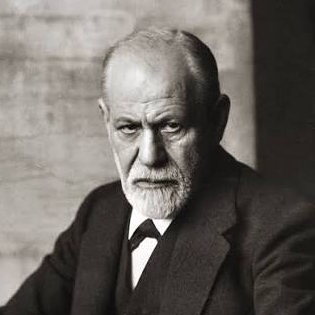
That relates to something that Freud is alleged to have done, to argue that, you know, the patient has to have some financial incentive, which is symbolic, and also who doesn't want to make a living? So that is a concrete or a tangible element of the frame.
The rest of this transcript — segmented and speaker-labeled, so you land on the exact moment something was said
Search every transcript — by keyword, by phrase, or by meaning, across every show Radar indexes
Trends — what is surging across podcasts, measured against its own baseline
Alerts — when a name you follow appears in a newly indexed episode
No account is needed to search Radar.