HumanPrint: How to Use AI Without Losing Yourself
Sep 10, 2026 · 16 min · 10 segments
What are you waiting to create while the rest of the world argues about AI? In this episode, you’ll examine how uncertainty, criticism, and shifting standards can quietly delay your work, then use…
Christine WhitmarshHostThere's a historical parallel I like here, although, as always with technology history, the parallels have limits.
When photography arrived in the 19th century, artists and critics had to figure out what this mechanical image-making technology meant for painting, portraiture, and art itself.
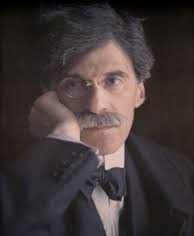
One of the people who spent a large part of his life pushing that argument forward was Alfred Stieglitz.
He returned to New York in 1890, determined to establish photography as a medium capable of serious artistic expression.
In 1902, after disagreements with the Camera Club of New York, he and other photographers formed the Photo Secession, and he went on to edit Camera Work, and Camera Work is a publication, and operate galleries that promoted photography alongside modern art.
In 1893, he made a photograph called The Terminal using a small 4x5 camera that was not considered worthy of serious artistic photography at the time.
The smaller camera let him move through the city, though, and respond quickly to what was happening around him.
So even within this new technology, there were already arguments about which version of the tool was artistically legitimate.
And this guy didn't resolve the argument by waiting for, waiting for photography to receive unanimous cultural approval.
He kept making photographs, publishing them, organizing other photographers, experimenting with the medium and helping build an audience for his work.
The Metropolitan Museum of Art describes him as a major force in elevating photography as fine art in the United States.
And one of his own ideas was that a mechanical instrument could become an artistic tool when guided by the sensibility of the person using it.
He said that a mechanical instrument could become an artistic tool when guided by the sensibility of the person using it.
Again, generative AI and photography, they're two different technologies with different ethical questions, economic effects, relationships to source material.
Think about what it's like to be a creator though, standing in the middle of all this.
A new tool shows up, people immediately start arguing about what it does and does not count as legitimate creative work.
And meanwhile, the rules are being invented in real time as we're creating.
There's a historical parallel I like here, although, as always with technology history, the parallels have limits.
When photography arrived in the 19th century, artists and critics had to figure out what this mechanical image-making technology meant for painting, portraiture, and art itself.
One of the people who spent a large part of his life pushing that argument forward was Alfred Stieglitz.
He returned to New York in 1890, determined to establish photography as a medium capable of serious artistic expression.
In 1902, after disagreements with the Camera Club of New York, he and other photographers formed the Photo Secession, and he went on to edit Camera Work, and Camera Work is a publication, and operate galleries that promoted photography alongside modern art.
In 1893, he made a photograph called The Terminal using a small 4x5 camera that was not considered worthy of serious artistic photography at the time.
The smaller camera let him move through the city, though, and respond quickly to what was happening around him.
So even within this new technology, there were already arguments about which version of the tool was artistically legitimate.
And this guy didn't resolve the argument by waiting for, waiting for photography to receive unanimous cultural approval.
He kept making photographs, publishing them, organizing other photographers, experimenting with the medium and helping build an audience for his work.
The Metropolitan Museum of Art describes him as a major force in elevating photography as fine art in the United States.
And one of his own ideas was that a mechanical instrument could become an artistic tool when guided by the sensibility of the person using it.
He said that a mechanical instrument could become an artistic tool when guided by the sensibility of the person using it.
Again, generative AI and photography, they're two different technologies with different ethical questions, economic effects, relationships to source material.
Think about what it's like to be a creator though, standing in the middle of all this.
A new tool shows up, people immediately start arguing about what it does and does not count as legitimate creative work.
And meanwhile, the rules are being invented in real time as we're creating.
The rest of this transcript — segmented and speaker-labeled, so you land on the exact moment something was said
Search every transcript — by keyword, by phrase, or by meaning, across every show Radar indexes
Trends — what is surging across podcasts, measured against its own baseline
Alerts — when a name you follow appears in a newly indexed episode
No account is needed to search Radar.