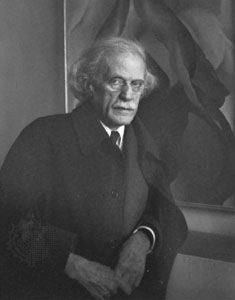
Alfred Stieglitz
American photographerWikipedia
13
MENTIONS
7
EPISODES
7
PODCASTS
Search complete. 13 mentions across 7 episodes found for "Alfred Stieglitz".
Oct 1, 2026

Amy ElizabethHOST
She also studied under Clarence H.
Amy ElizabethHOST
White at Columbia University, who was a founding member of the photo secession movement spearheaded by Alfred Stieglitz.
Amy ElizabethHOST
So the goal of this movement was to promote photography as a fine art and not just a way to document the world around them.
Amy ElizabethHOST
Their predominant style was pictorialism, which likened a photographer to a painter, stating that the manipulation of the image was what made the image the artist's own handiwork.
Amy ElizabethHOST
And upon White's death, Stieglitz wrote his, meaning White's, pupils, women, half-baked dilettantes, not a single real talent.
Amy ElizabethHOST
And I was like, what?
Chris HeineHOST
Wow, Alfred Stieglitz, that is a
Amy ElizabethHOST
hot take.

Brooks JensenHOST
Everybody's got an iPhone, everybody can upload to Instagram, and everybody can have a decent picture or two or a thousand.
Brooks JensenHOST
And what I used to call the priesthood of photography, thinking of Alfred Stieglitz and Edward Weston et al, when the priesthood disappears, is what's left still admirable artwork? I hope so.
Brooks JensenHOST
I like making artwork.
Brooks JensenHOST
I like the challenge of making artwork.

speaker_0NARRATOR
Both men resigned in protest.
speaker_0NARRATOR
Alfred Stieglitz photographed Fountain at his 291 gallery, positioned in front of Marsden Hartley's 1913 painting, The Warriors.
speaker_0NARRATOR
The painting depicts a German military parade, and the title of the painting suggests a battle between old and new ways of thinking.
speaker_0NARRATOR
Stieglitz's photograph appeared in the May 1917 issue of The Blind Man, a short-lived New York avant-garde art magazine, along with an editorial that argued that Duchamp's act of choosing an ordinary object created a new thought for that object.

Kevin EalainGUEST
And realistically, it didn't get established until the 70s.
Kevin EalainGUEST
But jumping back, Alfred Stieglitz was a photographer in the late 1800s, 1900s, and he is kind of single-handedly responsible for making photography what it is today.
Kevin EalainGUEST
He started the first camera club in New York in 1896.
Kevin EalainGUEST
So you just think that's not even 20 years after roll film was developed in Wisconsin there.

Ben ColmanGUEST
This is a painting that O'Keeffe made in 1922 during one of her many, many summer stays in Lake George in upstate New York.
Ben ColmanGUEST
So O'Keeffe begins in the late 19-teens when her romantic relationship with Stieglitz begins.
Ben ColmanGUEST
She starts spending part of each year on the shores of Lake George with the Stieglitz family.
Ben ColmanGUEST
And this is a place that she grows to love, but it's also a complicated place for her.
Ben ColmanGUEST
It was very much a Stieglitz family home, and she shared the space with several generations of her partner and later husband's family.
Ben ColmanGUEST
And I think had a fair bit of frustration in those early years finding space that could be her own and spaces that she could put her stamp on.
Ben ColmanGUEST
That changed when she set her sights on an abandoned shed that was falling apart on the Stieglitz family property.
Ben ColmanGUEST
This had been built more than a generation earlier and had fallen into disrepair by the time she saw potential in it.

Felix John TaylorGUEST
The one that comes to mind is Pamela Coleman Smith, who she designed the famous Rider-Waite tarot deck in 1909.
Felix John TaylorGUEST
But she was before that, she was not a big name, but she was on the modernist art scene in New York she had several exhibitions of her work by the kind of modernist art promoter Alfred Stieglitz and she was kind of talked about her work was seen as a kind of anti-conservative you know the rumblings of the modernist movement going on but that she could kind of change people's minds with the kind of symbolism of her watercolours um and i think that influence came if not directly from the golden dawn then from the golden dawn membership yates especially um her kind of mystical leanings um and um the kind of synesthetic um techniques that she used to to to uh construct these paintings um may have come from kind of visionary techniques that the Golden Dawn used.
Felix John TaylorGUEST
So I think she definitely had an influence that is not fully appreciated.
Felix John TaylorGUEST
But then you've also got the decadent movement of the 1890s that Crowley was definitely... or he aspired to be a part of his, his, um, his boyfriend at Cambridge, uh, you know, was deep in the movement, collected yellow books, uh, was kind of parodied, parodied, parodied in a novel of, um, by EF Benson.

Christine WhitmarshHOST
When photography arrived in the 19th century, artists and critics had to figure out what this mechanical image-making technology meant for painting, portraiture, and art itself.
Christine WhitmarshHOST
One of the people who spent a large part of his life pushing that argument forward was Alfred Stieglitz.
Christine WhitmarshHOST
He returned to New York in 1890, determined to establish photography as a medium capable of serious artistic expression.
Christine WhitmarshHOST
In 1902, after disagreements with the Camera Club of New York, he and other photographers formed the Photo Secession, and he went on to edit Camera Work, and Camera Work is a publication, and operate galleries that promoted photography alongside modern art.