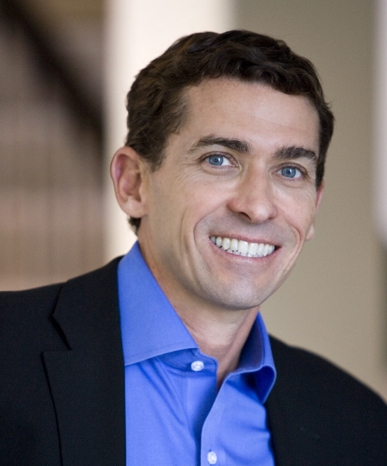
Steve GoldsmithGuest
Bill EggersHost
So governments invested heavily in data, dashboards, analytics, and stat programs.

Based on your research there, where do you most often see the breakdown between sensing problems and actually improving outcomes? And how can what you've talked about in terms of the use of AI maybe help to bridge that gap?

I mean, the famous stat programs that we all celebrated, CompStat with Bill Bradner, CityStat, were top-down systems, right? But increasingly, there was no connection between what was measured and what happened.

And so what we are proposing is that AI can broaden, I don't want to use the word democratize because everybody uses it, but can broaden the use of data throughout the enterprise.

So why do you have an outlier? Why do you have more potholes here? Why do you have a drainage problem? And then allow a broader number of individuals in the organization to use their discretion to make these natural language inquiries of the data and solve problems.

You can broaden the number of people who can come up with answers and you'll be more responsive.

So in cities you've worked with, what distinguishes governments that turn predictive insights into action from those that are stalling at analysis as a kind of follow-on to that?

And what's occurring is that the old regime of 100 years ago is still the prevailing way we deliver government.

So unleashing the power of data means... granting discretion to people who currently are rule-driven rather than problem solvers.

And so what it means is, and you see this across the country, in the US, there are cities that have enormously talented people chief data officers, right? They come up with all sorts of insights, but they need to have a partner who's the CAO or the deputy mayor of operations who has the authority to work across the organization and change the delivery system.

So we're seeing not too many cities that have really unleashed that power on a day-to-day basis.

So governments invested heavily in data, dashboards, analytics, and stat programs.

Based on your research there, where do you most often see the breakdown between sensing problems and actually improving outcomes? And how can what you've talked about in terms of the use of AI maybe help to bridge that gap?

I mean, the famous stat programs that we all celebrated, CompStat with Bill Bradner, CityStat, were top-down systems, right? But increasingly, there was no connection between what was measured and what happened.

And so what we are proposing is that AI can broaden, I don't want to use the word democratize because everybody uses it, but can broaden the use of data throughout the enterprise.

So why do you have an outlier? Why do you have more potholes here? Why do you have a drainage problem? And then allow a broader number of individuals in the organization to use their discretion to make these natural language inquiries of the data and solve problems.

You can broaden the number of people who can come up with answers and you'll be more responsive.

So in cities you've worked with, what distinguishes governments that turn predictive insights into action from those that are stalling at analysis as a kind of follow-on to that?

And what's occurring is that the old regime of 100 years ago is still the prevailing way we deliver government.

So unleashing the power of data means... granting discretion to people who currently are rule-driven rather than problem solvers.

And so what it means is, and you see this across the country, in the US, there are cities that have enormously talented people chief data officers, right? They come up with all sorts of insights, but they need to have a partner who's the CAO or the deputy mayor of operations who has the authority to work across the organization and change the delivery system.

So we're seeing not too many cities that have really unleashed that power on a day-to-day basis.
The rest of this transcript — segmented and speaker-labeled, so you land on the exact moment something was said
Search every transcript — by keyword, by phrase, or by meaning, across every show Radar indexes
Trends — what is surging across podcasts, measured against its own baseline
Alerts — when a name you follow appears in a newly indexed episode
No account is needed to search Radar.