Aug 13, 2026 · 27 min · 9 segments
What if AI's biggest threat is not a smarter machine, but a less curious human? In this episode of Decoded, Dr. Jurgi Camblong sits down with Pr. Joseph Sifakis, Turing Award laureate and inventor…
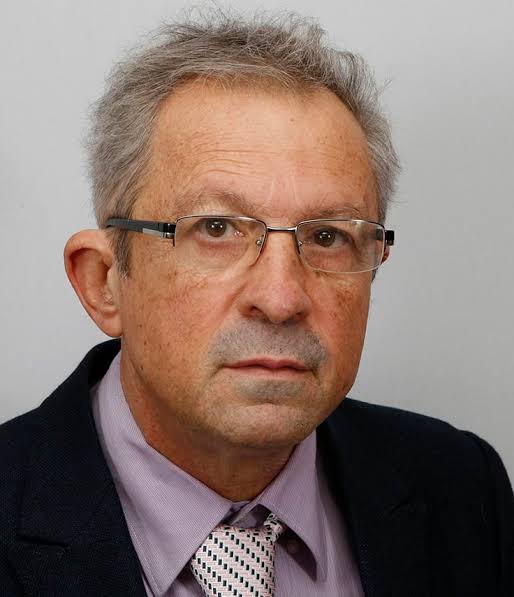
Joseph SifakisGuest
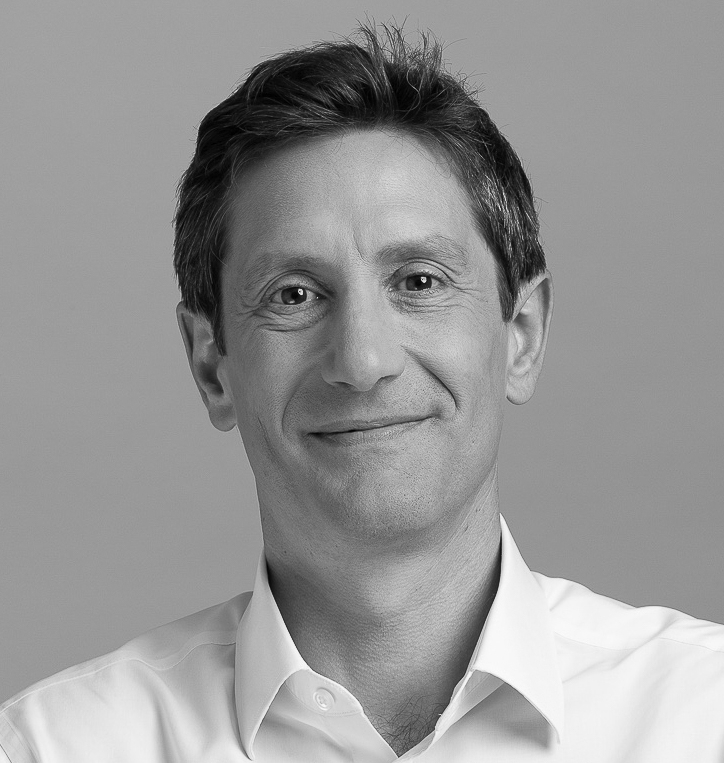
Jurgi CamblongHost
This type of operations for systems would be very complex and would require a lot of compute power, which wouldn't exist, right, in ninety-seven?

So I built a theory, and the theory was just an intellectual construction, okay? I remember when I passed my PhD, some people in the jury said, "But this theory is not applicable, okay? It's a nice theory.

It's not applicable." So I was unable to put my theory in practice, but this w-was a nice theoretical result More powerful machines that were not available at that time, I could apply my theory, okay? So I had to wait until computer performance improved, and also I should say that the need for verification became increasingly urgent because people were developing also increasingly complex systems.

It had a failure, but the failure was an intermittent failure, and it was poorly understood why this appeared, and it was very hard to reproduce, to reproduce through testing.

Okay? And Intel decided to invest heavily in the development of the first industrial scale, uh, technology based on model checking.

Intel's example was immediately followed by other developers of critical systems, NASA, IBM, and Microsoft, and later.

Practically, today, what are applications that we might be using or computer scientists might be using and are leveraging on model checking?

It's applied to hardware, to critical software because you see applying model checking techniques costs a lot of money.

You don't try to verify a software that you will use it for non-critical tasks.

This type of operations for systems would be very complex and would require a lot of compute power, which wouldn't exist, right, in ninety-seven?

So I built a theory, and the theory was just an intellectual construction, okay? I remember when I passed my PhD, some people in the jury said, "But this theory is not applicable, okay? It's a nice theory.

It's not applicable." So I was unable to put my theory in practice, but this w-was a nice theoretical result More powerful machines that were not available at that time, I could apply my theory, okay? So I had to wait until computer performance improved, and also I should say that the need for verification became increasingly urgent because people were developing also increasingly complex systems.

It had a failure, but the failure was an intermittent failure, and it was poorly understood why this appeared, and it was very hard to reproduce, to reproduce through testing.

Okay? And Intel decided to invest heavily in the development of the first industrial scale, uh, technology based on model checking.

Intel's example was immediately followed by other developers of critical systems, NASA, IBM, and Microsoft, and later.

Practically, today, what are applications that we might be using or computer scientists might be using and are leveraging on model checking?

It's applied to hardware, to critical software because you see applying model checking techniques costs a lot of money.

You don't try to verify a software that you will use it for non-critical tasks.
The rest of this transcript — segmented and speaker-labeled, so you land on the exact moment something was said
Search every transcript — by keyword, by phrase, or by meaning, across every show Radar indexes
Trends — what is surging across podcasts, measured against its own baseline
Alerts — when a name you follow appears in a newly indexed episode
No account is needed to search Radar.