Sep 21, 2026 · 8 min · 6 segments
What is 36,000 kilometres long, made of a super-strong material that doesn't exist yet, and replaces rocket launches? It can only be a space elevator, a speculative mega-engineering project that has…
What's 36,000 kilometres long, made of a super strong material that doesn't exist yet, and replaces rocket launchers? It can only be a space elevator, a speculative mega-engineering project that's been a fixture of science fiction since 1979.
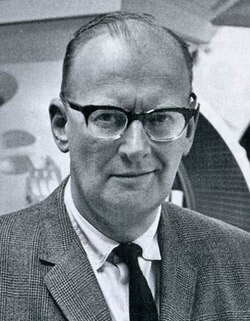
That was the year that SF superstar Arthur C. Clarke popularised the concept with his novel The Fountains of Paradise.
Few mega-engineering concepts have inspired science fiction writers like the space elevator.
What's commonplace in the genre today, though, was once very new, and so it was with The Space Elevator in 1979.
That was the year that two major novels by British-born expatriate authors popularised the concept.
One was The Web Between the Worlds by Charles Sheffield, and the other was The Fountains of Paradise by Arthur C. Clarke.
The two novels have striking similarities, but Clarke wrote at the time that the publication of the two books reflected not a clear case of plagiarism, but merely an idea whose time has come.
It won both the Hugo and Nebula awards for best novel, possibly in part due to Clarke's claim that it would be his last novel.
Viewed in retrospect, The Fountains of Paradise is classic Clarke, something of a throwback to his work of the 1950s and 1960s.
It contains his usual optimism, hard science credentials, and emphasis on engineering challenges rather than human conflict.
At the same time, it's something more, especially in its depiction of a fictionalised version of Clarke's adopted home of Sri Lanka, which is intriguing, if in some ways problematic.
What's 36,000 kilometres long, made of a super strong material that doesn't exist yet, and replaces rocket launchers? It can only be a space elevator, a speculative mega-engineering project that's been a fixture of science fiction since 1979.
That was the year that SF superstar Arthur C. Clarke popularised the concept with his novel The Fountains of Paradise.
Few mega-engineering concepts have inspired science fiction writers like the space elevator.
What's commonplace in the genre today, though, was once very new, and so it was with The Space Elevator in 1979.
That was the year that two major novels by British-born expatriate authors popularised the concept.
One was The Web Between the Worlds by Charles Sheffield, and the other was The Fountains of Paradise by Arthur C. Clarke.
The two novels have striking similarities, but Clarke wrote at the time that the publication of the two books reflected not a clear case of plagiarism, but merely an idea whose time has come.
It won both the Hugo and Nebula awards for best novel, possibly in part due to Clarke's claim that it would be his last novel.
Viewed in retrospect, The Fountains of Paradise is classic Clarke, something of a throwback to his work of the 1950s and 1960s.
It contains his usual optimism, hard science credentials, and emphasis on engineering challenges rather than human conflict.
At the same time, it's something more, especially in its depiction of a fictionalised version of Clarke's adopted home of Sri Lanka, which is intriguing, if in some ways problematic.
The rest of this transcript — segmented and speaker-labeled, so you land on the exact moment something was said
Search every transcript — by keyword, by phrase, or by meaning, across every show Radar indexes
Trends — what is surging across podcasts, measured against its own baseline
Alerts — when a name you follow appears in a newly indexed episode
No account is needed to search Radar.