Changing Climate, Changing Migration
Jun 30, 2026 · 29 min · 9 segments
The coordinated global response to climate change-driven displacement is relatively new. Just a few decades ago, virtually no governments were paying attention to the ways in which people were being…
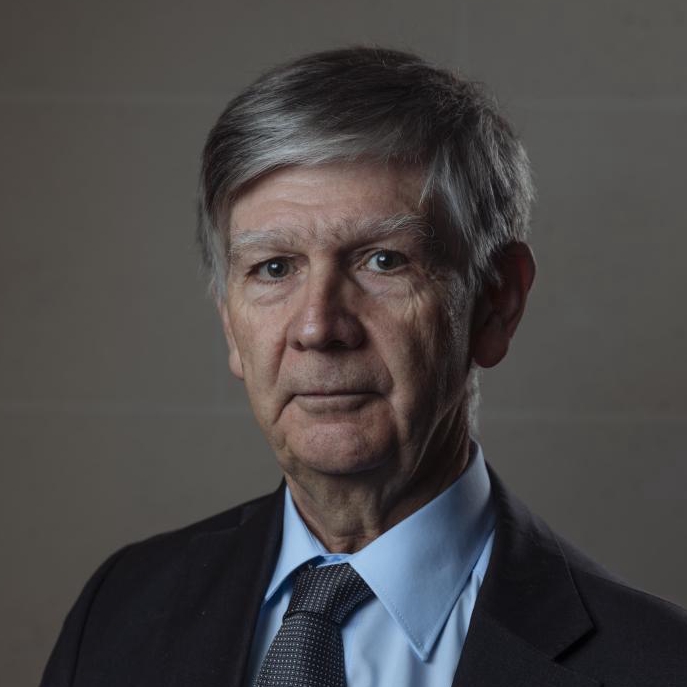
Walter KälinGuest
Julian HattemHost
So you have been reckoning with serious questions about displacement for roughly four decades.

Uh, how has the global situation changed over your tenure, both in terms of displacement itself, and how has the global community, how has the global community's response to that displacement changed over your time?

There have been wars, uh, civil wars, disasters, but, uh, up to the end of the Cold War, it was not really possible to talk about these issues at the global level.

The discussion started in the early 1990s when the UN Human Rights Committee, for the first time said, "Okay, internal displacement, it's happening.

We have to put it on the international agenda." And they appointed a representative on internal displacement.

Um, this then led to the development of what is called the Guiding Principles on Internal Displacement.

But at that time, the focus really was on internal displacement in, like, the Bal- Balkans, South Caucasus, all these, um, armed conflicts we had, uh, in the 1990s.

It was only in 2004, when the Indian, uh, tsunami, uh, Indian Ocean tsunami happened just after Christmas, that people really, at the international level, realized, okay, disasters, that's not just something about feeding people, putting up some tents, evacuating them.

It is a fact that natural hazards are displacing millions, tens of millions of people every year.

But this was a discussion that was very much, um, of relevance for humanitarian actors and humanitarian donors.

And there was, for instance, no talk about climate change and its adverse effects, sea level rise, droughts, all these kind of, um, adverse effects and impacts of climate change.

And it was only in 2010 that, uh, the, uh, states, the governments negotiating at one of the big conferences in Cancún in Mexico then adopted a very short paragraph, three lines, basically saying displacement, predominantly voluntary migration, and planned relocation are part of the challenge to adapt to global warming.

But what has really changed is international attention and also the development of, uh, some of the normative frameworks, I mean, rules, provisions to protect these people, to help them, to assist.

Um, but so if one has kind of only a narrow focus or has been in this space for less time, it's very easy to be defeatist, right? It's, you know...

So you have been reckoning with serious questions about displacement for roughly four decades.

Uh, how has the global situation changed over your tenure, both in terms of displacement itself, and how has the global community, how has the global community's response to that displacement changed over your time?

There have been wars, uh, civil wars, disasters, but, uh, up to the end of the Cold War, it was not really possible to talk about these issues at the global level.

The discussion started in the early 1990s when the UN Human Rights Committee, for the first time said, "Okay, internal displacement, it's happening.

We have to put it on the international agenda." And they appointed a representative on internal displacement.

Um, this then led to the development of what is called the Guiding Principles on Internal Displacement.

But at that time, the focus really was on internal displacement in, like, the Bal- Balkans, South Caucasus, all these, um, armed conflicts we had, uh, in the 1990s.

It was only in 2004, when the Indian, uh, tsunami, uh, Indian Ocean tsunami happened just after Christmas, that people really, at the international level, realized, okay, disasters, that's not just something about feeding people, putting up some tents, evacuating them.

It is a fact that natural hazards are displacing millions, tens of millions of people every year.

But this was a discussion that was very much, um, of relevance for humanitarian actors and humanitarian donors.

And there was, for instance, no talk about climate change and its adverse effects, sea level rise, droughts, all these kind of, um, adverse effects and impacts of climate change.

And it was only in 2010 that, uh, the, uh, states, the governments negotiating at one of the big conferences in Cancún in Mexico then adopted a very short paragraph, three lines, basically saying displacement, predominantly voluntary migration, and planned relocation are part of the challenge to adapt to global warming.

But what has really changed is international attention and also the development of, uh, some of the normative frameworks, I mean, rules, provisions to protect these people, to help them, to assist.

Um, but so if one has kind of only a narrow focus or has been in this space for less time, it's very easy to be defeatist, right? It's, you know...
The rest of this transcript — segmented and speaker-labeled, so you land on the exact moment something was said
Search every transcript — by keyword, by phrase, or by meaning, across every show Radar indexes
Trends — what is surging across podcasts, measured against its own baseline
Alerts — when a name you follow appears in a newly indexed episode
No account is needed to search Radar.