May 4, 2026 · 40 min · 17 segments
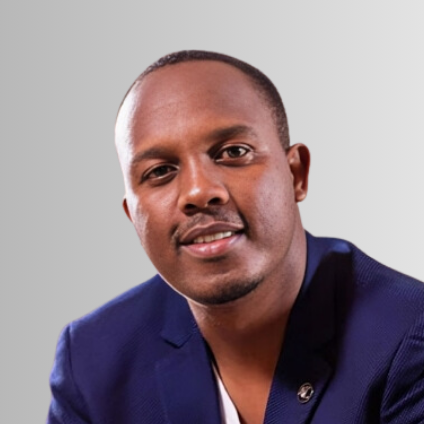
Most grassroots voices are ignored in global climate politics — until now. Dorcas Naishorua, Miss Climate Kenya 2023-2025 and fierce advocate from Kajiado County, shares how her lived experiences as a…
I know 'cause in pastoralist communities, climate change isn't abstract, it's, it's mostly survival.
What's one uncomfortable truth about, about climate change that policymakers still ignore?
So, uh, Deeplex, I would first say that, um, climate change mitigation and adaptation will never be possible if we do not engage the community.
That is one point that should be very clear to each and every policymaker or stakeholder who is, uh, on the hot seat or on the higher seat of that end.
You know, when you're talking about climate change, I honestly can't tell you how, how hot or how cold it is me being in this house at the moment, yeah? I cannot tell you.
But some, uh, a, a, a gentleman who is out there in the fields getting pasture for the livestock, or the mama who is h- out here trying to get, uh, water, is able to tell you the struggles that they go through.
She's equally able to tell you, and tell you like, "You know, instead of walking all the way, how about we have wells? How about we have a bore hole here? How about we plant more trees ndio kukinyesha zile wetlands zikuje zichukue tena, and then we can get some water to use as a family?" Policymakers in most if not...
They don't wanna hear, um, a, a, an indigenous person who, who is here to come and talk about something.
I told them that, "You guys expect me to have come here to tell you sweet things and tell you how we are really depending on you, and how we want funding from you." But it was more of, "No, no, no, we don't need your support.
We need you guys to pay for the losses that you're creating, you know? You guys are creating harm to us.
It is not our fault that we are having, uh, we are not having rains at the moment.
We do not have industries that pro- produce CO2." You know, this whole problem, w- don't make it look like we are there to, to, you know, us we are just there to sit and h- and listen, and then, uh, you guys give us the deliberations at the end of the day.
We have to sit at the table, and we have to give our opinions, we have to give our ideas, and you guys actually have to follow from the back, not from the front.
If you have to f- to support, push us, you know? If you have to give us funding, let it be a push, not us pushing you, but you don't really know the actual solutions that we need.
So I believe that, um, solutions as far as climate change is concerned, it has to be led by grassroots individuals, not just in Kenya, but across the world.
I know 'cause in pastoralist communities, climate change isn't abstract, it's, it's mostly survival.
What's one uncomfortable truth about, about climate change that policymakers still ignore?
So, uh, Deeplex, I would first say that, um, climate change mitigation and adaptation will never be possible if we do not engage the community.
That is one point that should be very clear to each and every policymaker or stakeholder who is, uh, on the hot seat or on the higher seat of that end.
You know, when you're talking about climate change, I honestly can't tell you how, how hot or how cold it is me being in this house at the moment, yeah? I cannot tell you.
But some, uh, a, a, a gentleman who is out there in the fields getting pasture for the livestock, or the mama who is h- out here trying to get, uh, water, is able to tell you the struggles that they go through.
She's equally able to tell you, and tell you like, "You know, instead of walking all the way, how about we have wells? How about we have a bore hole here? How about we plant more trees ndio kukinyesha zile wetlands zikuje zichukue tena, and then we can get some water to use as a family?" Policymakers in most if not...
They don't wanna hear, um, a, a, an indigenous person who, who is here to come and talk about something.
I told them that, "You guys expect me to have come here to tell you sweet things and tell you how we are really depending on you, and how we want funding from you." But it was more of, "No, no, no, we don't need your support.
We need you guys to pay for the losses that you're creating, you know? You guys are creating harm to us.
It is not our fault that we are having, uh, we are not having rains at the moment.
We do not have industries that pro- produce CO2." You know, this whole problem, w- don't make it look like we are there to, to, you know, us we are just there to sit and h- and listen, and then, uh, you guys give us the deliberations at the end of the day.
We have to sit at the table, and we have to give our opinions, we have to give our ideas, and you guys actually have to follow from the back, not from the front.
If you have to f- to support, push us, you know? If you have to give us funding, let it be a push, not us pushing you, but you don't really know the actual solutions that we need.
So I believe that, um, solutions as far as climate change is concerned, it has to be led by grassroots individuals, not just in Kenya, but across the world.
The rest of this transcript — segmented and speaker-labeled, so you land on the exact moment something was said
Search every transcript — by keyword, by phrase, or by meaning, across every show Radar indexes
Trends — what is surging across podcasts, measured against its own baseline
Alerts — when a name you follow appears in a newly indexed episode
No account is needed to search Radar.