Liz Knowles - See, Hear, Feel
Aug 18, 2026 · 56 min · 13 segments
In this 55-minute interview, American violinist Liz Knowles talks with author Judy Minot about "the practice of practicing." Liz has a strong foundation in both classical and Irish traditional music…
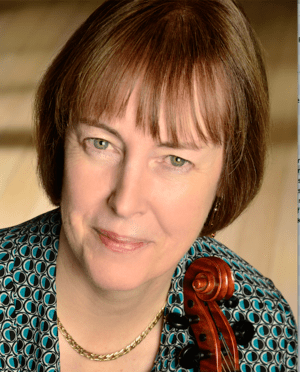
In this 55-minute interview, American violinist Liz Knowles talks with author Judy Minot about "the practice of practicing." Liz has a strong foundation in both classical and Irish traditional music and is known for her work with fiddlers Liz Carroll (The String Sisters, The Lizzes Podcast) and Martin Hayes (Martin Hayes Quartet). She and Judy covered a range of topics about music practice, including using perception ("see-hear-feel") to address practice issues, the emotional component, when to focus and when to let go of focus, tips on how to improve focus, getting inspiration from other disciplines, practice as a meditation, and finding a practice routine that fits you. **Links/Resources** www.lizknowles.com www.openthedoorforthree.com **Books mentioned:** Molly Gebrian: Learn Faster, Perform Better: A Musician's Guide to the Neuroscience of Practicing Mihaly Csikszentmihalyi: Flow: The Psychology of Optimal Experience Haruki Murakami: Novelist as a Vocation **Judy Minot** Website https://www.judyminot.com/bestpractice/ Patreon https://www.patreon.com/c/BestPracticeforMusicians **Memorable Quotes** "It's really important to notice when focus goes out the door." "You can be perfect and have something really down. And then if your mind gets in the way, it's over. Game over." "Sometimes I think we think practice is all the technique, and it's all the getting our bodies to do certain things, but it's the mind-body connection. And if you're not looking at every piece of that, then you might be missing the kind of that that little door that just opens into the ease that you're looking for." "You can't play an instrument without at some point having to engage with the whole body and understanding how energy works, how muscles work, how the physicality of this works." "It's only you in that room. It's only you on that instrument. It's you that is going to pull you through to the next thing. A teacher can help you, sure, but the reality is, it's on you." "It's the most wonderful thing you can do for yourself to really see who you are right now and accept that this is where you are right now. Regardless of what anybody else is practicing, you find the formula that works for you, that keeps you interested, keeps you engaged, keeps you positive..." **Guest Liz Knowles** is a violinist, composer, arranger and teacher whose distinctive, rich sound comes from her shared foundation in both classical and Irish traditional music. She is a member of the Martin Hayes Quartet, the supergroup the String Sisters and Open the Door for Three. She's also a podcaster, producing the "Lizzes Podcast" with violinist Liz Carroll. At a young age she toured as the violinist in Riverdance. Her many notable performances and recordings include as soloist with the New York Pops, and featured artist for the Ireland 100 festival at the Kennedy Center. **Podcast Host Judy Minot** is a music educator, musician, and author of the award-winning book Best Practice, Inspiration and Ideas for Traditional Musicians. She holds a 4th degree black belt in the martial art of aikido, multiple awards for video editing including two platinum records and a platinum video, is a certified yoga teacher, and has sung on the stage of Carnegie Hall. She teaches Best Practice concepts online and in person around the world.
In this 55-minute interview, American violinist Liz Knowles talks with author Judy Minot about "the practice of practicing." Liz has a strong foundation in both classical and Irish traditional music…
- Show signals
- Audience≈552 followers