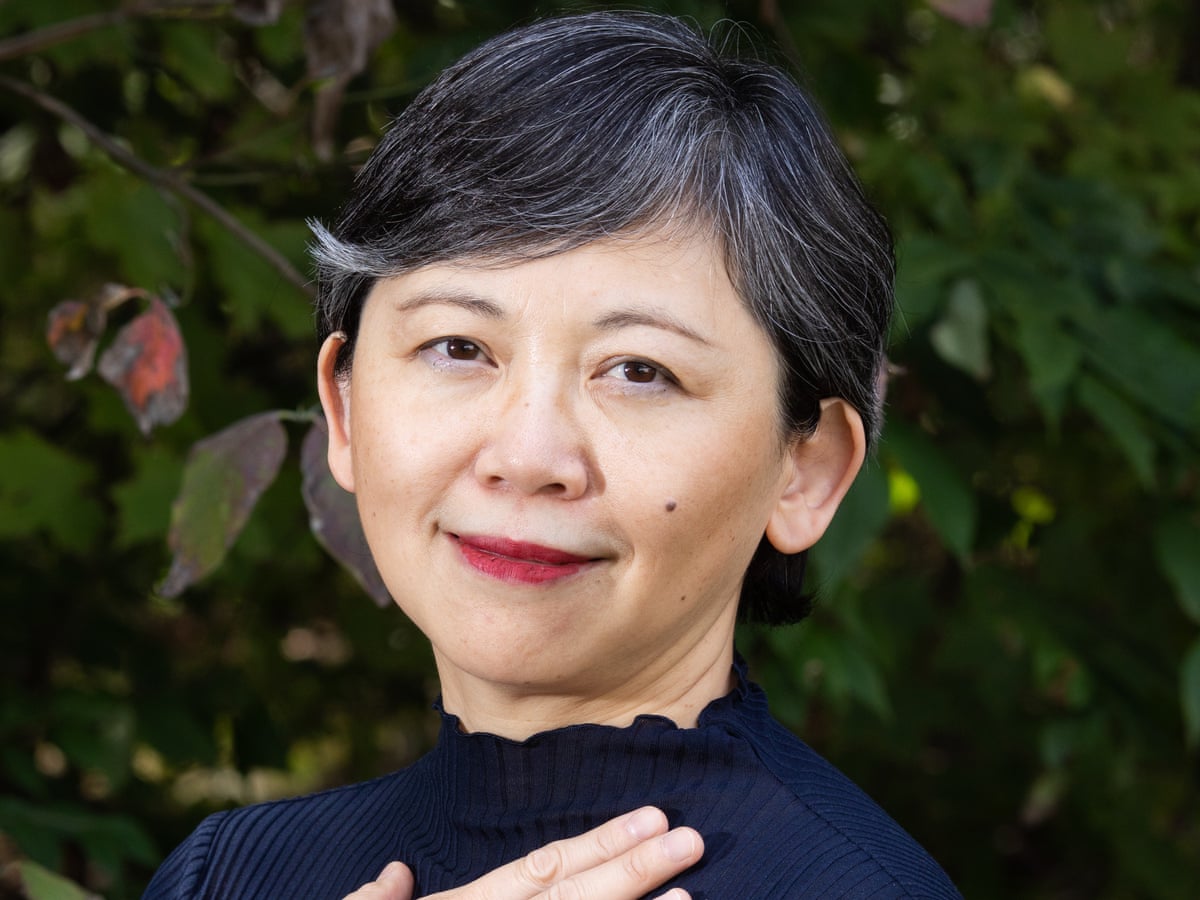
Yiyun Li
Chinese writer
13
APPEARANCES
11
PODCASTS
Nov 10, 2026


Yiyun LiGUEST
And as a teenager, he traveled to Moscow with his teacher, Clementi, and then he settled in Moscow and became, in Russia, they called him the grandfather of Russian music.

speaker_1HOST
Tell me about him.
Yiyun LiGUEST
But Musio Clemente is another, you know, it's a figure in history, in music history.
speaker_1HOST
What was it like to walk in fictional shoes for a while, although clearly the fictional shoes of two real life people?

Marrie StoneHOST
And I was just wondering if you could talk just for a moment about writing in English and how it might be deepened by your Chinese skills.
Yiyun LiGUEST
Meaning, I always say every word has to be studied before it becomes a word for me in English.
Yiyun LiGUEST
So as you say, native speakers, I think you always have the intimacy with the mother tongue.
Marrie StoneHOST
So take us into the book, introduce us to it, and then talk a little bit about the inspiration behind this topic.

Yiyun LiGUEST
I consider myself a beginner, but dedicated beginner, which means I practice every day.

Yiyun LiGUEST
I always find that so interesting because the world actually is smaller than we thought.
Yiyun LiGUEST
And, you know, certainly I read War and Peace all the time, and Tolstoy would talk about the people moving from east to west, moving from west to east.
Yiyun LiGUEST
You know, I think we never thought about that period as an immigration and migration era, but people moved very much, except they moved more slowly.
12 MINS LATER

Miwa MesserHOST
But the clarity of the language and like, you know, you do a thing where I just, I know I'm not going to get hit with 77 adjectives and I'm not going to have to parse, I'm not going to have to parse your meaning because you are always very clear on who your characters are and where they're going.


Mitzi RapkinHOST
Did he change or was it just society's pressure on his childhood innocence that just couldn't last?
Yiyun LiGUEST
I have to sort of make a little sort of disclaimer that the novel does follow both children for a long time.
Yiyun LiGUEST
When I was working on it, someone said, you don't have to write children for so long.
Yiyun LiGUEST
And I thought that is against everything I believe in writing and everything I believe in my characters is as children, they are fascinating and they have this quite mysterious and rich interiority that they have not had the vocabulary to explore or to express.
Yiyun LiGUEST
And I think that's important because both John and Pascherette are prodigies Now, Jiang is a prodigy of music, and Pasheret is a musical prodigy, but she's also a prodigy in living.
9 MINS LATER
Mitzi RapkinHOST
And I wanted to ask you about that and just her life's arc in general, if you want to say anything.


Terry GrossHOST
In fact, she turned out to be no more than a mediocre pianist, but piano was a good way for her to learn how to count, mark, and endure time." Did you take piano lessons in part for research, but in part to learn how to endure time after your son's death?
Yiyun LiGUEST
I, um, I began my piano lesson in, at the end of 2023, purely to get to know how to play the piano.
Yiyun LiGUEST
And, um, it occurred to me that piano or music is a good way t- for me to count time, because music is about time.
11 MINS LATER

Kate GibsonHOST
How did you first come upon John Field and Adelaide Percheron? Because obviously they are characters in history as well as living characters in your novel.
Yiyun LiGUEST
One of the earliest pages in his autobiography, Tolstoy wrote about listening to his mother playing on the piano forte, a John Fields piece of music.
10 MINS LATER


Yiyun LiGUEST
So I will read, this is, uh, Leonora, and, uh, Adelaide, early on when Adelaide was a young child and disturbed every single person in the family.
Yiyun LiGUEST
Smile with your mouth, yes, but also with your eyes, with your eyebrows," Leonora said.
Yiyun LiGUEST
She raised her chin at a angle and beamed frostily, then turned to flash Adelaide a grin, as though caught by surprise, and then looked downward with a dreamy smile.
14:45

And I wonder if you can talk a little bit about that parallel between the performance of being a woman and the performance of being a musician at this time, and how you think about, you know, is it true, as Leonora and Clementi suggest, that the surfaces are counting more than the music or the person themselves, that there's a lot of power residing in that?
Yiyun LiGUEST
Um, I think it's just a profound depression, and really, um, sometimes I think people have all sort of thoughts about or against people who have chosen suicide, and people who have chosen or attempted suicide are often called selfish.
Yiyun LiGUEST
But my experience is oftentimes people in great de- Pain, whether it's great mental pain or great physical pain, and sometimes, uh, people in, in deep depression cannot tell the difference between mental pain and physical pain because everything is together as a great kind of suffering.
Yiyun LiGUEST
I think it's not that people who experience that kind of suicidal urge, it's not that they want to die, or they want to use this to hurt other people.
Yiyun LiGUEST
It, it feels, at, at least in my experience, it felt as though that was the only way to stop the suffering.
Terry GrossHOST
Um, so I, I'd love to hear you, like, talk about reaching that conclusion that you were going to respect their decisions.


Anderson CooperHOST
Yes, I love them, and I still love them, but more important than loving is understanding and respecting my children, which includes, more than anything else, understanding and respecting their choices to end their lives." It's an extraordinary thing to say, to feel.
Yiyun LiGUEST
I think that's the best I can do for them as their mother is they made a decision.
Yiyun LiGUEST
I ha- I attempted suicide, too, and it's not that you don't want to live for people who commit suicide.
Yiyun LiGUEST
It's not you don't want to live or you don't love people, you don't love your mother, or you don't love your friends.
Yiyun LiGUEST
It's the pain, and you're experiencing there's no way to stop the pain but to wipe your body out.
10 MINS LATER
Anderson CooperHOST
Can you talk about that? 'Cause I, when I, I read that, I, I, I was, I was kind of stunned by it.
speaker_2UNKNOWN
You're in it right now.
Yiyun LiGUEST
And we will always be in this abyss because we'll always be parents who have lost two children, and nothing in life is going to change that.
Yiyun LiGUEST
What I want to do is to live in this abyss a little better so it doesn't feel abysmal.
speaker_2UNKNOWN
Pain is a fact.


Deborah TreismanHOST
And now here's Yiyun Li reading "The Piano Tuner's Wives" by William Trevor.
Yiyun LiGUEST
There was a little more to it than that, because in choosing Violet to be his wife, the piano tuner had rejected Belle.Which was something everyone remembered when the second wedding was announced.
Yiyun LiGUEST
"Well, she got the ruins of him anyway," a farmer of the neighborhood remarked, speaking without vindictiveness, stating a fact as he saw it.
Yiyun LiGUEST
Others saw it similarly, though most of them would have put the matter differently.
Yiyun LiGUEST
The piano tuner's hair was white, and one of his knees became more arthritic with each damp winter that passed.
1 HR LATER