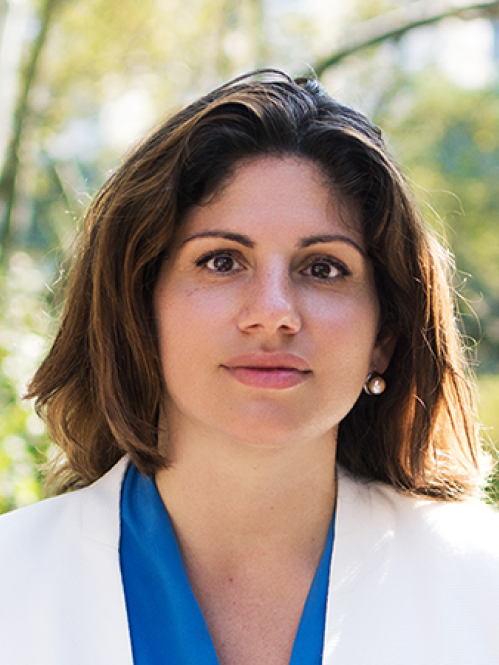
Yael Bromberg
Attorney at law
3
APPEARANCES
3
PODCASTS
Sep 9, 2026


Archon FungHOST
So talk about both those, the more enduring frictions, but then also, Do you think that there's a difference in the formal barriers that are appearing? And are those only in specific places? I mean, you hear about New Hampshire and North Carolina, but do you perceive it as more general?

Yael BrombergGUEST
And this is the thing about young people as an independent, first of all, as a constitutionally recognized class of voters, which we don't usually appreciate them as that.
Yael BrombergGUEST
And pursuant to the 26th Amendment, right, and as an independent base of voters.
Yael BrombergGUEST
So, for example, you'll even see in blue states, because I know everyone wants to talk about red, blue, purple, you'll even see in blue states ways in which young people... could have proven electoral mechanisms that could encourage engagement, but even there it's not passed.
Yael BrombergGUEST
And I'm thinking about on-campus voting locations, and I'm thinking about election day registration, right? And so you'll see even a hesitation to engage voters in those key mechanisms in blue states.
Yael BrombergGUEST
And then you look at red states, right? And you look at New Hampshire, purple state, recent rollback on the availability of student voter identification as a form of ID, going on decades and decades of efforts of youth voter suppression in New Hampshire.
8 MINS LATER


16:50
And I'm wondering if you could share a little bit about that story, about attempts that have been made in the past to restrict college student voting rights and maybe what we can learn from those to apply in the current moment.
Yael BrombergGUEST
There's a range of modalities in which young voters specifically are targeted.
Yael BrombergGUEST
And the 26th Amendment helps to establish a framework for understanding them so that they're not interpreted as one-off scenarios, right? This is part of a systemic lens.
Yael BrombergGUEST
challenges to the ability to just register to vote from your college campus to begin with, and then to offer those additional proofs, the lack of ability to establish a form of voter identification.
13 MINS LATER

Yael BrombergGUEST
I would add that I think that the moment calls for something larger, that this is an example of what has succeeded electorally in New York City, based on certain indications of who comes out to vote for those elections as well, and the presentation of that particular race and who the opposition candidate was.
Yael BrombergGUEST
We are, we are, we are divided in ways that are real and also in ways that are completely psychological.
Yael BrombergGUEST
Like, to me, the fact that 70% of Americans want to overturn Citizens United and get rid of money in politics, we're talking about middle America farmers.
Yael BrombergGUEST
And as I often talk with Professor Brooks about, the movement against the data centers is extraordinary because you have, like, mom farmers fighting in all parts of the country, right? From South Carolina to South New Jersey to middle America farmland, exercising their civic and democratic muscle to fight against special interests.
10 MINS LATER
