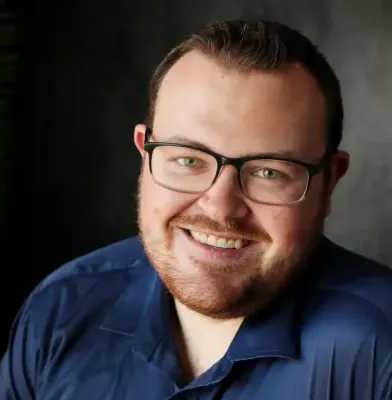
Willie Blake
Coach Willie Blake is a high-performance coach for dyslexic professionals and entrepreneurs, known for his LIGHT philosophy (Love, Inspiration, Gratitude, Hope, Time) and Dyslexic Achievers Hub.
14
APPEARANCES
13
PODCASTS
Oct 7, 2026

J.V.HOST
So for any audience member that may be watching, listening to this episode, can you explain the definition of dyslexia before we dive in, please?

Willie BlakeGUEST
Now what the heck does that mean? If you like to break it down, dys means difficult, and then lexia is reading.
Willie BlakeGUEST
So literally, dyslexia is difficulty with reading, and that's usually like the over umbrella of others like d- I'll, I'll be s- scientific, very brief here.
Willie BlakeGUEST
Dysgraphia, which is difficulty with writing; dyscalculia, which has to do with math; dyspraxia, which is like hand-eye coordination.

Willie BlakeGUEST
You're like, did I do something wrong? Am I broken? I was just trying to be a friend.
Willie BlakeGUEST
And if people don't like me for who I am, maybe that means I got to be somebody else.
Willie BlakeGUEST
Because as adults, you know, we have tougher skin, but as kids, we don't know how to interpret that as well.
7 MINS LATER

Richard TierneyHOST
I'm going to ask you, Willie, when you feel anxious or depressed, or as you shared it in your profile, when you were coming out of that state of not feeling good enough, what did you use? What kind of tools did you put into play?
Willie BlakeGUEST
You're like, did I do something wrong? Am I broken? I was just trying to be a friend.
Willie BlakeGUEST
And if people don't like me for who I am, maybe that means I got to be somebody else.
Willie BlakeGUEST
Because as adults, you know, we have tougher skin, but as kids, we don't know how to interpret that as well.
7 MINS LATER
Richard TierneyHOST
I'm going to ask you, Willie, when you feel anxious or depressed, or as you shared it in your profile, when you were coming out of that state of not feeling good enough, what did you use? What kind of tools did you put into play?

Willie BlakeGUEST
So you have 10 ounce can of cream of chicken, as well as a 10 ounce can of cream of mushroom.
Willie BlakeGUEST
Then you have two cups of sour cream, and these are pretty, pretty, uh, standard stuff you can find in your home.
Willie BlakeGUEST
You'll want some chi- lo- half cup of chicken broth, a teaspoon of salt, pepper, and garlic powder.
Willie BlakeGUEST
And then you want, um, if you go to, like, Walmart or WinCo, just a small bag of peas, and I think it's about a half cup or a cup of frozen peas.
Willie BlakeGUEST
Then you'll want a full thing of spaghetti pasta, and then you want about a pound of cooked chicken.
speaker_0ADVERTISER
Auto-pay enrollment required

Willie BlakeGUEST
Second thing is more on the learning side, which if you are a parent of multiple kids, you know that each kid is different.
14 MINS LATER

Sonia ChandHOST
And so when you took up entrepreneurship and helping entrepreneurs and doing the coaching and things, what was that journey like for you to go into that space?


Mike KonradHOST
And I don't know if you share that same philosophy with dyslexia or maybe something different.
Willie BlakeGUEST
A bunch of weirdos trying to make this world whatever place that we're wanting to, right? But that's the awesome thing.
Willie BlakeGUEST
the best companies in the world were built by people who were considered crazy were considered different like elon musk wasn't like the most charismatic person and like jeff bezos and donald trump and you know there's a bunch of people who are like considered crazy but they have The results they get, they have done miraculous things and created the companies that they created and the people that they team up with.
Willie BlakeGUEST
So yeah, each of them had their own thing and it could be ADD, ADHD, it could be dyslexia, it could be autism or OCD, any neurodivergent thing or other realms as well.
Willie BlakeGUEST
Some people go through things such as type one diabetes or cancer or a miscarriage.
9 MINS LATER
Mike KonradHOST
What did your career path look like? And when did you first recognize that your personal experience could become the foundation for a business? Ooh,

FortuneHOST
So what happened? What exactly switched in you?
Willie BlakeGUEST
Previously, during elementary, middle, and high school, so as a kid up through teenage years, life was hard, and just like you said, it was feeling like I was broken, always left behind by this thing called dyslexia, and which I didn't even ask for.
Willie BlakeGUEST
And so over those years in a traditional school system where you have a lot of memorization, reading, writing, and everything that has to do with, like, structure of that, of course it's gonna be difficult for people who are neurodivergent and especially dyslexic, which simple of simple, dyslexics have a difficulty with reading, speaking, and spelling.
Willie BlakeGUEST
So because of that, it was-- it, it felt like I always had to say yes to other people to serve them just so I felt of worth.
13 MINS LATER
FortuneHOST
So why is that feeling so common? Just wanna ask.

OkoroHOST
So can you like share us, um, um, a, a brief history about yourself with the whole, um, um, dyslexia condition? How, how, how, how did you view life before you were like enough is enough, and you were able to take matters into your hand and, and, and decide how you wanted your future to be? Can you just give us a, a background of yourself?
Willie BlakeGUEST
So quick history, around five or six years of age is when I got diagnosed with dyslexia.
Willie BlakeGUEST
For, um, the simplicity of what it is, it's difficulty with reading and also speaking for me.
Willie BlakeGUEST
It was like doing double the effort just to be able to catch up to everybody else.
11 MINS LATER
OkoroHOST
Yeah.


Keith HaneyHOST
So what was the turning point in your life where you decided to stop hiding it and to own it?
Willie BlakeGUEST
Halfway through college, I was switching from my accounting degree to business management.
Willie BlakeGUEST
So if this statistic says that they're reading, then I guess I got to read more.
Keith HaneyHOST
What were some of the fears you had to overcome stepping out publicly and acknowledging it?

PeteHOST
I know one of my daughters is dyslexic, you know, for her reading certain things was hard and things like that, too.
Willie BlakeGUEST
Even though I struggled with reading, I always loved the fantasy world of how magic and how fiction and the adventure.
11 MINS LATER
PeteHOST
Yeah.

SanaHOST
But what do you think is or what we are carrying wrong about intelligence and success that you would want listeners to gently let go of today from this conversation?
Willie BlakeGUEST
But if you don't do anything, the one who has never given that but is working hard and going after it is eventually going to beat you.
10 MINS LATER
SanaHOST
And then

BlessedHOST
Now, Coach, how did being diagnosed with dyslexia shape the way you saw yourself growing up?
Willie BlakeGUEST
Because in a traditional school system, they focus a lot on reading, on writing and memorization.
Willie BlakeGUEST
And that's kind of the umbrella term, because if you break it into its parts, you have dys, which is difficult.
10 MINS LATER
BlessedHOST
So how can one distinguish, you know, between meaningful growth and simply just staying busy and wasting time?

AbrahamHOST
What was the turning point that helped you stop seeing yourself as broken and start leading with your story?
Willie BlakeGUEST
Yeah, ever since I was a kid, about six or seven years old was when I was officially diagnosed with dyslexia.
Willie BlakeGUEST
I always felt behind, always felt broken because I was trying to put in double the amount of effort in which I wouldn't.
Willie BlakeGUEST
I always was the yes person, always having to please other people, because if I made a mistake or fail, goodness gracious, people would get after me for it.
16 MINS LATER
AbrahamHOST
Yeah.

ShannonHOST
And what does that do? What do you think that that does to their mindsets and how can they make a shift to make that more positive?
Willie BlakeGUEST
What it usually does, I've seen like my clients and the people I've worked with is always second guessing themselves.
Willie BlakeGUEST
They always say, is this right? They might jump to a close friend or chat GBT and just be like, Hey, is this actually a good thing I'm about to do? So they're always second guessing as well as it, the, the, gap in between the time they have a thought and then the time to take action tends to be extended because of just that low confidence.
Willie BlakeGUEST
So the way to combat that that I've seen is to one, do what works for you more often and do what doesn't work for you less often.
Willie BlakeGUEST
Now, and not just those generic terms, what that looks like, right? What that looks like is like, what are your strengths? What are things that you're great at? And I know there's a lot of women entrepreneurs out there who one of the great strengths they have is actually great relationship building with the clients or customers that they have.
Willie BlakeGUEST
Men in the workplace, they're just like, we're just doing this whole transactional thing and bada bing, bada boom, we're good.
ShannonHOST
Yeah.