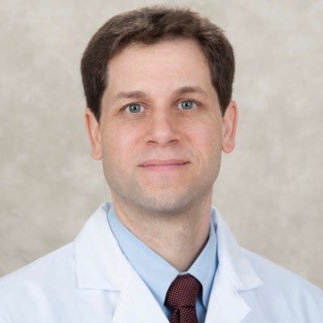
William Tap
Chief of Sarcoma Medical Oncology Service at Memorial Sloan Kettering Cancer Center, specializing in soft tissue and bone sarcomas.
1
APPEARANCES
1
PODCASTS
Aug 13, 2026


Emanuela PalmeriniGUEST
And, uh, would you like to tell me more about, uh, the, the drug that we are currently studying and some of those are, are approved?

William TapGUEST
You know, we talk in oncology about different types of inhibitors, small molecule inhibitors that can actually get inside a cell and, and block receptor signaling.
William TapGUEST
The type of drugs that are actually approved now in tenosynovial giant cell tumor are these CSF1R inhibitors that can actually block the signaling of these receptors, uh, when CSF1 is bound.
William TapGUEST
There's antibodies to the receptor that will prevent the binding of the ligand, uh, CSF1 being the ligand, and then there's what we call ligand traps, so-- uh, which are like sponges that will suck up all of the CSF1.
William TapGUEST
And by, by blocking this binding, this relationship, this intracellular signaling, what, what it does is it disrupts this ecosystem that you were talking about, and it will actually, uh, not only prevent the aggregation of the immune cells at the joint, but eventually the immune cells will die and the inflammation will go away and, and pretty rapidly you could see tremendous improvement in some of the symptoms because you're relieving this inflammatory process, inflammatory conditions, you know, swollen legs, joints that, that are very painful, and you realize once that inflammation goes away, you could feel better quickly.
William TapGUEST
I- in the beginning, we used to think that the neoplastic clone, so that's the cell that has this broken, um, chromosomal rearrangement that secretes the CSF into the, the joint, also depended on the presence of that CSF1 to feed itself, what we would, we would call an autocrine type of loop, where the CSF1 would actually feed the neoplastic cell and the cell would grow.
Emanuela PalmeriniGUEST
What is, um, that you underscore and you discuss more with your patient, uh, to pick, uh, one compound or the other for treatment?