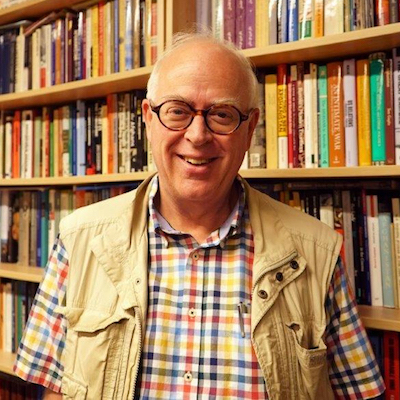
William Maley
Author
3
APPEARANCES
3
PODCASTS
Aug 14, 2026


Andy ParkHOST
Do you think that the US and the West for that matter have learnt the lessons of Afghanistan?

William MaleyGUEST
No, I think the West is exceptionally poor in learning [laughs] lessons these days.
William MaleyGUEST
Blind Freddy could have warned against going into Iran in the way in which the United States did, and this is now having wider ramifications because of the rapid chew-through rate for American equipment, which means that the Ukrainian demands for missile protection against incoming ballistic missiles from Russia are, are literally going unmet at the moment because of the depleted US stocks.
William MaleyGUEST
The United States and some of its allies make the mistake of seeing the world in a compartmentalized fashion, whereas in reality, what goes on in one part of the world sends psychological signals about, uh, the commitment of major powers to other parts of the world as well.
William MaleyGUEST
And in addition, if you fight a conflict in one place, it diminishes your capacity to fight a conflict elsewhere.
Andy ParkHOST
Do you think that the Australian military and also, I suppose, at a government level, we've learnt lessons that perhaps should be carried forward?
William MaleyGUEST
Well, I think to an overwhelming degree, Australian military personnel performed very creditably in Afghanistan, and, uh, the concerns about misbehavior are, are really focused on a small number of, of soldiers.

Andy ParkHOST
Do you think that the US and the West for that matter, have learnt the lessons of Afghanistan?
William MaleyGUEST
No, I think the West is exceptionally poor in learning [laughs] lessons these days.
William MaleyGUEST
Blind Freddy could have warned against going into Iran in the way in which the United States did, and this is now having wider ramifications because of the rapid chew-through rate for American equipment, which means that the Ukrainian demands for missile protection against incoming ballistic missiles from Russia are, are literally going unmet at the moment because of the depleted US stocks.
William MaleyGUEST
The United States, and some of its allies, make the mistake of seeing the world in a compartmentalized fashion, whereas in reality, what goes on in one part of the world sends psychological signals about, uh, the commitment of major powers to other parts of the world as well.
William MaleyGUEST
And in addition, if you fight a conflict in one place, it diminishes your capacity to fight a conflict elsewhere.
Andy ParkHOST
Do you think that the Australian military and also, I suppose, at a government level, we've learnt lessons that perhaps should be carried forward?
William MaleyGUEST
Yes, well, I think to an overwhelming degree, Australian military personnel performed very creditably in Afghanistan, and, uh, the concerns about misbehavior are, are really focused on a small number of, of soldiers.
William MaleyGUEST
There are, however, I think concerns about the long-term wellbeing of those soldiers because the, um, Australian government at the end of June drove the closure of the Afghan Embassy in Canberra, which was, of course, opposed to the Taliban.


Richard RoweGUEST
And by that I mean that it honors the trust which the membership of the United Nations has bestowed upon Australia to ensure that Article 24 and the powers and functions and responsibility of the Security Council are adhered to.
William MaleyGUEST
And mine was Bhante's observation, abandon hope all you who enter here, partly inspired by Hammarskjöld's observation that the role of the United Nations was not to take us to heaven but to stop us from going to hell.
William MaleyGUEST
And it's quite appropriate, I think, to have realistic rather than utopian expectations of what international political organisation can deliver.
speaker_5UNKNOWN
But how important is it really, these individual people who are, you know, to quote Hamilton, in the room when it happens?
William MaleyGUEST
Henry Kissinger, when he became National Security Advisor in the United States, remarked that the big change in his thinking from when he'd been a professor of government at Harvard... was an appreciation of how much more personalities mattered than he had understood from his academic career.
William MaleyGUEST
And of course a lot of writing in international relations is concerned with structures of international society.
William MaleyGUEST
But diplomatic historians often emphasize the contingent consequences of particular interactions between individuals.