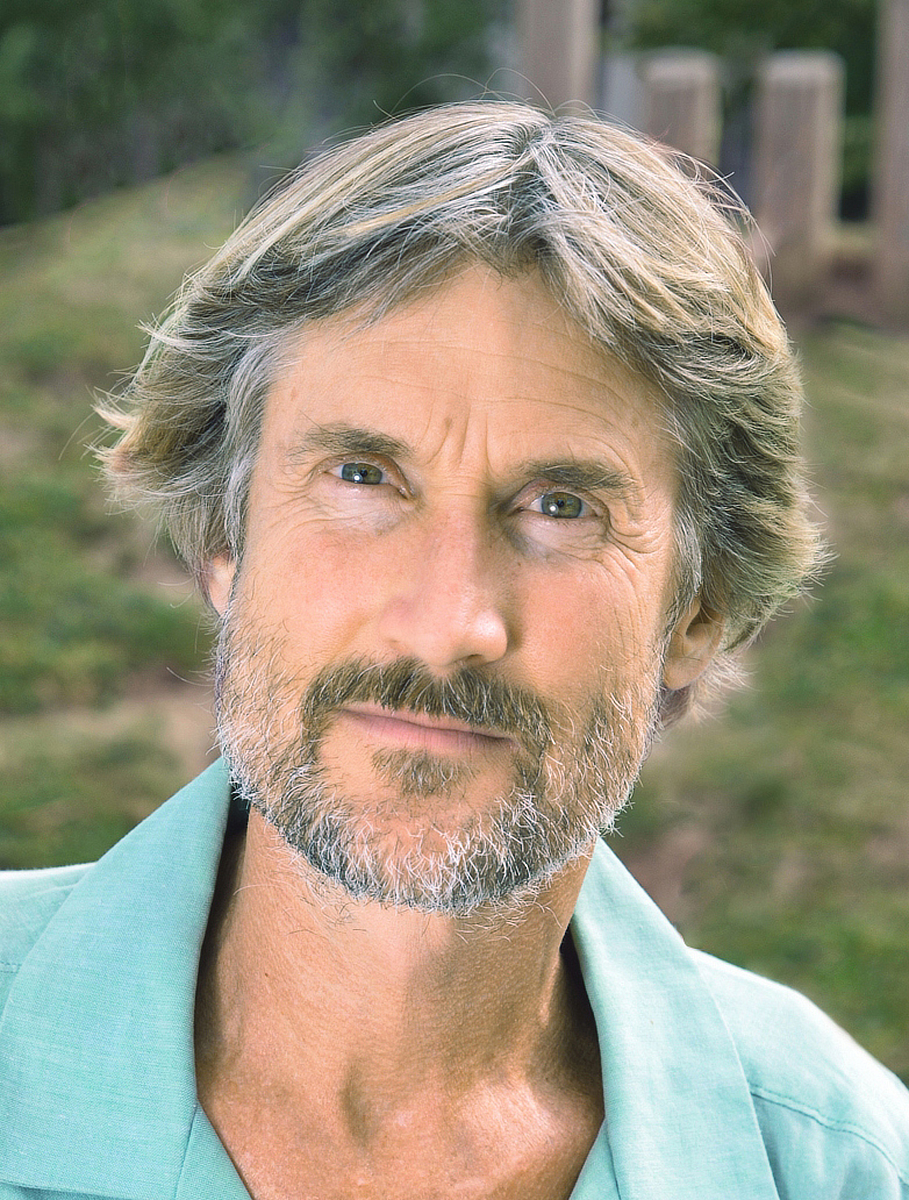
Will Tuttle
Author
9
APPEARANCES
6
PODCASTS
Aug 25, 2026

OkoroHOST
what actually led you to walk down this path in life? Can you just take us to how it all began?

Will TuttleGUEST
And my background as a kid growing up in northeastern United States near Boston, Massachusetts, I was a pretty healthy young person.
19 MINS LATER
OkoroHOST
Yeah.

Will TuttleGUEST
I was born and raised in Concord, Massachusetts, so it's kind of in the northeastern part of the United States.
Will TuttleGUEST
And it's kind of a famous town because there were some well-known philosophers that lived there back in the 19th century, Emerson and Thoreau and Alcott.
28 MINS LATER

Joy SekaniHOST
Before you go, I would love for you to tell us where people can get to learn more about you and even go deeper into your work, your teachings and your books.

PaulHOST
So what happened to you in 1980, Will, that made you… go plant-based initially or just change your perspective on what was happening?
Will TuttleGUEST
Yeah, what it was, you know, the thing for me, I guess just briefly, I was born and raised in the northeastern part of the United States in Concord, Massachusetts, which has this whole history.
Will TuttleGUEST
My forefathers, way back then, they were shooting against the British and saying, we're going to have our own country here, all that.
Will TuttleGUEST
But then later, In the 1800s, there was the transcendentalist movement, which were these authors and philosophers like Thoreau and Emerson, Alcott, and they were experimenting not only with Eastern religion, non-Western traditions, meditation, connecting with nature um also vegetarianism actually they had the first what we would call the vegan community ever in the united states way back in the 1840s was uh with uh bronx and alcott and his and some other people and they didn't eat meat or dairy or eggs or or wool or they wouldn't even wear cotton because cotton came from slavery and there was because we had slavery back in the 18 the forties.
Will TuttleGUEST
No one ever heard of the word back then, but there was this sort of this, this, but, but I didn't, I didn't know anything about that.
17 MINS LATER
PaulHOST
You've done all those other things and then the gift of that is that inner knowing where life – it somewhat becomes less complex because you you stop listening so much to what everyone else is telling you what what what it should look like yeah which is what the world wants with that the world is demanding that we are the the salvation is that we all embody that space because it's not a it's a non-competitive space to be in because you are so unique and you're not looking for others to tell you who you are or to give you affirmation

NazishHOST
Like, what did you not yet understand, and what kept calling you toward the wider definition?
Will TuttleGUEST
And so briefly, uh, I was born and raised back in the 1950s in Concord, Massachusetts, outside of Boston in the northeastern part of the United States.
Will TuttleGUEST
He was a medic in World War II, uh, for the United States Army in France and Germany.
Will TuttleGUEST
And, uh, he, he, um, advised me when I was a child, he said, "Do everything you can to not go to doctors.
Will TuttleGUEST
Try, try to stay away from doctors." He felt that doctors very often made things worse.
8 MINS LATER
NazishHOST
Where does this wholeness actually live in a normal day?

SayanHOST
So with that being said, Dr. Tuttle, could you tell us on maybe a normal day in your own life right now, what is one small practice that helps you stay attuned to that deeper meaning underneath all your ordinary actions?
Will TuttleGUEST
Well, you know, the basic foundation, I think, of decoding reality is the state of our consciousness.
Will TuttleGUEST
And so I wake up every morning and I spend the first two hours of the day in meditation.
Will TuttleGUEST
And I think that's the foundation because the whole idea is that if we are not in a meditative awareness, then our mind is being run by conditioning.
Will TuttleGUEST
And so from the time we're little kids, we're like a little sponge and we just soak up everything and their language becomes my language, their food becomes my food, their way of thinking becomes my way of thinking.
Will TuttleGUEST
And we become like our parents and teachers and friends and neighbors and relatives and the ads on TV and all this stuff.
6 MINS LATER
SayanHOST
What is some of the meaning that is hidden inside, you know, how we eat and how we live with other beings that you wish more people slowed down to actually see, if you can say.

MichaelHOST
Dr. Tuttle, in what ways does animal agriculture undermine the health of our planet? And how does choosing plant-based foods contribute to rescuing our world?
Will TuttleGUEST
The main thing really there's that's a huge subject, but one of the main points, we should really be very aware of is that animal agriculture is hideously inefficient it's so wasteful of land and water and resources so.
Will TuttleGUEST
We my wife and I lived in an rv for 17 years we traveled all over North America, most of North America is.
Will TuttleGUEST
unfortunately been enslaved to vast fields of genetically engineered corn and soy and alfalfa.
Will TuttleGUEST
It's to feed these animals who are stuck away in these stinking sheds by the thousands or tens of thousands.
MichaelHOST
Do we really need to learn about meditation or is this just, you know, you know, something that's OK, but not that big a deal either way?

Will TuttleGUEST
Yeah, I get asked that quite a bit, you know, and I've been a vegan, you know, for 45 years.
Will TuttleGUEST
Back then, it was before there were any vegan, you know, ice cream and vegan cheese and vegan hot dogs and meat and all that.
25 MINS LATER
StevenHOST
Dr. Tuttle, would you like to start?
Will TuttleGUEST
When we put our number one priority on the spiritual path, on a spiritual awakening, we sow the seeds of happiness and health.
Will TuttleGUEST
I mean, then our wisdom opens up and we begin to be guided in the right direction because we're focusing on our spiritual awakening, that we're not just merely this bag of bones that's going to end up in the dirt again.
21 MINS LATER
MichaelHOST
If
Will TuttleGUEST
I'm playing the piano, if I get into a samadhi, it's like the music just starts pouring through.
Will TuttleGUEST
I'm in the... living room of our home we just returned after a five-month lecture tour we gave about 70 lectures across the country promoting compassion for animals and healthy living and i'd like to just begin by dedicating our time together here this morning to the healing of all of our relations so let's just take a moment and just go within i'm sitting at the piano and give thanks for this precious opportunity that we have to connect more deeply with the truth that we are and know that we live our lives to be a blessing to all generations.