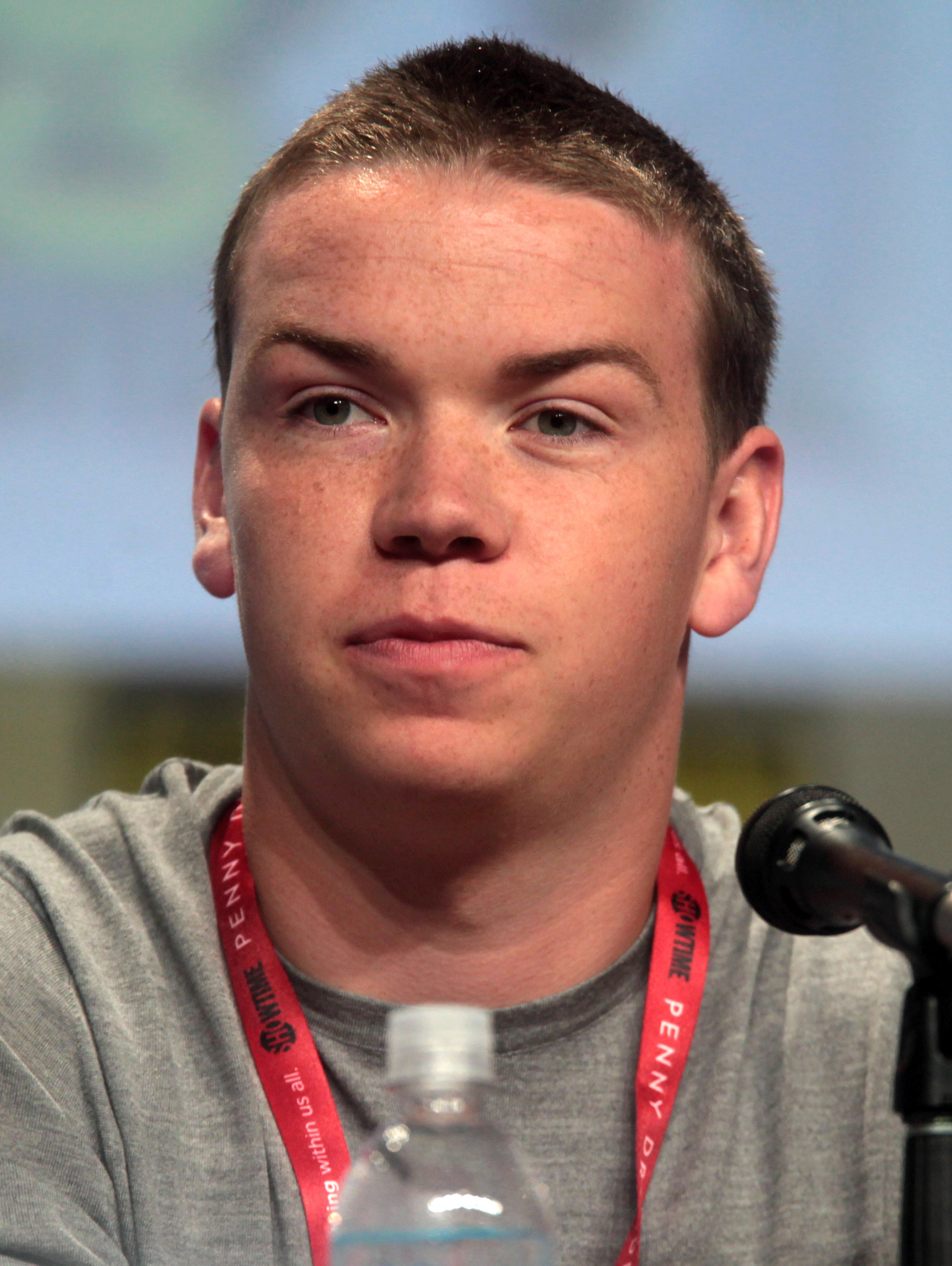
Will Poulter
Actor
9
APPEARANCES
6
PODCASTS
Sep 11, 2026

Will PoulterGUEST
I'd almost sort of suggest that there was certainly kind of both at play in the sense that initially I think there's a sense of pride to sort of overcome or reckon with in asking for help or even kind of being willing to uh engage with the program i think sometimes that's one of the hardest steps and you know from what i know within the recovery community is the success rate is so high annette dio as the real director of this program is so trusted and beloved in the community and participants speak so highly outside of the recovery community about the efficacy of this program, that maybe that hesitancy to engage with the program is lessened just because of how successful it is and what a kind of amazing figure Annette and so many of her colleagues are.
Will PoulterGUEST
And it's actually in the form of developing a sense of pride in himself, learning a new form of pride, one that is kind of akin to self-respect.
Will PoulterGUEST
And you actually see him feel proud, maybe for one of the first times in his life.
Will PoulterGUEST
It's when Annette sits opposite him in the office and she tells him he's doing a good job and we're all real proud of you.
Will PoulterGUEST
One of the things that Adam and I spoke about is How do we kind of show and share without telegraphing it or betraying the kind of, I suppose, tone of naturalism that the film is somewhat defined by? How do we show this idea that that's maybe the first time Cody has ever experienced something like that? And what does that pride do to someone on a journey of self-development? And I think it's critical to him keeping going.

Elvis MitchellHOST
So it's like he's trying to disappear in front of people and to have him sort of reckon with the fact that he exists in the room and he doesn't have to be afraid of being sort of supplanted by his foster brother, that he can talk to a woman, that females in particular, we can see his anxieties with, can't we?


Alison StewartHOST
Um, Will and Noah, what did you learn about acting from watching non-professionals do it?
Will PoulterGUEST
Well, there's, there's something kind of extraordinary in getting the opportunity to work with a community who have lived experience of the, um, of the very subject matter you're trying to kind of bring attention to, and, and you kind of realize as an actor, like, there's, there's nothing like the real thing, you know, uh, in terms of representing that experience.
Will PoulterGUEST
Um, and you know, I think one of the great things about the way that Adam went about this is it was very much with not infringing on the recovery process at, at the top of mind and, and not, um, not allowing for the process of the filmmaking to sort of, uh, add to the burden or the challenges faced by the real participants.
Will PoulterGUEST
And we fail to see the complex journeys and the rich, textured lives that everyone lives, and, um, we need to bear that in mind if we're gonna sort of really truly extend empathy to folks in this situation.
Will PoulterGUEST
We were fortunate enough, uh, because of the way that Adam wanted to shoot the film, to spend ample time with participants in the program, um, and to even sit in on some of their meetings, their NA meetings, um, or their Anonymous meetings.
Will PoulterGUEST
And I would say that after spending the hours that we did speaking with them, and then to go and
Will PoulterGUEST
Um, what I like about it is that, you know, in, in many ways the restrictions and the res- and, uh, the restraints force you to know what your priorities are and what your values are, and I think it a- it, it meant that we could really make sure that we were all aligned in terms of what we were after, um, and what our process would be going in.

Elvis MitchellHOST
Poulter recently toured the film through Ohio, where it's set, and The Treat is a diary of his travels.
Will PoulterGUEST
[gentle music] Recently, I got a chance to be on the press tour with Annette Deyo, who is one of the leads of the film and also the leader of the adult recovery program in Ohio, and writer-director of Union County, Adam Meeks.
Will PoulterGUEST
And we got the opportunity to go to a number of different movie theaters around the state, uh, many of which independent, with fantastic programming, with lots of wonderful independent films.
Annette DeyoSOUNDBITE_SPEAKER
They have better tools to work with Jack.
Will PoulterGUEST
She had this analogy about challenging the stigma around addiction and supporting recovery efforts that I, I really love.
Will PoulterGUEST
She said that if you were a resident in a small town and your child was ill, or your child had experienced a injury of some kind, maybe they were upstairs in the bedroom sick from something, you might expect to receive a casserole from your neighbor, a sign of solidarity, an extension of empathy.


Matt NegliaHOST
Um, was it that experience that made you wanna come back and, you know, re-explore, uh, this side of, uh, what is unfortunately still plaguing our country?
Will PoulterGUEST
You know, I think, uh, a lot of my education on, uh, the opioid crisis specifically came about through reading, uh, Beth Macy's book, Dopesick, and then, um, and then being a part of the show, and I'm, I'm grateful to Danny Strong and everyone on that project for sort of contributing to that, that education.
Will PoulterGUEST
I think, um, the show was definitely focused on sort of exposing how human greed kind of, you know, drove that epidemic and how, um, so many, you know, hardworking American people were kind of taken advantage of and were prescribed, you know, um, a really dangerous narcotic under false pretenses that it was in fact medication.
Will PoulterGUEST
And, um, that left a few kind of like lingering questions for me, and I think, um, questions that the, the show kind of alluded to.
Will PoulterGUEST
Um, you know, what, what can be done to help people who've been affected by, um, the epidemic and while a lot of the damage is irreparable, you know, what workable and actionable responses are there, um, in the interest of recovery? And in a way, Union County and the Adult Recovery program at the center of it kind of answered that question.
10 MINS LATER


Sean FennesseyHOST
... and that he's seen it firsthand what is portrayed in the film, but for both of you, I'm curious about that.
Will PoulterGUEST
As you say, A- Adam's from the area, and he's had friends and family kind of affected by, um, the epidemic, uh, uh, the opioid epidemic, which was really kind of, um, taking a hold of folks, you know, around the time that he was out there visiting family.
Will PoulterGUEST
Um, so his grandmother had got sick, I believe, in 2017, 2018, and he was seeing, you know, the effects of, um, how this opioid epidemic was, you know, impacting people.
Will PoulterGUEST
And at that time, he was, you know, spending a lot of time in the area, and he was at a folk music concert in somebody's house, which is kind of actually, like, more of a typical thing in Ohio than, than, than maybe other places, and it's, it's a beautiful thing that, uh, is something of a kinda, like, cultural practice out there.
Will PoulterGUEST
He was introduced to Annette Dio, who is the real-life, um, director of this adult recovery program in, in Ohio.
22 MINS LATER


Al RokerHOST
yeah And in fact, a number of the folks in the film are from that community that you brought these real actors, to the point, these real folks, to the point where the film almost borders on, it almost feels like it could be a documentary, that it's so real.
Will PoulterGUEST
And that's also, I think, pivotal to kind of the strength of the message that the film really wants to send.
Will PoulterGUEST
Um, I think Cody is, uh, sort of a, a, an amalgam of several different people, um, who have real lived experience of, you know, the recovery program.
Will PoulterGUEST
Um, he is inherently quite a quiet and reserved person, I think, with a lot of sort of, uh, repressed trauma, um, and certainly dealing with some mental health conditions.
Will PoulterGUEST
And I think that, um, often when we talk about substance use disorder, we are inherently talking about, you know, um, mental health issues, um, because the two often go hand in hand.
Will PoulterGUEST
And, and certainly trauma nearly always plays a role in, um, someone's relationship to, uh, substance use disorder.
7 MINS LATER


Will PoulterGUEST
a good portion of the film takes place on this massive ship that's what a good portion of Hook takes place on.

Joy HunterHOST
I will go to that for Titanic like your hook like my Titanic is your hook I watch it me and my friends watch it every New Year's Day hung over and get an Indian takeaway I
Joy HunterHOST
your drama teacher was a big part in in getting you up for that role can you tell us a bit about that journey of getting cast for son of rambo
Will PoulterGUEST
yeah so so laura lawson um was my drama teacher and kind of has been an amazing mentor to me and really you know i owe my career to her in the sense that she created school of comedy which was originally like a sort of after school kind of drama club that she sort of kind of snuck me into all the participants at that stage were kind of I want to say like 16 and over and I think she kind of introduced me when I was sort of 11 and so I was hearing things that maybe I hadn't heard or you know wasn't really allowed to say before and and even then like these relatively young people were kind of handling material that was adult and you know it was mature comedy and they were doing it so brilliantly and it was really inspiring to me to be in that space.
Will PoulterGUEST
I think also being like a kind of precocious kid who wanted to be, you know, an adult before they were one.
Will PoulterGUEST
And we were gigging like theater pubs and, you know, away from doing the kind of events at a school.
Will PoulterGUEST
We were sort of like just basically performing in any space that would have us or take a chance on, you know, a group of kids doing adult comedy, which often resulted in people just putting the phone down or... throwing flyers away the second we gave it to them on the streets we went to Edinburgh Festival with it and that was amazing and then truthfully the timeline's a little bit murky I can't quite remember when I did my first Edinburgh experience and when Son of Rambo came about but I do know that I was 12 when I did Son of Rambo and it was it was my first film and you know the premise of Son of Rambo is basically two kids you know who are movie fanatics watch a film and recreate it over their summer holiday That was basically what me and Bill Milner, who's still a friend to this day, had to do.
24 MINS LATER
Joy HunterHOST
I'd love to know if there's any pattern in what attracts you when a script comes across your desk, because you've done so many different roles.