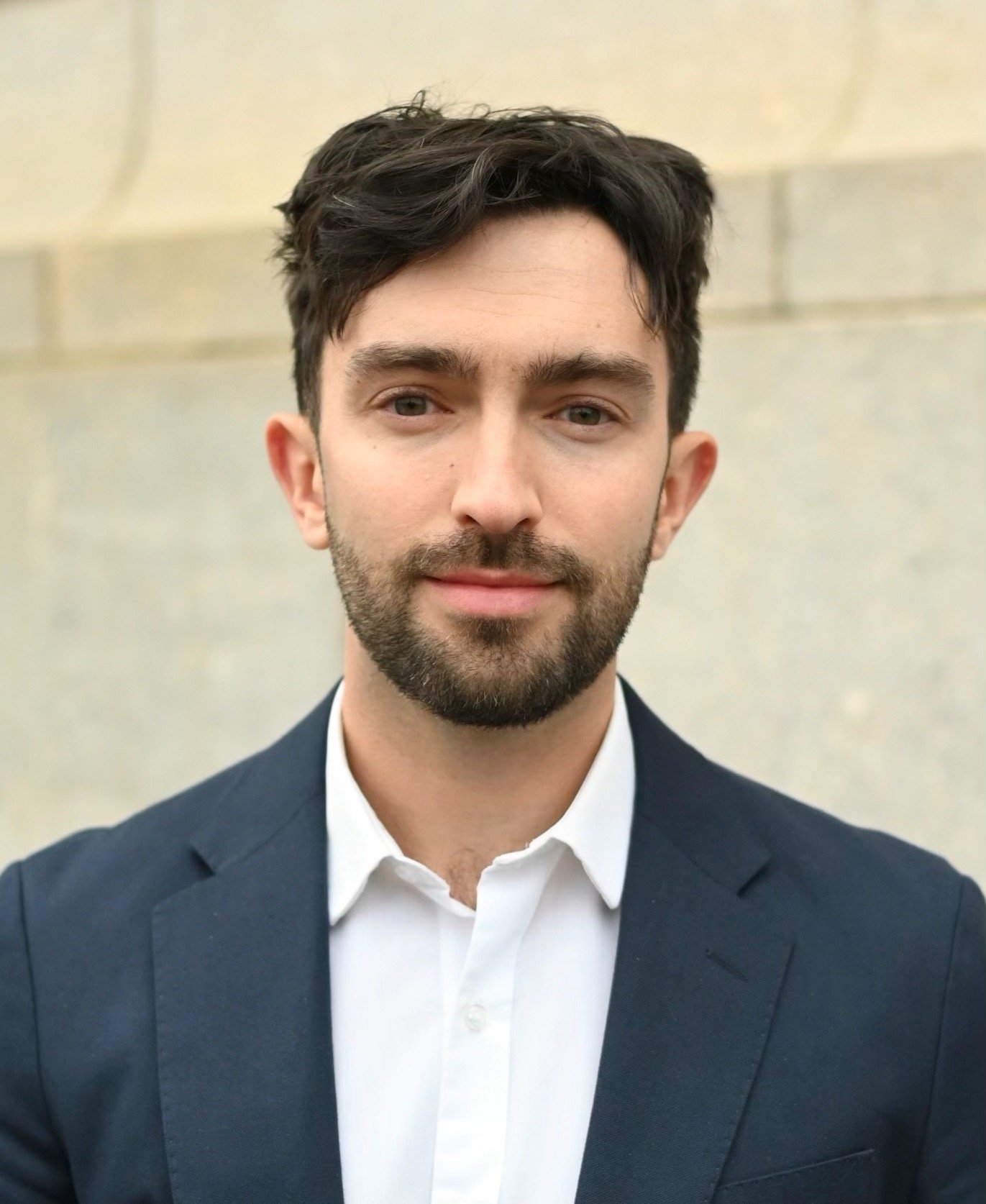
Will Freeman
Journalist
13
APPEARANCES
9
PODCASTS
Nov 3, 2026


Will FreemanGUEST
So just for some perspective here, this is a town of about 30,000 people on a little arid hill right next to the port city of Manta, a larger city in Ecuador.
Will FreemanGUEST
It's all, the whole town centered around a little artisanal fishing port where people have fished for generations.
Will FreemanGUEST
Actually, I met fishermen in the town who still knew how to navigate the open Pacific by the stars.
25 MINS LATER
33:26
And given, as you said, the global nature of the trade, where would you suggest that the Trump administration sort of, you know, focuses its effort, focuses its money or also the U.S. military?

Will FreemanGUEST
So coming back to the Western Hemisphere specifically, I mean, I think the paradigm shift in the national security architecture with this administration is we've gone from benign neglect, you could say, which actually wasn't so benign, and I'll get to that in a second, under pretty much all the previous recent administrations, to the bossy big brother.
Will FreemanGUEST
who is a bully in some cases, who's very heavy-handed, who in some cases is self-dealing, but I think is also in certain other areas produced results that other administrations couldn't.
Will FreemanGUEST
And I say that as someone who's very critical of this administration, but let me explain why.
Will FreemanGUEST
And I think first to explain why we need to understand where the quote unquote benign neglect got us.
38 MINS LATER

Will FreemanGUEST
So coming back to the Western Hemisphere specifically, I mean, I think the paradigm shift in the national security architecture with this administration is we've gone from benign neglect, you could say, which actually wasn't so benign, and I'll get to that in a second, under pretty much all the previous recent administrations, to the bossy big brother.
Will FreemanGUEST
who is a bully in some cases, who's very heavy-handed, who in some cases is self-dealing, but I think is also, in certain other areas, produced results that other administrations couldn't.
Will FreemanGUEST
And I say that as someone who's very critical of this administration, but let me explain why.
Will FreemanGUEST
And I think first to explain why, we need to understand where the quote-unquote benign neglect got us.
38 MINS LATER


Will FreemanGUEST
And for a couple of years now, they've already known to make the joke, all the games daddy likes are the same.
Will FreemanGUEST
Because there is this really fascinating thing that, yes, there's a truth to that.
34 MINS LATER

Will FreemanGUEST
I mean, that is still what we're seeing in the Eastern Pacific and with the fishing boats.
Will FreemanGUEST
Those are the speed boats you see often in the videos posted of the explosions afterwards.
Will FreemanGUEST
And another class were these large civilian fishing vessels, which the administration claims are being used to traffic illicit fuel to narco vessels further out to sea.

Jake TapperHOST
What are other countries doing to fight trafficking? Are any of their strategies effective?

Michael SmerconishSOUNDBITE_SPEAKER
So my question to you, is there any amount of crime reduction that would cause you to say the trade-off is worth it?
Will FreemanGUEST
Well, so I don't believe a lot of the claims about crime reduction because crime has been trending down nationwide in cities that have flock cameras and cities that don't have flock cameras.
Will FreemanGUEST
So I would need to see more evidence of that to actually trust that it works.
Michael SmerconishSOUNDBITE_SPEAKER
Side effects, be specific.
Will FreemanGUEST
In the process of putting these ALPRs up and setting up the system, in order to search it, you have to record everyone who drives by.
Will FreemanGUEST
That's mostly innocent people because not tons of criminals are driving down the streets.
Will FreemanGUEST
It creates a database of where everyone has been for generally the last 30 days, a searchable database.


Will FreemanGUEST
Yeah, so, uh, in, in the process of, uh, putting these ALPRs up and, uh, setting up the system, um, in order to search it, you have to record everyone who drives by.
Will FreemanGUEST
So, uh, yeah, that's mostly innocent people because, uh, not tons of criminals are driving down the streets.
Will FreemanGUEST
Uh, so it creates a, a database of where everyone has been for, uh, generally the last 30 days, um, a searchable database.
36:41
I, I, I, I guess, I guess it's time for me to, to play the card of, well, don't abduct kids and don't steal cars, and you've got nothing to worry about.


Jim LindsayHOST
And so what did you hear from the Cubans you met? Do they blame, uh, the government? Do they blame the United States? Is it just resignation? What's, what's the mood?
Will FreemanGUEST
So just to, to put this in perspective, because people don't have power, they can't- If they have a fan, they can't use it.
Will FreemanGUEST
It's boiling hot in Cuba and high humidity, so people aren't sleeping, right? Most people aren't eating.
Will FreemanGUEST
They're maybe eating once or twice a day, and they're spending virtually all their time trying just to figure out just how to survive, right? So the mood is exhaustion and frustration.
22 MINS LATER

Will FreemanGUEST
Well, it comes at a moment of extreme uncertainty, I'd say, for the future of the authoritarian regime on the island.
Will FreemanGUEST
Of course, it's persisted a long time, uh, and, you know, through a lot of other crises when people thought that it might finally collapse.
Will FreemanGUEST
the military and other authorities that rule the island had transformed the economy to revolve around tourism.

Ryan NoblesHOST
Do you think the intelligence community is underestimating the opposition in Venezuela?
Will FreemanGUEST
And I think that they said that not despite her connections to other regime insiders, but because of them, because she commands such power, uh, and already has for a number of years.
Will FreemanGUEST
She and her brother, uh, were instrumental in continuing to make the Venezuelan economy run when it came under heavy US sanctions.
Will FreemanGUEST
They figured out how to continue producing oil, selling it, k- skirting sanctions, evading them, and selling it around the world.
Will FreemanGUEST
Um, they, uh, have been crafty negotiators in a number of circumstances, sometimes directly with the United States.
Ryan NoblesHOST
Even if that's what they wanted to do, is- is Venezuela even in a position where elections are possible right now? Is the president right? Is there some degree of fixing that needs to take place first?

Will FreemanGUEST
Now, those are really crucial economic, uh, crucial economic lifeline for the regime, unlike the small speedboats carrying drugs.
Will FreemanGUEST
Uh, what is Maduro saying? He's actually saying, according to The New York Times, that he may put soldiers on some of these oil tankers, Venezuelan soldiers, carrying that oil to China.
Will FreemanGUEST
Now, if the US tried to seize or board those vessels, uh, as we've seen with others in recent weeks, what could happen? Could we end up with, um, a shootout between US and Venezuelan forces, and the situation escalating out of the control of both leaders? Um, that's what I think I, I'm worried about.
Will FreemanGUEST
You know, it's that we could also have that potential for just an accidental, uh, escalation here that puts the two countries in war.
Ryan NoblesHOST
I mean, how do you expect Maduro will respond to this latest threat by President Trump? Is there a lot of pressure that Maduro's feeling now given these latest escalations?
Will FreemanGUEST
I mean, the idea that somehow the Maduro regime was sustained by little speed boats carrying packets of cocaine across the Caribbean, that was just ludicrous.
Will FreemanGUEST
Um, now that said, this is a dictator in Venezuela who's shown an incredible capacity to survive economic hardship and pressure before, right? We should remember that Venezuela, as of 2019, was already experiencing what economists call the worst economic crisis outside of a war zone in the past few decades, right, and he survived all of that.
Ryan NoblesHOST
I know you think that regime change is probably unlikely, at least in the short term, but if it were to occur, h- how destabilizing would that be in Venezuela, and would it practically do anything when it comes to the illicit drug network?


Will FreemanGUEST
Yeah, look, well, I think, uh, on that point, there was a bipartisan consensus going back at least until the last year of the Biden administration that, uh, China looked like it was developing the capacity to potentially interfere in canal operations.
Will FreemanGUEST
Keep in mind, this canal handles 40% of all US container traffic, uh, maritime traffic every year.
Will FreemanGUEST
So, look, it's a real issue, but I think that there the rhetoric hasn't necessarily been productive.
Will FreemanGUEST
So, you know, you're hearing these j- claims, "We're gonna take back the canal." What exactly does that mean? Uh, if it means just the concessions, the deals we've worked out so far, okay, so be it.
Will FreemanGUEST
But by raising that idea of taking back the canal, it's really weakening the pro-US president in Panama.
Will FreemanGUEST
Ironically, I think it's taking one of our best partners, one of Trump's best partners in the region and putting him in a tougher and tougher political spot.