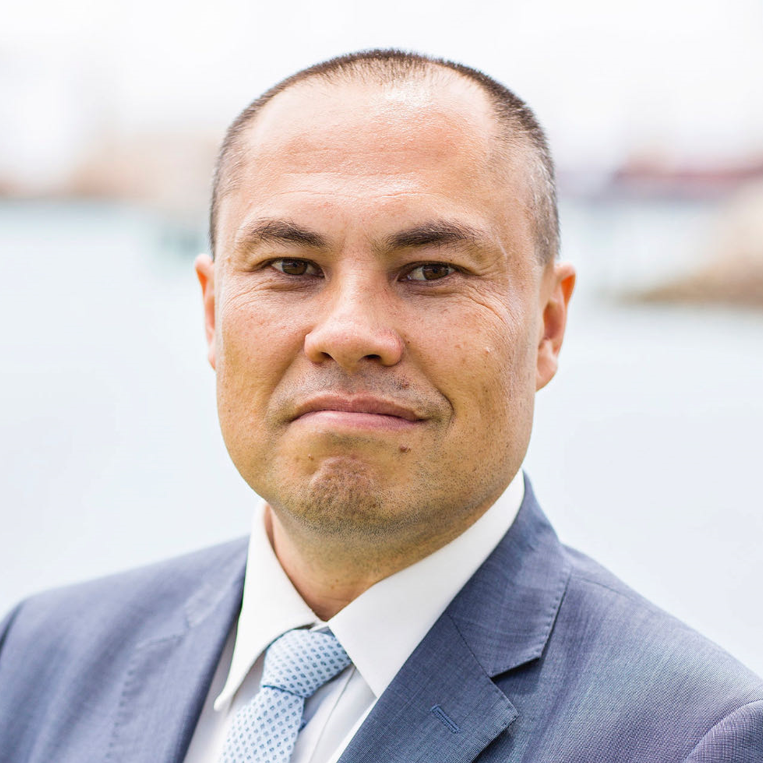
Warwick Powell
57
APPEARANCES
12
PODCASTS
Nov 23, 2026


Warwick PowellGUEST
Which topic you would like to go first? Well, the first thing I should do is apologize to your viewers.
Warwick PowellGUEST
But having looked at the performance of the Nvidia stock as well as much of the tech stocks, I thought there was enough hair cutting going on.
Warwick PowellGUEST
Yeah, look, it's been a real rollercoaster fortnight, hasn't it? And I guess we can start with Jensen Gate.
Warwick PowellGUEST
And, you know, for mine, I've probably been a little bit less interested in the minutiae of the campaign that was orchestrated to oust Jensen, the timing of it, the role of the New York Times, the role of Marco Rubio, the rewritten... intelligence memo and indeed the role of probably some of the other oligarchs behind the scenes.
26 MINS LATER

speaker_7ADVERTISER
Wayfair, Wayfair, Wayfair, Wayfair,
Warwick PowellGUEST
Speak to a political elite that has lost its bearings and is clutching to, in many respects, I think, not even a reality of a recent past, but the imaginary of the recent past.
Warwick PowellGUEST
and through that imaginary are seeking once again to project american unilateralism and american exceptionalism but without any foundations whatsoever to give effect to that and i think one of the interesting contradictions if you will within the american political system particularly inside the Beltway and amongst the elite, is that there is now a fragmentation of attitudes towards this evolving and changing landscape.
Warwick PowellGUEST
I think we do have someone like President Trump, who I don't think has any particularly deep or well-considered views about things, but is an instinct player and he is not so invested in the old institutions of Washington that he can't just sense that the world has changed and that the Americans can't quite do the things that they once used to do.
Warwick PowellGUEST
Now, their response is to try to get allies to muscle up and take the fight up and all those sorts of things.
10 MINS LATER

JoelHOST
Can you run us through a little bit about that through the millenarian drive that's backing it?
Warwick PowellGUEST
Look, the primacist impulse is deep and it manifests itself right across the American body politic, deep into the cultural outlook of, you know, many Americans.
Warwick PowellGUEST
what makes America America, this idea of it being an exceptional country, God ordained, privileged, entitled, and ultimately with a responsibility to lead the world, lead humanity, towards what the Americans would view as the good life, according to the American gospel.
Warwick PowellGUEST
And these impulses have been backed by centuries of military adventurism, sometimes in the name of protecting its own homeland, sometimes in the name of expanding its economic purview, particularly the expansionary wars that were conducted vis-a-vis Mexico and projecting into Latin America.
Warwick PowellGUEST
Of course, the wars that raged across what we now know as the United States of America in times past.
Warwick PowellGUEST
And of course, ever since the Second World War, we've seen a cavalcade of American military interventions around the world.
22 MINS LATER
Marco RubioSOUNDBITE_SPEAKER
Recall that


Tu YunHOST
So there comes this question, would there be some concern that this new regulations may be abused or applied in some inappropriate circumstances? Maybe to Warwick, from an outsider's perspective, do you have similar concerns?
Warwick PowellGUEST
When new laws are introduced, there is always the inherent possibility that they may be applied capriciously and in unpredictable ways.
Warwick PowellGUEST
There are also concerns that definitional vagaries might come into play, which will lead to favouritism or unfair treatment.
Warwick PowellGUEST
There may also be concerns about procedural fairness or a lack of consistency in procedural justice.
Warwick PowellGUEST
All of these kinds of concerns come into play whenever any new laws are introduced.
Warwick PowellGUEST
From an outside perspective, I think that there is always at first a precaution or a cautious view about how new laws are to be applied.
8 MINS LATER
Tu YunHOST
Then, Warwick, what other lessons could China draw from those jurisdictions in protecting trade secrets while safeguarding legitimate business activities and technology cooperation?
Warwick PowellGUEST
Yeah, look, I think you've hit on something very important there, Radhika, and that is this idea that the development of the forces of production lays the foundations for prosperity and abundance.
Warwick PowellGUEST
So many of the viewers will of course know that a common critique from the mainstream Western media about China is that it suffers from what they call surplus or excess production, excess capacity.
Warwick PowellGUEST
And abundance is actually the very foundations upon which you can actually have a thriving society where people have the means by which they can enjoy a productive and a healthy life, but also the time to explore other parts of what it means to be fully human.
Warwick PowellGUEST
The other thing, too, is those two companies we visited, one is in energy and the other one is in telecommunications.
22 MINS LATER
Warwick PowellGUEST
where do you want to start? How about we start with actually an executive order that President Trump signed in the last 24 hours, which was to enable the deferment on the payment of taxes and excises on diesel in the United States in the name of reducing the cost of diesel now.
Warwick PowellGUEST
reason why i wanted to start there is because i think it opens up it's like a gateway to just about everything else that's going on because in that executive order itself it speaks to the political dilemmas leading up to the uh the um midterms which is what in about 20 or about four weeks or so you know three and a half four weeks it speaks to actually a tacit recognition that the cost of energy particularly for transportation in the united states is creating substantial pressures on trucking companies logistics transport and also households who use diesel for their for their transport And the extent to which it is a crisis is not so much reflected in the wording of the preamble and the discussion around the executive order, but actually in what Energy Secretary Wright said online and in an interview in relation to this.
Warwick PowellGUEST
And Vice President Vance also talked about this as an embodiment of President Trump's quick action on important issues, blah, blah, blah.
Warwick PowellGUEST
But what it tells us is that this issue of energy costs is starting to bite politically.
Warwick PowellGUEST
And Trump is seeking, of course, to ameliorate that heading into the midterms.
13 MINS LATER
Carl ZhaHOST
Do you see the current U.S. obsession, I mean, U.S. quagmire in the Strait of Hormuz will lead to some kind of detente between U.S. and China, as we have seen with Trump's visit to China and Xi Jinping's visit to the United States?
Warwick PowellGUEST
I'll put some cards on the table that I... was remiss in not putting them on the table earlier.
Warwick PowellGUEST
And being half Chinese, straddling these worlds, sometimes I think I understand it, and most of the time, though, I think I understand it even less today than I ever did.
27 MINS LATER

Mattias DesmetGUEST
And I think it's as important that we criticize the absurdity in the dissident camp as we try to do in the mainstream

Warwick PowellGUEST
Isn't it amazing in the last speaker that would put me between everybody and afternoon tea, right? Which, of course, is a very dangerous position, as was mentioned yesterday.
Warwick PowellGUEST
Firstly, can I thank Pascal and his team for their generosity in inviting me? and for everything that you've done over the last few days to make this event, I think, a truly memorable one in more ways than one.
Warwick PowellGUEST
It's also a tremendous pleasure to spend three days with a group of exceptionally bright people.
Warwick PowellGUEST
who also, in a sense, despite all of our diversities in where we come from and our own perspectives on things, nonetheless have, I think, a deep core common landing point.
7 MINS LATER

Warwick PowellGUEST
And this is a contrast, of course, to the center of gravity that we find in neoclassical economics, which is around the question of equilibrium.


Xu QingduoHOST
Harold, what stands out to you in terms of the Long March spirit? You know, today we are commemorating the 90th anniversary of this important event.
Warwick PowellGUEST
Yes, and I always remember it because my birthday is October the 21st, so I will never forget that the Long March anniversary is the next day.
Warwick PowellGUEST
I think the spirit, you know, it's something that is that universal idea of the greater good, but also having that personal aspiration to never give up in your heart, but also to work for the greater good.
Warwick PowellGUEST
And As the other commentators said, it's that adaptability, not only to the geography, and I certainly don't measure myself as having the same experience, although I retraced the route twice.
Warwick PowellGUEST
But the ability to adapt to the terrains, to the different people, I mean, you could not have chosen a more challenging route if you just had a map of China and said, where should you go to have to adapt and to work and go through the different regions, the different tribal groups.
6 MINS LATER
Xu QingduoHOST
And what's their goal here? What does Tokyo intend to achieve by doing this, by such a revision?
Warwick PowellGUEST
Well, they're not the first ones of the group of American allies, particularly led by the United States, frankly, over the last two decades or more, to, through practice, through actual conduct, progressively water down the longstanding historical commitments to the question of one China.
Warwick PowellGUEST
The salami slicing of the one China policy or the one China principle has been something that United States and its allies have been pursuing now for quite some time, trying to raise questions around the legitimacy of the historical settlements and of course, exploiting these small moments what appear to be small moments to create new openings to legitimize the thought process that in fact um we're not dealing with one china but in fact um in effect de facto two china's and uh and this is of course a very troubling move because the very fabric of the peace arrangements within the western pacific after the end of the second world war involved really two things one was japanese acknowledgement and acceptance of its defeat and its adoption of its pacifist constitution and all of the other arrangements that went along with that And ultimately also was the settlement of the question of Taiwan by virtue of a one China settlement.
Warwick PowellGUEST
So these two pillars of Western Pacific or North East Asian security and peace are now fundamentally being questioned.
Warwick PowellGUEST
And if these two pillars begin to be watered down and weakened as they currently are, then I'm afraid we are staring at an incredibly unstable period coming
Xu QingduoHOST
So how far can she go? Can she manage the economy or somehow the growth of the economy without, let's say, introducing a shock level of market volatility?
Warwick PowellGUEST
Well, this has been the longstanding problem for one Japanese administration after another, is that for the past two decades or so, one administration after another has singularly failed to restructure and revitalise the very foundations of Japan's economy.

Warwick PowellGUEST
And that's a consequence of the things we were just talking about, the continual efficiencies and pressures to bring costs down.
Warwick PowellGUEST
We also have intense competition at the retail end, which makes it very difficult for enterprises to sell things for super profits.
Warwick PowellGUEST
So there's strong downward pressure on the price of goods and to some extent services to final consumers.
16 MINS LATER

Radhika DesaiHOST
And there's so much to talk about Warwick, so why don't we just begin with your take on this set of developments?
Warwick PowellGUEST
Look, I think that there are two broad parts that we need to, in a sense, unpack and then try to bring it back together again.
Warwick PowellGUEST
The first part goes to the substantive issue of the risks of AI and what they may or may not be and why they may or may not be real.
Warwick PowellGUEST
And I think it's important for us to understand in essence what it is that we're dealing with as a kind of technology.
Warwick PowellGUEST
What we've got is large language models and large language models are in large part probabilistic machines that are open ended.
Warwick PowellGUEST
It requires a very particular way of conceptualizing and understanding language and linguistics to actually have this sense of what large language models actually are.
Warwick PowellGUEST
The empiricist tradition within epistemology has a view of language as being in a stable signified signifier relationship where language and words that exist within a domain, the domain of language and thought have a direct relationship with an external reality.
38 MINS LATER
Warwick PowellGUEST
young Americans to connect, to explore and to find their own way in terms of China and the relationship that America and Americans have towards China.
Warwick PowellGUEST
And this comes on the back of recent public opinion survey in the United States, which shows, I think, two things.
Warwick PowellGUEST
that are of interest for us right now one is that there is a broad warming of relationships towards china and the need for america and china to collaborate it's not an overwhelming um tsunami of public goodwill but there is a warming the trajectory seems quite clear for the time being that there really isn't a deep appetite for intense friction and conflict And interestingly, that warming is most pronounced amongst younger Americans.
Warwick PowellGUEST
So there is a generational demographic question as well about attitudes towards China.
Warwick PowellGUEST
And I think this announcement by President Xi of the 100,000 will contribute and help consolidate that warming of perspective from younger Americans.
17 MINS LATER
Radhika DesaiHOST
So, Warwick, what's your take on these two matters? And do you think they are related?
Warwick PowellGUEST
It is part of an ongoing campaign by the United States in particular and from time to time more recently the European Union to try to lay responsibility for what they see as their own economic problems at the feet of the People's Republic of China by framing it within a wider macroeconomic lens where they speak about things like global imbalances The idea of global imbalances, as it's being used these days, I think is very deliberate.
Warwick PowellGUEST
We want a world to be in balance, but it also lends a certain sense of technicality to it as if it rises above the political fray, the fray of geopolitical interests and the interests of different sections of American capital and European capital.
20 MINS LATER
Xu QingduoHOST
So what do you see as this, what does this visit mean to both sides, as well as this bilateral relationship here?
Warwick PowellGUEST
Look, I think the thing to understand about this visit is that in a very difficult and challenging domestic and international environment, President Trump and President Xi have ensured that the mechanisms are in place for critical issues that impact not only the bilateral relationship, but actually the welfare of many peoples and countries across the globe are in place to sustain the kind of discussions that you're going to need to have to move these issues forward.
Warwick PowellGUEST
And it is easy to, in a sense, walk away from these difficult issues in the face of domestic challenges.
Warwick PowellGUEST
And in the United States, there is no doubt that the Beltway the political elite inside Washington hold a particularly hostile view towards China and President Trump I guess through these mechanisms has ensured that he and his administration have some political room to enable them to address the issues of substance whilst keeping their domestic critics to some extent at bay.
Warwick PowellGUEST
So I think the most important outcome of this, aside from the signaling, and that is important in and of itself, of course, that this relationship matters deeply to President Trump and to the United States and to China as well, but that it ensures that there are ways and means by which the two sides can progress discussions.
12 MINS LATER
Xu QingduoHOST
But how to manage this competition? What both sides need to do to make sure the competition is a healthy one?

Song RuixinCORRESPONDENT
Why is the Taiwan question being brought into this trilateral framework?
Warwick PowellGUEST
A couple of decades now, there has been a concerted effort, and it has been intensifying by, uh, the United States and its allies to water down and salami sice- salami slice the Taiwan question.
Warwick PowellGUEST
Whilst they officially stand by the, uh, the One China policy or the One China principle, um, they have been seeking ways in which they can, in practical terms, water that down and undermine that basic proposition of international law and international relationships.
Warwick PowellGUEST
It's a way of applying pressure to the People's Republic of China and Beijing, and it's a way of creating instability on China's peripheries, which, uh, particularly the United States, through its allies, seeks to, um, use as part of its ongoing, and I mean multiple decades ongoing, campaign to contain China, both economically and also from a, a regional geographical influence point of view.
Warwick PowellGUEST
Uh, there has been a persistent campaign to, um, to water down the practical implementations of the agreements that Ch- that the United States had entered into with China over the decades, as well as the positions adopted by these other two countries.

39:39

Where do you see this debate going? Do you see the frontier AI development as a genuine systemic threat or is the current pacing debate essentially shaped by commercial and geopolitical interests?
Warwick PowellGUEST
So on the safety question, I think that it would be irresponsible to take the attitude that there are no risks, that the pace of AI development and its capacity to operate autonomously in a self-learning mode is real, and we've seen some recent examples of that.
Warwick PowellGUEST
And therefore, anybody, whether they're individuals or organizations or nation states, would be irresponsible to just dismiss concerns about AI getting out of hand and running faster than humans can keep up with simply because there are other agendas at play.
Warwick PowellGUEST
There are also, I think, some very serious commercial agendas at play as well.
Warwick PowellGUEST
the American AI business model was premised on the idea that it would, the small number of American AI firms with proprietary technologies would be able to sustain very high walls and very wide and deep commercial moats that nobody elsewhere in the world could challenge them on.
Warwick PowellGUEST
And by virtue of that, we're in a position to generate economic rents sustain revenue levels at that delivered substantial above average profit rates.
7 MINS LATER

Asbed BedrossianHOST
So where are the real geopolitical bottlenecks in the AI stack currently? Are they chips, compute, energy? Where do you see this going?

Ding HengHOST
So first of all, how would you look at this anthropic CEO's recent fear-mongering regarding China's artificial intelligence development?
Warwick PowellGUEST
Well, I think it speaks to a certain sense of deep-seated American entitlement, irresponsibility and desperation all in one go.
Warwick PowellGUEST
The American AI proprietary business model is dead in the water, and it has been dead in the water ever since deep-seek emerged.
Warwick PowellGUEST
almost two years ago, not quite two years ago, followed on by a flurry of high performance open source models released to the global marketplace.
Warwick PowellGUEST
The large, highly capitalized, heavily indebted American AI tech sector is now desperately looking for ways in which they can secure preferential government treatment from the American government in ways that will protect them and enable them to cover over a business model that no longer has any foundations at all.
Warwick PowellGUEST
So in many regards, the way I would interpret this particular call, which is incredibly shrill, incredibly alarmist and incredibly irresponsible, is that it is a reflection of a growing sense of financial desperation covered over by concerns about safety and security.
Warwick PowellGUEST
Look, American corporations and the instruments of the American state have long accused China and Chinese companies of intellectual property theft.
Warwick PowellGUEST
And again, we still use the metaphors associated with a very physical view of money.
Warwick PowellGUEST
You know, this idea of moving money across borders and moving money from one account to another.
Warwick PowellGUEST
When, of course, what is happening today is literally deductions from one ledger and additions on another ledger.
Warwick PowellGUEST
And it's important to remember that because what we're really dealing with is information systems.
Warwick PowellGUEST
And those information systems need a number of features for them to function properly.
16 MINS LATER
speaker_6ADVERTISER
liquidity problems, particularly for the global south.

Dou HongyuHOST
So the law is aimed at solving some problems, but how difficult is it to implement the law itself, as if a sovereign AI model must remain under the control of a Russian developer throughout its entire life cycle? So what are the difficulties in meeting such a requirement in practice?
Warwick PowellGUEST
Look, in some respects, elements of the laws are relatively straightforward to police and to administer.
Warwick PowellGUEST
To become an authorised entity or individual going about the development of these models, it requires pre-qualifications.
Warwick PowellGUEST
And that can be, of course, done through regular company registration procedures, as well as identity and authorisation and licensing procedures.
Warwick PowellGUEST
The biggest challenge is actually around one of the more interesting provisions in the legislation, and that goes to the issue of the models needing to respect, quote, traditional Russian spiritual and moral values.
Dou HongyuHOST
And then turning to some external challenges, how do you think this new AI law, especially with these sovereign AI models, affects the cross-border AI cooperation and data sharing and technology exchanges between Russia and other countries?
Warwick PowellGUEST
Well, before they went, we had the CIA director go, um, for a, for a fly in, fly out visit, and I think you've got to put these things together.
Warwick PowellGUEST
Um, and also set this against the context of the last four months to five months.
Warwick PowellGUEST
Over the course of the last four to five months, there has been a growing tide initially of Western narrative and reportage that pointed to a turning of the tide again, that Ukraine, by virtue of its drone offensive, was getting the better of Russia, and that the Russian economy was suffering extreme stress, both because of the drones campaign, uh, uh, disrupting oil supplies domestically, um, but also it disrupted Russia's, um, export trade.
Warwick PowellGUEST
The reality is that as much damage as these drone attacks did cause and disruptions caused on domestic fuel supplies, particularly to Crimea, the disruptions to traffic flows, again, particularly to Crimea, periodic disruptions to the production of, um, oil for export markets.
20 MINS LATER
Carl ZhaHOST
And, uh, this which leads me to the question, why is Trump still doing what he's doing? [laughs] Because it's, it's obviously not working.


Warwick PowellGUEST
Well, as you intimate, Liu Xin, there is no surprise at all in the way that the mainstream Western press has approached this particular disaster.
Warwick PowellGUEST
It tends to operate on the basis of script before evidence, and it is driven by, I guess, an institutionalised ethos of sensationalisation.
Warwick PowellGUEST
And ultimately, of course, painting China in as bad a light as it possibly can.
Warwick PowellGUEST
Let's not forget, though, and this is really a question that the Western mainstream media needs to take a good hard look in the mirror on itself, is the fact is that mainstream Western media's trust within their own societies is at historic lows.
Warwick PowellGUEST
Gallup surveys, for instance, have shown that public confidence in the mass media, newspapers, television, radio, has dropped to as low as 28%.
Warwick PowellGUEST
But the fact that iran is entertaining this invitation speaks to what was outlined back in may this year when iran's foreign minister arachi visited beijing And coming out of those meetings, we had both Wang Yi and Arachi spelling out separately, but clearly a common position that they discussed and arrived at, that a preferred outcome for the region would be a new security architecture created by the states of the region for the region, and that it would be premised on the idea of good neighbourliness.
Warwick PowellGUEST
What that implied was a future arrangement that did not have American military bases as a central feature.
Warwick PowellGUEST
Again, it's not an end point at this moment, but it is a trajectory and it's a vector where we are starting to see the emergence of new relationships between that hold possibilities.
21 MINS LATER

Warwick PowellGUEST
Well, let's not forget that Palau is one of a small number of countries in the world that maintains diplomatic recognition and relationships with Taiwanese authorities.
Warwick PowellGUEST
The second one, of course, is that Palau is in many regards a pointy end spear carrier within the Pacific for American foreign policy.
Warwick PowellGUEST
Palau only became independent about 30 years ago, but under special relationships and agreements with the United States, provides the United States with exclusive access to Palau territories for the American military.
Warwick PowellGUEST
So it has long been part of a wider arc of American foreign and security and defense, defense in inverted commas, of course, policy vis-a-vis the Pacific and the Western Pacific in particular.
Warwick PowellGUEST
The Pacific was described by the Americans in the years after the Second World War as America's lake.
Dou HongyuHOST
To what extent could that be related to Taiwan's participation in events surrounding the summit, and how much is the Taiwan-related issue contributing to tensions and divisions within the grouping?
Dou HongyuHOST
So how do you think Global South countries themselves would perceive the so-called China squeeze narrative? Will they buy it?
Warwick PowellGUEST
And just notice where the so-called China squeeze narrative came from and look at the media organs that are peddling it.
Warwick PowellGUEST
They are entirely originated from and being dispersed globally via the media organs of the colonial and imperial nations across the transatlantic.
Warwick PowellGUEST
And the global south has long become accustomed to the propaganda operations of the Global North media and the role that they serve to play.
Warwick PowellGUEST
Let's not forget that for the best part of the last six or seven decades, the Global South has actually been denied economic development opportunities by the structure of the global system anchored around the American market, and to a lesser extent, the European market.
Warwick PowellGUEST
Most countries in the Global South have been subjected at one time or another in their history to financial and economic coercion, particularly by the Americans.
25 MINS LATER
Dou HongyuHOST
Do you see the narratives like China threat over capacity and national security risk, do you see them as interconnected? And what are the underlying mindset behind these narratives?
Scroll for more appearances