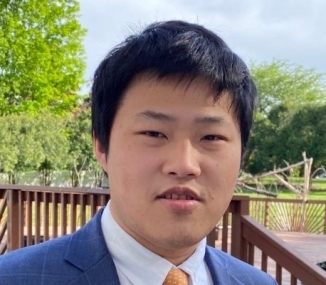
Wang Haolan
Research Associate at the Asia Society Policy Institute's Center for China Analysis, focused on US politics, US-China relations, and East Asian security.
2
APPEARANCES
1
PODCASTS
Sep 27, 2026


Ding HengHOST
So Haolan, going back to you, why do you think China and the United States have pledged to support each other in hosting this year's AIPAC meeting and the G20 summit? I mean, is this pledge a signal that nowadays China and the United States are more willing to help advance or reinforce each other's international influence rather than, say, to compete viciously for global influence?

Wang HaolanGUEST
I agree with the proposition that both nations are now at a point that recognize each other's importance in the multilateral and multinational international system.
Wang HaolanGUEST
This is primarily the endorsement of both China's hosting of the APAC in November and the U.S. hosting of the G20 in December is a recognition that China and the US has this, what I said, overlapping responsibilities as the world's two largest economy and two great powers, as both leaders like to put it.
Wang HaolanGUEST
China is hosting APEC, I think, first time since 2014, while the US is hosting the G20 for the first time since I'm blanking, but I think 2010-ish.
Wang HaolanGUEST
But two leaders, I think, decision or their ability to support each other in terms of creating more chances of bilateral meeting, which is important, given that the importance of the leadership level dialogue in keeping the direction of the U.S.-China relationships on track and enforces the mechanism that they have established to implement the consensus and the constructive items that have been achieved.
Wang HaolanGUEST
In the past, leaders don't often attend, especially American president, don't often attend the APEC summit.
Wang HaolanGUEST
And for any kind of these important forums, it's important to have the president of the United States as well as the leader of the great countries in the world to be in part of the meeting, especially given that AIPAC offers opportunity for the Americans and leaders of the Western world to meet with other leaders that usually are not invited to other meetings these days, particularly there's a possibility of President Trump meeting with President Putin.
14 MINS LATER
Ding HengHOST
So with that in mind, how do you read this China-US consensus regarding the Iran issue and the Strait of Hormuz?
Ding HengHOST
So in the realm of artificial intelligence, how can China and the United States leverage their own strength, their respective strength, rather than guard against each other?
Wang HaolanGUEST
I think, as you noted, that President Xi and President Trump has made the artificial intelligence as new cornerstone or important topics in U.S.-China relationships, and both sides could leverage its own strength to help them develop their cutting-edge technologies in the field of artificial intelligence, but more importantly, I believe, to safeguard against unknown risk in this field of technological revolution.
Wang HaolanGUEST
And many have said AI will be the defining technological transformation in the 21st century.
Wang HaolanGUEST
But no doubt, I think that both governments are taking this proposal seriously.
Wang HaolanGUEST
The US currently has major strengths in frontier model development, in computing powers, and in advanced semiconductor ecosystems.
10 MINS LATER
Ding HengHOST
Is this a sign that Beijing's position regarding the Taiwan question is actually being taken seriously by the Trump administration to say the least?