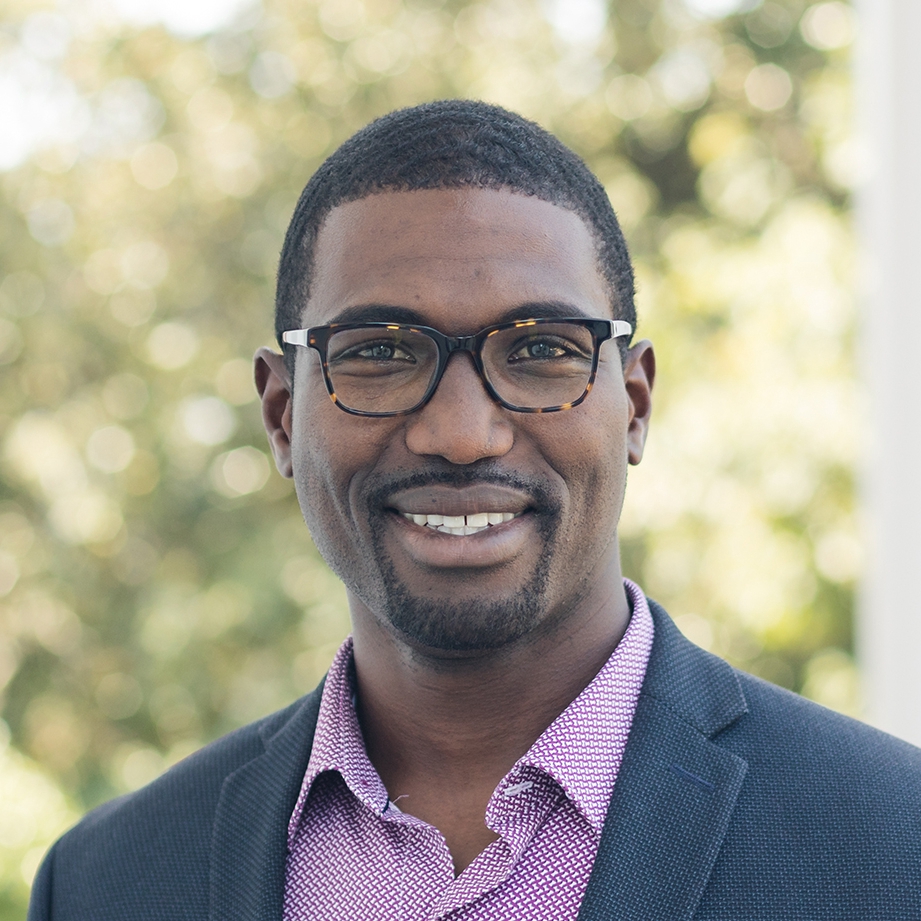
Walter Strickland
Teaching pastor at Imago Dei Church in Raleigh and associate professor of systematic and contextual theology at Southeastern Baptist Theological Seminary; author of "Swing Low."
4
APPEARANCES
4
PODCASTS
Nov 3, 2026

26:10

So that this word is can describe somebody's political or sort of sociological identity, whether or not they are members of a local church, whether or not they have any interest in reading the Bible or whether or not they kind of even know the basics of what Christianity is really about.

Walter StricklandGUEST
And the startling thing about this is that oftentimes in exit polling, you know, people will ask, you know, what is your religious affiliation? And people will self-identify as evangelical with no follow-up.
Walter StricklandGUEST
the gospel of Jesus Christ, what is evangelical even mean? I mean, if we were to ask those questions, I think, we often hear about this 81% of evangelicals who voted for Donald Trump.
Walter StricklandGUEST
I don't know the answer to this question, but I would be curious about how many of those self-identified evangelicals could actually articulate the gospel in any clear way.
Walter StricklandGUEST
I'm not saying that people who could articulate it didn't vote for him, but what I'm saying is that that would actually be a more helpful barometer to see, okay, what do they even mean by saying evangelical? Oh, are they...
Walter StricklandGUEST
on board with David Bevington's quadrilateral, you know, to just be, to define it in one way, or are they, do they believe in cultural religion? Do they believe in a, in a God? They affirm, you know, things that, have generally come from scripture in culture? Do they have a desire to go back to the sort of cultural assumptions of the 1950s? Because everyone's like, you know, we got to go back to a time when everything was better in the 1950s.
8 MINS LATER


Walter StricklandGUEST
I think that a lot of Generation X, or Gen Z, sorry, a lot of millennials, they're starting to feel the reality of a lack of community.
Walter StricklandGUEST
The mental health scenario of millennials and Gen Z, the loneliness that we're seeing amongst them, there is this illusion of community that they have.
Walter StricklandGUEST
because that community is mediated through the internet, they're thinking, oh, I got all kinds of friends.


Joel LawrenceHOST
Take us into, if you would, The ecclesiology of the African-American tradition, how you think that has resources for us today, and this theological questioning from the church side, what difference that makes in that kind of particular tradition that you've been exploring so deeply?
Walter StricklandGUEST
Yeah, so, you know, the church is this beautiful sort of multifaceted prism that the light of the gospel just sort of shines through and hits it.
Walter StricklandGUEST
And so this is how, you know, in the church, as it's in various contexts, it has these similar realities of sort of word and sacrament, or as my Baptist brothers and sisters would say, word and ordinances, right? Yes, yes.
Walter StricklandGUEST
And we do, in the church universal, the church historic has done those two things.
Walter StricklandGUEST
But it's almost like, if I can give an illustration of a soundboard, we have all those channels, and the sound engineer sort of mixes it based upon the needs of the moment.
Walter StricklandGUEST
And so the church throughout time and in different places has had to turn up different channels of that soundboard in order for the people in the church to thrive in that particular timing context.
Walter StricklandGUEST
And so the African-American church has been shaped by, like any other church, a particular set of challenges, you know, for the people who have occupied it, a specific set of instances that they have had to respond to.
Joel LawrenceHOST
But speaking kind of from what you've learned in the African-American tradition to the broader, maybe the majority, historic white American church tradition, this kind of piety and protest, how— How would you encourage folks in different traditions to be thinking about where those fit within the life of the church today and how we can maybe better inhabit those practices and the patterns that come from that tradition?

speaker_0NARRATOR
Download your free digital copy today at solimedia.org slash offers.
Walter StricklandGUEST
And I actually changed up how I wanted to work through this by using the Baptist distinctives to demonstrate that African-American Baptists are not some sort of splinter group over there.
35 MINS LATER
