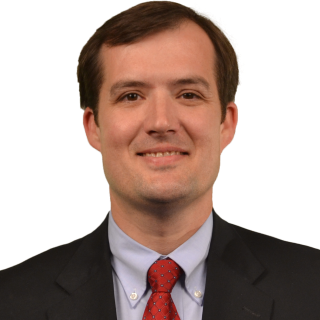
Wade Webster
Assistant Professor and Extension Soybean Pathology Specialist at North Dakota State University, researching soybean diseases like SCN, white mold, and sudden death syndrome.
12
APPEARANCES
5
PODCASTS
Nov 17, 2026


Zach HeftyHOST
How much do you see the soybean variety play a role in any of those diseases that you had just said?

Wade WebsterGUEST
And we have two types of resistance with phytophthora, what we call RPS genes.
Wade WebsterGUEST
And those RPS, we have multiple of them, 1A, 1C, 1K, which generally are starting to become a little less effective over time.
Wade WebsterGUEST
When we have the right combination of those genes, we don't see disease develop.


Jesse AllenHOST
But, uh, you know, just i- in general, uh, tips, tricks, reminders, what else would you, uh, tell folks about SCN management?
Wade WebsterGUEST
So soil sampling is probably where I'm gonna start, because that's gonna be really imperative for a lot of farmers in the state of North Dakota, because SCN is still developing here.
Wade WebsterGUEST
Once we start getting into other states, Iowa, Illinois, Indiana, where SCN's been around for a long time, understanding if SCN is present or not is probably not as critical.
Wade WebsterGUEST
But for us, a lot of the farmers don't have SCN or don't know that they have SCN, and that's the first, first benefit of soil sampling.
Wade WebsterGUEST
If you can get in there, you can get those samples taken, you can confirm its presence or not.
Wade WebsterGUEST
Once we know it's there, soil samples can then help understand, one, if soybeans should be able to be grown in that field based off of the numbers.
Jesse AllenHOST
I mean, talk about that aspect of things as well as we continue to try and evolve and, I guess, stay ahead of SCN, Wade.

Wade WebsterGUEST
Yeah, so soil sampling is probably where I'm going to start because that's going to be really imperative for a lot of farmers in the state of North Dakota because SCN is still developing here.
Wade WebsterGUEST
Once we start getting into other states, Iowa, Illinois, Indiana, where SCN has been around for a long time.
Wade WebsterGUEST
But for us, a lot of the farmers don't have SCN or don't know that they have SCN.
Wade WebsterGUEST
If you can get in there, you can get those samples taken, you can confirm its presence or not.
Jesse AllenHOST
I mean, talk about that aspect of things as well as we continue to try and evolve and, I guess, stay ahead of SCN, Wade.

Brian HeftyHOST
So how bad a yield hit is this for the pe- the people that you've seen sudden death syndrome on their farm?
Wade WebsterGUEST
Yeah, you know, in, in a typical year, just with how short our growing season is, uh, this far north, we typically can get out of SDS without pretty substantial yield losses.
Wade WebsterGUEST
But this year, unfortunately, uh, we did see it show up about early R5, and we had that leaf drop taking place when that grain fill was occurring.
Wade WebsterGUEST
We're seeing a lot of yield losses in certain pockets, uh, very dependent upon where you're at.
Wade WebsterGUEST
But, uh, yield losses could be a- anywhere upwards of 50% in certain, certain areas.
speaker_0ADVERTISER
For more content like this, please visit PTP 365.
Wade WebsterGUEST
I've always been impressed that our Lord summarized the Old Testament in two sentences, "Love the Lord your God with all your heart, soul, mind, and strength.
Wade WebsterGUEST
For upon these two commandments hang all the law and the prophets." Matthew 22:37-39.
Wade WebsterGUEST
But our task is even greater than that, because we don't have two sentences, we have one word to define the Bible, to tell the story of the Bible, and that one word has to be redemption.


Wade WebsterGUEST
When a preacher is let go, be gracious, be compassionate, but the leaders of the church need to control the narrative.
speaker_0NARRATOR
For more content like this, please visit PTP 365.
Wade WebsterGUEST
What is the characteristic that we most associate with God? I suppose that characteristic would be love.
Wade WebsterGUEST
It was that passage that is best known and best loved, John 3:16, "For God so loved the world that He gave His only begotten Son." 1 John 4 and verse 18 says, "We love Him because He first loved us." God is love.
Wade WebsterGUEST
This hour we're talking about what deserves the pulpit, choosing a topic that sets the stage, creates interest, and lasts in the memory.
Wade WebsterGUEST
It's got a lot of parts to it, but the more I looked into it and the more I tried to decipher exactly what was being asked of me this hour, it made sense.
Wade WebsterGUEST
Um, we set the stage, we paint a background for what we're about to talk about.
speaker_3UNKNOWN
[laughs]
Wade WebsterGUEST
We're gonna celebrate when they begin to think and make decisions for themselves and when they can write their name and when they can do a host of other things.
Wade WebsterGUEST
We're certainly gonna celebrate the day when they make the decision to become a Christian.
Wade WebsterGUEST
Hopefully, we've prepared the ground, we've sowed the seed, but it's gonna be up to them when that seed comes up and what fruit it bears in their lives.
9 MINS LATER
speaker_4UNKNOWN
[laughs]
speaker_0NARRATOR
For more content like this, please visit PTP 365.
Wade WebsterGUEST
In Luke chapter 18 in verses 11 and 12, we read of a man who stood and he prayed thus with himself, and he thanked God that he was not like other men.
Wade WebsterGUEST
And then he began to talk about how he fasted and how he gave tithes of all that he possessed.
Wade WebsterGUEST
It's a problem that all of us will have if we put ourselves out there and we make friends.


Rusty HalvorsonHOST
Wade Webster says they're getting a lot of reports of root rots in soybeans, most likely previous infections from earlier in the season when rains were a lot more consistent.
Wade WebsterGUEST
So on the eastern side, especially in that Cass County, Richland County, that Red River Valley, we are pretty dry.
Wade WebsterGUEST
We are seeing a few areas in the central and on the northern tier, about north of Highway 2, where we are starting to see some more stem and foliar diseases starting to show up.
Wade WebsterGUEST
And so we have a few interesting cases of some diseases that we haven't seen for a few years that we're still in confirmation of.