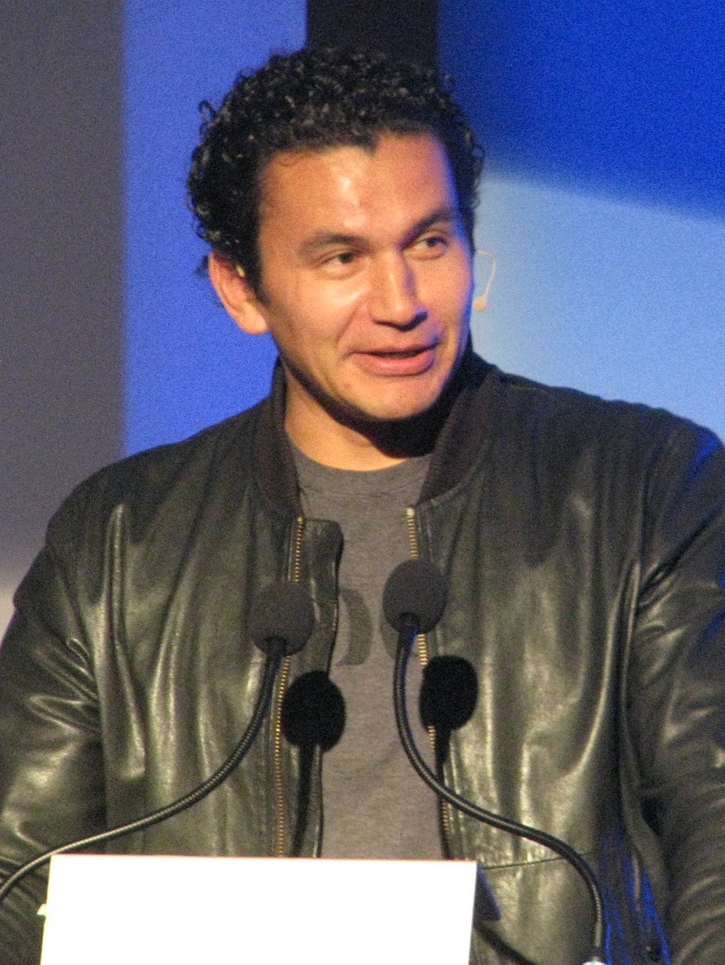
Wab Kinew
Premier of Manitoba
11
APPEARANCES
9
PODCASTS
Sep 9, 2026


Wab KinewGUEST
You'll remember a few weeks ago, we're making gym mandatory, no doctor's notes right up to grade 12, which is going to be great for fitness and long-term health.
Wab KinewGUEST
But as part of the health curriculum, we're also going to be talking about Screen time, social media, AI, AI chatbots.
Wab KinewGUEST
And so we are going to be bringing that into a conversation about how can you have good mental health in an era where you have all these different technologies that are maybe trying to keep you stuck to a screen.
Wab KinewGUEST
But one of the things that I like that Omar said about AI is adapting, adapting to what's coming.


Ace BurpeeHOST
The premier of the province of Manitoba, Wab Kanu, your thoughts on the entire Jacelyn Morissette story?
Wab KinewGUEST
So when you folks reached out, I wanted to just call in and say on behalf of the province of Manitoba, thank you.


Wab KinewGUEST
Every single Canadian from coast to coast to coast is either a huge fan or, at the very least, has heard of us.
Wab KinewGUEST
So once again, from the people of Manitoba to you, Steve, to the team at The Debaters, the Winnipeg Comedy Festival, and all the comics, thank you, and congratulations.


Jayme PoissonHOST
... or a regulator whose job would be to get the tech companies to comply with the ban, and just how confident are you that a provincial regulator will be listened to? I know Australia is having a heck of a time with this right now.
Wab KinewGUEST
Yeah, I think we're looking at quite a bit of a different approach compared to what Australia is doing.
Wab KinewGUEST
Um, yes, we- we're, we're thinking about implementing a commissioner, and the point there is to have the sort of regulatory back and forth that exists in every other sector of the economy.
Wab KinewGUEST
And, uh, the big social platforms and AI, uh, platforms are, uh, there's a lot of publicly traded companies in there, and publicly traded companies-- or they're about to IPO.
Wab KinewGUEST
And publicly traded companies don't like having regulatory or, uh, fines hanging over them.
Wab KinewGUEST
And so I think there would be, uh, cooperation just as other companies in the broader economy participate with provincial regulators.
Wab KinewGUEST
And when you get that back and forth, you might see, uh, a conversation, like consider Alphabet that owns YouTube, and you could say, "Well, that's a social platform, and it's causing harm," but then the commissioner could come in and say, "But, you know, are you willing to create a platform like YouTube Player for Education?" Which has no-- Which currently exists, for the record.
10 MINS LATER

Wab KinewGUEST
And in this case, I love Canada, so I would never have a referendum to break this country up.
Wab KinewGUEST
And in fact, I would like to do what I can, in a respectful way of course, to make sure that national unity is an important priority.
Wab KinewGUEST
I mean, in Manitoba we're no strangers to feeling like Eastern Canada ig- ignores us, um, from time to time.

Vassy KapelosHOST
You're obviously voicing it right now, but I wonder a- as you think about the next number of months, do you have any hesitation about weighing in? Do you th- do you want to play a role in that? And what do you think the role for the prime minister should be?
Wab KinewGUEST
And in this case, I love Canada, so I would never have a referendum to break this country up.
Wab KinewGUEST
And in fact, I would like to do what I can, in a respectful way of course, to make sure that national unity is an important priority.
Wab KinewGUEST
I mean, in Manitoba, we're no strangers to feeling like Eastern Canada ig- ignores us, um, from time to time.
Vassy KapelosHOST
But I wonder i- as you think about the next number of months, do you have any hesitation about weighing in? Do you th- do you want to play a role in that? And what do you think the role for the prime minister should be?


Wab KinewGUEST
And first of all, I, I don't think that, uh, Premier Smith needs to call a referendum in, in Alberta, and I, I've told her that a, a few times now, including publicly.
Wab KinewGUEST
But, um, if there is going to be a referendum, I don't want, uh, fake news to be framing it up.
Wab KinewGUEST
And so that's why I wanted to make sure to correct, uh, some of the things that are being said and just make sure that people hear, uh, the actual, the actual truth, which in this case is not that Indigenous people and, you know, the people gathering petitions are at odds with one another.
Wab KinewGUEST
It's actually that the Alberta government had a responsibility, uh, to conduct themselves, uh, differently, and they, and they failed the petition gatherers.
Wab KinewGUEST
So instead of trying to blame, uh, First Nations people who are defending their rights in court, perhaps just accepting responsibility and, um, saying that, you know, the petition was let down by the actions of the Alberta government, uh, would've been the b- the more accurate thing to say.
6 MINS LATER


Catherine CullenHOST
I know you're still developing the plan, but can you draw a bit of a, a mental picture for us?
Wab KinewGUEST
Well, well, 16 is, uh, first off the age, so, you know, as kids are getting their driver's licenses, we're, we're thinking that level of maturity.
Wab KinewGUEST
And it is because before that point, you know, the, the brain is still developing, and you haven't had that real-world experience to develop street smarts or, or perhaps to, you know, think about, you know, the, the bigger context, uh, that might happen from online interactions.
Wab KinewGUEST
And so when we talk about accountability, we're-- we don't intend to foist the accountability onto parents or onto kids.
Catherine CullenHOST
Would you rather see Ottawa take the lead on this if, if they announce something similar? Or are you gonna let this be a federal issue, or you're going ahead regardless?

Wab KinewGUEST
It's an important question, but I think it speaks to the heart of what is at stake here, which is: Do you want a society that is manipulated by a, a class of tech billionaires, or do you want a society that focuses on protecting our kids, protecting human beings? You know? The goal of our s-society should be to train the next generation, not to train the next AI model.
Wab KinewGUEST
And while I would expect there's gonna be some pushback from various directions, I think the vast, vast majority of Manitobans, and probably Canadians too, recognize that social media has caused a lot of harm in our society and that particularly when we're talking about our kids, when we think about the very pernicious harms that can be visited upon them while their brains are still growing, this is a fight worth having.

Nil KöksalHOST
building.How does what the, the vice president, US vice president is saying there, Premier, sit with you? And when we talk about timing CUSMA talks approaching, does that factor into your thinking around this, that there could be retaliation?
Wab KinewGUEST
Well, my role is to protect kids in Manitoba, and when I say that we don't want a society d- in which we're being manipulated by tech billionaires, I mean, I, I'm thinking about JD Vance and Donald Trump.
Wab KinewGUEST
They are the emissaries doing the bidding of some big, big, uh, forces in the tech industry, some very, very wealthy people.
Wab KinewGUEST
There is a dogma in Silicon Valley and in the tech world generally that has tried to reduce, um, the current development of AI into a, a contest between the US and China, and in so doing, basically do fear-mongering to say that anyone who opposes this o- opposes freedom, which is nonsense.
Mike LeCouteurHOST
And, and I guess by extension, I, I mean, how willing are you to try and make that happen to get a liquified natural gas pipeline out to Churchill?
Wab KinewGUEST
We just think that, uh, a lot of the people occupying important positions are not treating our country fairly.
Mike LeCouteurHOST
How do you reconcile that with a potential energy project like NH- uh, like LNG going out to Churchill?


Matt GallowayHOST
How do you balance all of those competing interests if everybody ostensibly is on the same team?
Wab KinewGUEST
You take a kid from, uh, the Rockies, and a kid from the prairies, a kid from Quebec, a kid from Ontario, a kid from, uh, the West Coast, a kid from the north, you put them together, and then they go win an Olympic, uh, medal on the ice hockey, uh, sheet, right? That's basically what we have to do as premiers.
Wab KinewGUEST
Everybody's coming in, standing up for the various priorities that we have in our jurisdictions, but the overarching priority is to defend the country and to make sure that the, the people who call this place home, the kids in the future, are gonna be just as, as proud of it, but also have that economic opportunity.
Wab KinewGUEST
And so I think that some flexibility along the way will, will be helpful as well, too.
Wab KinewGUEST
I think that the desire to build up our Canadian economy in the face of the threats from Mr. Trump, but also, as we've seen from, from China and, uh, the tariffs that, uh, Carney's been negotiating on, are really casting things in a light where I think we're, we're looking at things in a way where, yeah, maybe the big energy project, the big port project, the other big mega projects are gonna move more quickly than before.
Wab KinewGUEST
And I think, think the challenge for us is, like the average reasonable right-minded Canadian is, well, how do we do that, move more quickly while still making sure that we're looking after the environment, still making sure that, uh, indigenous people are gonna have real opportunity, still make sure that there's gonna be regional balance? So things are not getting easier or simpler, but, uh, I just have a lot of pride in, um, the group of people that Canadians ha- have sent to work together on this, and I feel like even if there are those disagreements on specific issues, we'll be able to create a consensus at the highest level for the sake of our, of our country.