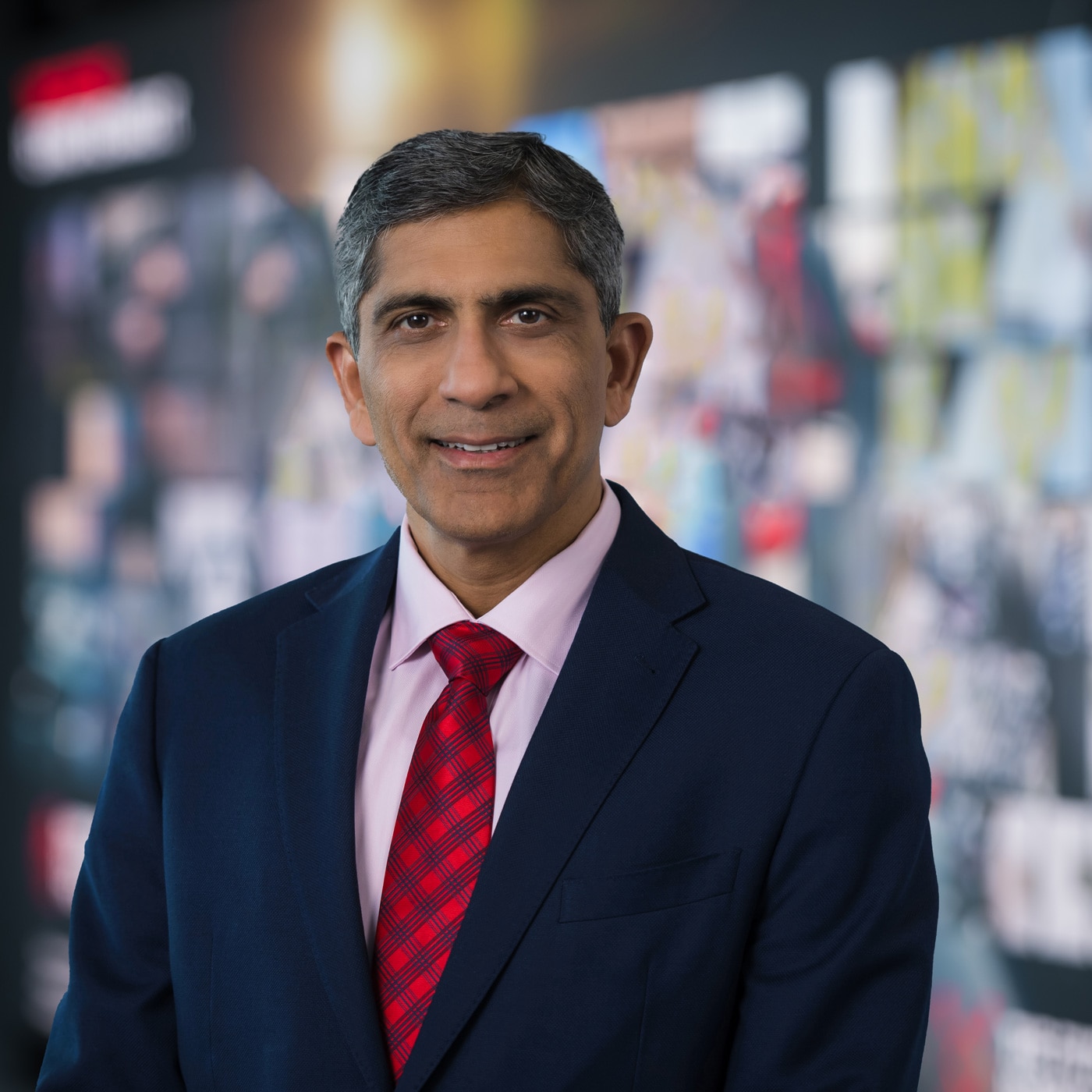
Vimal Kapur
CEO of Honeywell
10
APPEARANCES
8
PODCASTS
Oct 8, 2026

8:39

What is the new story you have to tell about this company? How different is it from the one that you had to tell when it was still one single conglomerate?

Vimal KapurGUEST
Uh, so automation at scale, creating an automation business at scale with so multiple mission critical segments is different from being part of a company which did multiple businesses.
Vimal KapurGUEST
So Honeywell, uh, pre 2023 was a, was a big player and is still a big player in aerospace, uh, you know, big player in specialty chemicals, also big player in automation, and bunch of smaller businesses.
Vimal KapurGUEST
So the company created value by having management system to run these businesses well globally, individually, but there was no common strategy you can build when your businesses and end markets are so diverse.
15 MINS LATER

Vimal KapurGUEST
Because our automation is all pervasive, we are basically thinking, how do we serve all these end markets? But things are changing fast.
8 MINS LATER

Eric VeielHOST
How will acquisitions play into building that portfolio? And maybe just broadly, how do you think about capital allocation?
speaker_1NARRATOR
What was wrong with the Honeywell of before?
Vimal KapurGUEST
Honeywell did extremely well in the last 20 years' period from 2005 to, you know, 2022, 2023 timeframe.
Vimal KapurGUEST
We are a company which did a great job of running businesses efficiently, globalizing ourself, so it was clear to me that our next 50 years, the earnings growth will come from top-line growth.
Vimal KapurGUEST
And top-line growth is hard to accomplish if you are a complex structure with addressing multiple segments.
Vimal KapurGUEST
Uh, that was my incoming thesis when I started, but two things happening simultaneously when I started as a CEO.
Vimal KapurGUEST
The first was aerospace industry started growing, and at the same time, ChatGPT came in, and AI started becoming an important conversation.
11 MINS LATER


Vimal KapurGUEST
Honeywell did extremely well in the last twenty years period from 2005 to, you know, 2022, 2023 timeframe.
Vimal KapurGUEST
It created a massive shareholder value, and the most of the shareholder value came from margin expansion.
Vimal KapurGUEST
We are a company which did a great job of running businesses efficiently, globalizing ourselves, so it was clear to me that our next fifty years, the earnings growth will come from top-line growth.
Vimal KapurGUEST
And top-line growth is hard to accomplish if you are a complex structure with addressing multiple segments.
Vimal KapurGUEST
That was my incoming thesis when I started, but two things happening simultaneously when I started as a CEO.

Vimal KapurGUEST
So automation, first we have to really understand what really automation business mean.
Vimal KapurGUEST
Because one of our, I think, both challenge and opportunity is we're creating a new category of stock called pure play automation.
Vimal KapurGUEST
I think automation fundamentally drives when you, the word still is creating more infrastructure.

John WaldronHOST
You talk about physical AI, which Again, I think it's back to our prior conversation, a little bit about data, but describe what you mean by

Vimal KapurGUEST
But the, the buildings which are, where we are putting much more focus to grow our, uh, install base is, of course, data center, but also, uh, hotels.
Vimal KapurGUEST
Why hotels we are focused on? As what we have learned is as society progresses, everybody wants to consume and have better quality of life.
Vimal KapurGUEST
They, they spend money in hotels and restaurant and stadiums, so hotels is a big vertical for us, controlling the room temperature there and driving energy efficiency.
Vimal KapurGUEST
Guest experience in terms of the digital app by which we manage the lo- lock systems there, the overall safety and security of the hotel.
Vimal KapurGUEST
So it's a big market, and people like Hilton and Marriott, they are all our big customers.
Vimal KapurGUEST
But if you switch to hospitals, the world also need more healthcare with the aging population all over the world, and hospital is a complex system.
10 MINS LATER

Vimal KapurGUEST
The acquirer keeps name because they figured Honeywell brand was so powerful and was more impactful, so they changed their own name.
Vimal KapurGUEST
So that was a big moment to your question on cultural assimilation of two large companies.
Vimal KapurGUEST
And it did go through its own motion of, uh, ups and downs, and that's when Dave Cote came in as chairman and CEO of Honeywell.
Vimal KapurGUEST
And Dave did a great job to rebuild the Honey- Honeywell culture, which was much more one company mindset.

Barry RitholtzHOST
Is it cheaper labor or a substitute for labor? What, what is the key selling point for your customers?

Morgan BrennanHOST
So what does industrial automation entail, and especially in this age of emerging physical AI?
Vimal KapurGUEST
Automation systems automate the, the segment we serve, buildings, offices, uh, airports, refineries, pharmaceutical plants, semiconductor facilities.
6 MINS LATER
Morgan BrennanHOST
... on Honey- Honeywell, and how does it, I guess, factor into this bigger conversation, this bigger dynamic around sup- supply chain resilience?

Vimal KapurGUEST
So, Jim, if you look at AI in context of industrial company like us, it presents a great opportunity for us to compound our growth.
Vimal KapurGUEST
The uniqueness in our business is that the data is not available in public domain.
Vimal KapurGUEST
You can't train the data which is for a refinery or for a life sciences facility or for a hospital, go to internet and train it.
Vimal KapurGUEST
And we have to train the data using our domain knowledge to build more purpose-built solution for our customers.

David FaberHOST
I'm curious how much of your margin story this year depends on pricing versus productivity gains.

Jim CramerHOST
What is the possibility then when that becomes so-called laser focused because it goes out on its own, that we'll start seeing some genuine earnings improvement?
Vimal KapurGUEST
Yeah, so look, you know, if you look at our Q4 performance, just as an immediate gauge, what we delivered, Honeywell grew 6%, and most segments did well.
Vimal KapurGUEST
Aerospace grew double digit, building automation grew high single digit, et cetera.
Vimal KapurGUEST
That 2025 guide, Jim, is based upon what we have conviction in and what we see.
David FaberHOST
But I'm curious, what is different about now versus a number of years ago in terms of why the board chose this as the proper route?