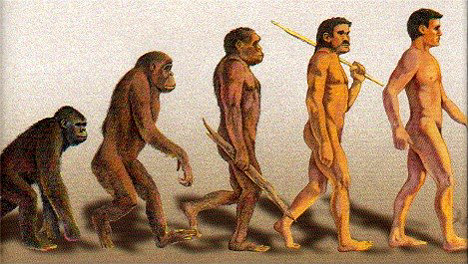
Homo erectus
PrimateWikipedia
387
MENTIONS
99
EPISODES
79
PODCASTS
Search complete. 387 mentions across 99 episodes found for "Homo erectus".
Nov 24, 2026

Lynn MargulisSOUNDBITE_SPEAKER
I've got a gorgeous picture I can lend it to you of Darwin by Dainese.
Lynn MargulisSOUNDBITE_SPEAKER
Dainese is the person who does Homo erectus for the museum.
Lynn MargulisSOUNDBITE_SPEAKER
She did young Darwin looking at one of his favorite insects on his wrist.
Lynn MargulisSOUNDBITE_SPEAKER
Anyway, it fit his life size.

Paul SaladinoGUEST
as I talk about in the book, there was actually a species called Paranthropus.
Paul SaladinoGUEST
And, you know, if you go back and look at the anthropology, there was, you know, Homo habilis and Homo erectus and Homo erectus appears to have, you know, or, you know, Homo habilis appears to have gone to Homo erectus appears to have gone to Homo habilis and Paranthropus and Paranthropus went extinct.
Paul SaladinoGUEST
And we can look at the teeth of Paranthropus and they were eating more plants and then homo erectus was eating more animals.
Paul SaladinoGUEST
And so there's a real, there's a real divergence there.
Paul SaladinoGUEST
And I think you're absolutely right.

Dave FarinaHOST
But to get more specific, Wells is referring to the Homo naledi finds in South Africa that do have an odd mix of primitive and derived traits.
Dave FarinaHOST
While they aren't considered our direct ancestors, this doesn't say anything about Homo erectus, which has been considered to be ancestral to Homo sapiens for decades.
Dave FarinaHOST
Why didn't Wells say anything about Homo erectus? Or any of the other hominid species we know so much about and are definitely ancestral to our species.
Dave FarinaHOST
Just pretend it's all based on a few bones in a cave and brush off an entire field of science.
Dave FarinaHOST
That's creationism for you.

Kevin HatalaSOUNDBITE_SPEAKER
What we're doing is some 3D shape analyses of these hominin footprints, which can tell us a variety of things about foot anatomy or how their feet were moving when these footprints were created.
Kevin HatalaSOUNDBITE_SPEAKER
We believe we can differentiate the footprints of two different hominin species that were living around this same time, Homo erectus and Paranthropus boisei.
Kevin HatalaSOUNDBITE_SPEAKER
The shapes of the footprints, they seem to be a closer match to footprints we've attributed to Paranthropus boisei than they seem to be to modern human footprints or fossil footprints we've attributed to Homo erectus.
Kevin HatalaSOUNDBITE_SPEAKER
The fact that so many of these footprints seem so large, they seem to indicate body sizes that are at the highest end or even above the highest estimates previously offered for P. boisei, that seems to indicate that this was most likely a group of predominantly adult males.
Kevin HatalaSOUNDBITE_SPEAKER
This is at least a really strong clue that adult males from this species were potentially moving together through this lake margin environment, and that implies some level of tolerance and cooperation among those individuals as well.

MJHOST
We visited Demancy and the country of Georgia where fossils documented early humans approximately 1.8 million years ago.
MJHOST
And that was Homo erectus.
MJHOST
We also investigated hummocker.
MJHOST
In what is now Syria, where archaeologists discovered evidence of organized warfare around 3500 BCE.
1 HR 5 MINS LATER
MJHOST
It's indigenous.
MJHOST
Well, guess what, indigenous? Nobody's indigenous.
MJHOST
We all came from Homo erectus in Africa.
MJHOST
It's in our DNA.

speaker_0NARRATOR
Our ancestors had to compete with other primate species for the territories of Eurasia.
speaker_0NARRATOR
like Homo erectus and Neanderthal man.
speaker_0NARRATOR
As they were a nomadic species, Homo sapiens kept moving from place to place, hunting and gathering all along the way.
speaker_7SOUNDBITE_SPEAKER
Very often these men of the Paleolithic also scavenged organs or the fat from animals that had been killed by much larger animals.

OlympiaHOST
In taxonomy, the classification of species, a genus is a group of closely related species, and ours is Homo.
OlympiaHOST
The genus Homo includes us, modern humans, plus extinct human species like Homo habilis, Homo erectus, or Homo neanderthalensis.
OlympiaHOST
The Neanderthals, these extinct humans also called archaic humans.
OlympiaHOST
So I was telling you that our understanding of this past has changed a lot.
OlympiaHOST
but clearly reflecting an evolution toward greater cognitive abilities, increasingly complex social lives, and a greater capacity for abstraction.
OlympiaHOST
To simplify a little, first there would have been Homo habilis, a species that used simple tools and lived in East and South Africa.
OlympiaHOST
Then came Homo erectus and other species that appeared later and were notable for their use of fire and their migration out of Africa.
OlympiaHOST
After that, Homo sapiens, modern humans, who would also have appeared in Africa before colonizing the entire planet.

Chris HaslerHOST
Previously on the History of the World podcast, we told the story of how our ancestors, the Australopithecines, evolved into the first proto-humans, Homo habilis, and eventually into Homo erectus, a species that was particularly well adapted to travelling long distances on foot.
Chris HaslerHOST
We discovered that human species had left their heartland of Africa on foot and had begun to colonize the Eurasian landmass.
Chris HaslerHOST
We also learned that our evolution is not a simple linear evolution, but that many different species of hominin had indeed previously coexisted and that many species have previously died out in failed natural evolutionary experiments.
11 MINS LATER
Chris HaslerHOST
Together, these discoveries illustrate just how widely early humans had spread across the Asian continent.
Chris HaslerHOST
Acheulean Tall Culture The Acheulean tool culture which appeared in Africa around 1.76 million years ago is generally considered a major technological development beyond the earlier Oldowan tradition, although the two technologies continued to coexist for considerable periods.
Chris HaslerHOST
So, not only had hominins evolved from the ape-like Australopithecines and Homo habilis, to Homo erectus, which was upright and expertly mobile on the ground.
Chris HaslerHOST
But stone tool technology had also advanced beyond the crude cutters and scrapers of the older one culture.
Chris HaslerHOST
So let's have a closer look at what supplanted the older one creations.

Michael FeeleyGUEST
So why is it not possible that we can live on these planets or people do live on these planets and there's been some kind of teleportation or some kind of thing? A lot of the ancient cultures do mention a strange race of beings that they called the knowledge from above, who gave them mathematical sequences, who gave them this kind of knowledge that advanced in the way in which they advanced.
Michael FeeleyGUEST
There's also some suggestion that around about 35,000 years ago, human genetics were tinkered with in some way that took us from Homo erectus, to homo sapien literally in evolutionary terms alvanite which is impossible by evolution itself so there's all these key indicators that there is some kind of connection going on uh certainly in the past and i would probably say most certainly currently but it's more beyond the scenes now than it was in them days i think it was more open in them days than what it is now
Darren GrimesHOST
Graham doesn't even believe in evolution.
Michael FeeleyGUEST
Yeah, I

Michael CremoSOUNDBITE_SPEAKER
It's kind of interesting.
Michael CremoSOUNDBITE_SPEAKER
When I first published Forbidden Archaeology, the main view in science was that human evolution went on in a very linear way with one hominin existing at a time and transforming into the next, from Homo habilis to Homo erectus to the Neanderthals to early Homo sapiens to Homo sapiens, very linear.
Michael CremoSOUNDBITE_SPEAKER
But we predicted in forbidden archeology that the actual pattern is one of coexistence of many hominin types, and modern science has come around to that point of view.
Cliff DunningHOST
So does that mean that we, as you were saying, we lived in harmony or co-existed with these other hominids and...
89 more episodes mention Homo erectus.
Create an account to see the whole feed, search across every transcript, and follow the entities you care about.