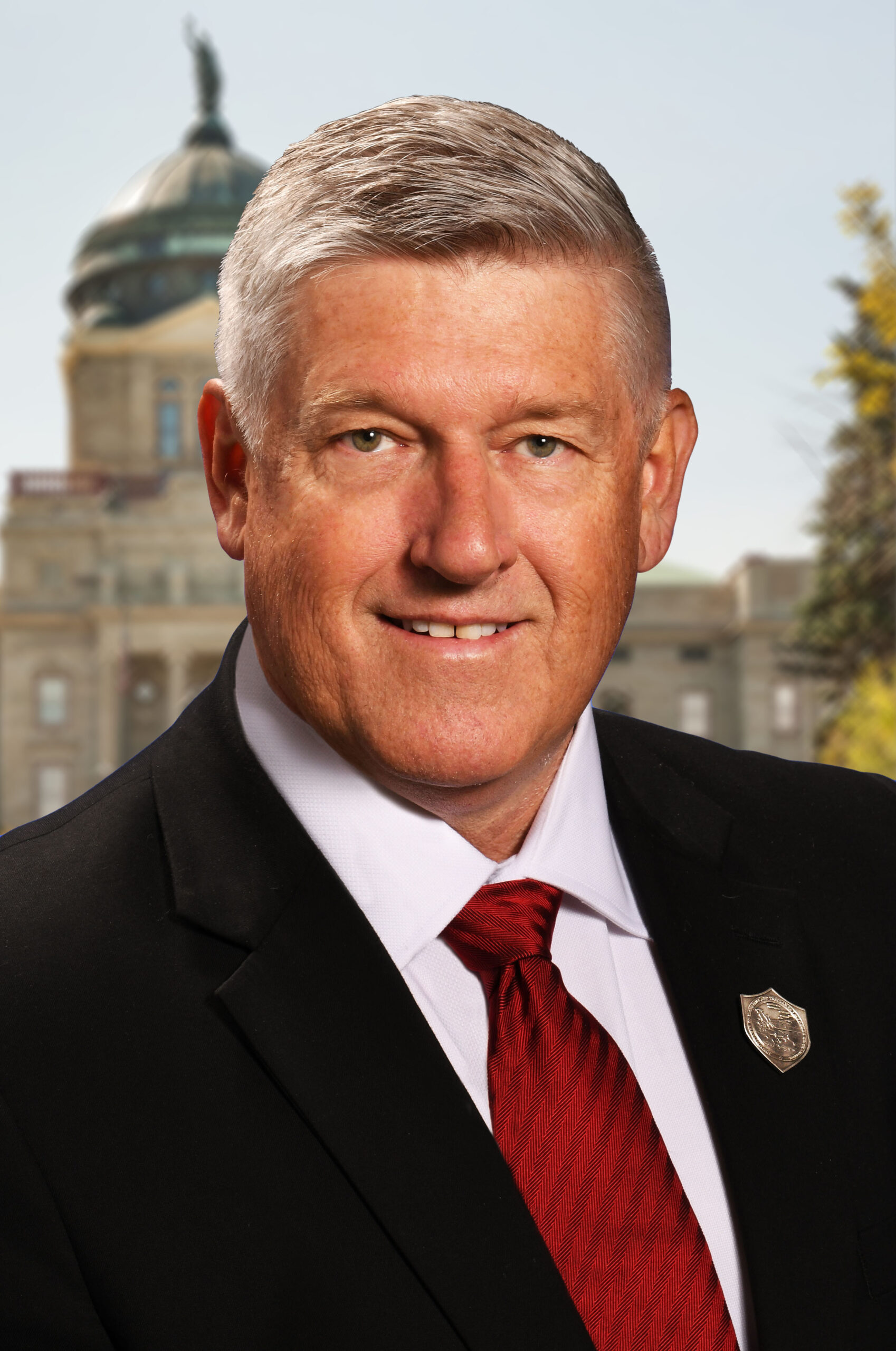
Troy Downing
United States Representative
20
APPEARANCES
8
PODCASTS
Oct 16, 2026


Troy DowningGUEST
And those are the folks that you can put together these coalitions and these, these, uh, uh, associations where you can actually get things done.
Troy DowningGUEST
And, you know, the, the things that you just mentioned on the, uh, water issues, you know, I, I, I go to DC, you know, every week we're in session thinking, "How do I best represent my district?" My district is very rural.
Sam StoneHOST
Explain what this does to make us less self-sufficient as a country to feed ourselves.

Donald TrumpSOUNDBITE_SPEAKER
[cheering]
Troy DowningGUEST
Here we take care of our first responders, we prosecute our criminals, and above all, we protect our families.
Troy DowningGUEST
[crowd cheering] Now, I know this was brought up earlier, but, uh, I just wanna, um, increase this a little bit.
Troy DowningGUEST
H- how many veterans do we have in the au- audience? [crowd cheering] How many first responders? Law enforcement, first responders.
Troy DowningGUEST
[crowd cheering] To every one of you who has worn a uniform, every one of you, I salute you and I thank you.
Troy DowningGUEST
[crowd cheering] Now, this election is about whether we remain a country built on freedom, personal responsibility, and opportunity, or succumb to forces usurping our freedom, and a government that tells us what to do, makes our decisions for us, where people expect handouts rather than paving their own way.
speaker_13UNKNOWN
Yeah.


Troy DowningGUEST
Well, it is important because especially, you know, you mentioned Glacier, but I brought my staff very recently within the last month down to Yellowstone Park.
Troy DowningGUEST
And we met with the superintendent and we looked at some of the projects going on, like the bridge that they're building over the Yellowstone River right now, which is an incredible upgrade to what was there before.
Troy DowningGUEST
is something that's going to be there for generations in the future rather than what was not working and was a dangerous way of getting around this particular valley around the river.
Troy DowningGUEST
Having these upgrades not only add to the safety, but it's also something that's going to continue to create access for generations to come.
Troy DowningGUEST
So it was neat going with the superintendent and looking at the project's but have happened under the Legacy Restoration Fund.


Joshua WeeseHOST
Today, Congressman Troy Downing sits down with us to discuss the Bear Paw Development Community Forum addressing health concerns of Montanans.
Troy DowningGUEST
As I travel around the district, I make it a point to visit as many of our critical access hospitals, as much of our rural healthcare as we can.
Troy DowningGUEST
And there's definitely, uh, a lot of disparity between the haves and have-nots, and that's in terms of, of funding, of terms of, you know, some of those facilities are 80, 85% Medicare and Medicaid.
Troy DowningGUEST
Some of them have much larger payments from private pay and commercial insurance.
Troy DowningGUEST
And so there's the struggles on the financial side, but one of the bigger struggles that I run into is the ability to recruit and retain professionals.
Troy DowningGUEST
Well, and, and across the board from, you know, physicians, you know, providers, nurses, you know, across the board to recruit and retain employees at a lot of these, you know, absolutely necessary critical access hospitals and healthcare facilities.
Troy DowningGUEST
And one of the messages that keeps coming up to me, because I've talked to a lot of folks, that they'll get applications, and they'll get pretty far down the application, uh, line, uh, to, of making offers to these folks that they want to bring into these communities, and they can't find housing.
Joshua WeeseHOST
Today, we sat down with Congressman Troy Downing to discuss his time visiting Havre and his trips to MSU Northern, and the different things he's learned.
Troy DowningGUEST
We, we've been up there before, and I gotta tell you, that is a facility that Havre should be proud of.
Troy DowningGUEST
And one of the things that's important is, uh, end of the day, we need to have people who know how to build and fix things.
Troy DowningGUEST
And I think that's a deficit, and we need to really start pushing this trades education, and I think that they're doing a fantastic job there.
Joshua WeeseHOST
Today, Congressman Troy Downing sits down with New Media Broadcasters to discuss the North Central Montana Water Security Act.
Troy DowningGUEST
not just to the Fort Belknap tribe, but to the irrigators, to everybody in the area along the High Line.
Troy DowningGUEST
And we've been pushing really hard, both in committee and also trying some other paths to get this done.
Troy DowningGUEST
So the Northern Montana Water Security Act, this is almost a billion and a half dollars that will improve infrastructure, economic development for tribal water users.
Troy DowningGUEST
This is also obviously going to be about $300 million in funding to complete the rehabilitation of the Milk River project in Dodson South Canal.


Joe MathieuHOST
You heard what the president said, that, that this bill was a big yawn, but is this not a direct example of what might actually help people? When, when would they be able to make, uh, this an opportunity for themselves?
Troy DowningGUEST
Well, first of all, I, I think sometimes, you know, the, the, the president, uh, will say things that, uh, you know, that are not exactly.
Troy DowningGUEST
I, I, I think he said that in the moment, but I think that the president does see a lot of the good things that we have in this bill, and obviously, the administration was part of some of this crafting of it.
Troy DowningGUEST
So one of the big issues, just to pull back a little bit, that I run into across my district is recruiting and retaining, you know, folks for, uh, rural hospitals and schools.
Joe MathieuHOST
I'm just wondering how you view this, and if you're worried that this resumption of kinetic activity in Iran pushing oil prices today is gonna bring those gas prices back up.


Troy DowningGUEST
You know, nobody comes here because they want to just, you know, that they hate the country.
Troy DowningGUEST
And for me, it's really important that the work that I'm doing, the work that I'm asking my staff doing, the work that I'm trying to get colleagues involved in, actually becomes something useful, actually becomes law, actually gets to the president's desk, actually gets signed.
11 MINS LATER

Troy DowningGUEST
You know, you got to just stop and laugh about the irony of what you're just talking about there.
Troy DowningGUEST
You know, we've got almost 85 percent of Americans support showing I.D. to vote.
Troy DowningGUEST
And Mamdani is saying that that's racist, that that's going to disenfranchise all these folks.
Troy DowningGUEST
And you can't even shovel snow in the city of New York without showing ID and having a social security number.
5 MINS LATER


Troy DowningGUEST
Yeah, and one of the things, obviously, this is one tool of, you know, requirements, a, a huge toolbox for dealing with this.
Troy DowningGUEST
But, you know, I'm a former regulator, securities and insurance regulator, and trying to understand how AI affected insurance rating, how it affected, you know, these, these large, large industries, was always an interesting issue.
Troy DowningGUEST
Because as soon as you get prescriptive, as soon as you put something down on paper, it becomes irrelevant because it's just evolving so quickly.
speaker_19UNKNOWN
Yeah.
Troy DowningGUEST
And so, you know, there's, there's, there's bills that I've brought where I have Democrat, um, co-sponsors that really we have very little in common, but we found some consensus where we both are passionate about it, and we get that through.
Troy DowningGUEST
And I've got examples of that, um, in, uh, the financial services, uh, committee, where we got it through unanimously and got it through unanimous consent off the House floor.
speaker_1UNKNOWN
But there's also a worry, right, that AI is gonna take, uh, some of these small business jobs as well, right? So, the congressman talks about how you've got to be able to adapt in an AI world, but then how also do you kind of combat this idea that it's gonna take jobs away as well?
Troy DowningGUEST
I mean, you see some new technology you think is gonna, you know, destroy one industry, but there's always something else that comes, comes out of it.
Troy DowningGUEST
And, you know, AI for me, it's, it's so exciting, the opportunity that you have there, and it's also so scary at the same time in how you navigate this.
Troy DowningGUEST
Because you see a lot of, you know, fraudsters and bad actors who are adopting and using this a lot more quickly than you see business and small businesses.
Troy DowningGUEST
And so having educational, um, uh, tools out there for them through the SBA I think is incredibly important so that these, they have the resources to figure out how to use it and what it's gonna do.
Troy DowningGUEST
And thank you for acknowledging the part that, you know, even though the government was shut down, we were still doing policy work.
Troy DowningGUEST
I still got bills into the hopper, you know, so we still did all of that work.
Troy DowningGUEST
But one of the things I will tell you, I sit on the Financial Services Committee, and there's a lot of energy to get caught up, and I think we will get caught up, of really just doubling down on our hearings to get back to where we had originally planned on being.
Troy DowningGUEST
So even though that time was stolen from us for completely political reasons, we're going to make up for that.

Amanda HeadHOST
But do you think that it was enough of a lesson learned by Democrats that they won't try to push shenanigans next year?
Troy DowningGUEST
And one of the things, obviously this is one tool of, you know, requirements of a, a huge toolbox for dealing with this.
Troy DowningGUEST
But, you know, I'm a former regulator, securities and insurance regulator, and trying to understand how AI affected insurance rating, how it affected, you know, these, these large, large industries was always an interesting issue.
Troy DowningGUEST
Because as soon as you get prescriptive, as soon as you put something down on paper, it becomes irrelevant because it's just evolving so quickly.

Troy DowningGUEST
And so, you know, there's, there's, there's bills that I've brought where I have Democrat, um, co-sponsors that really we have very little in common, but we found some consensus where we both are passionate about it, and we get that through.
Troy DowningGUEST
And I've got examples of that, um, in, uh, the Financial Services, uh, Committee, where we got it through unanimously and got it through unanimous consent off the House floor.
Troy DowningGUEST
Well, here's the thing is obviously having to work without being paid is tough for anybody.
Troy DowningGUEST
I mean, some folks have reserves, some don't, and some actually count on that for making their mortgage payments, for buying gas, for buying groceries.
Troy DowningGUEST
And so my point in going out there is to hear what was going on, the stories from boots on the ground.
Troy DowningGUEST
So as at the airport in Helena and talking to the TSA folks and the ATC folks, But the biggest thing is to make sure that they understood that we we cared about their plight and we're hoping that we can get through this.
Troy DowningGUEST
And just wanted to make sure that they didn't feel like they were out on their own on an island.
Troy DowningGUEST
Well, here's the thing, is obviously having to work without being paid is tough for anybody.
Troy DowningGUEST
I mean, some folks have reserves, some don't, and some actually count on that for making their mortgage payments, for buying gas, for buying groceries.
Troy DowningGUEST
And so my point in going out there is to hear what was going on, the stories from boots on the ground.
Troy DowningGUEST
So I was at the airport in Helena and talking to the TSA folks and the ATC folks there.
Troy DowningGUEST
But the biggest thing is to make sure that they understood that we cared about their plight and we're hoping that we can get through this.
Troy DowningGUEST
And I just wanted to make sure that they didn't feel like they were out on their own on an island.
Troy DowningGUEST
This is completely a political move, not a policy move, to shut the government down.
Troy DowningGUEST
They wanted to cram policy into just an agreement to keep the government open for seven weeks.
Troy DowningGUEST
so that we could go through regular order and actually do the business of the government.
Troy DowningGUEST
But rather than that, they threw politics in there to completely circumvent this and throw the entire nation into disarray.
Amanda HeadHOST
Is our military now prepared to take that head on as though it were a war? Because it pretty much
Troy DowningGUEST
This is completely a political move, not a policy move, to shut the government down.
Troy DowningGUEST
They wanted to cram policy into just an agreement to keep the government open for seven weeks so that we could go through regular order and actually do the business of the government.
Troy DowningGUEST
But rather than that, they threw politics in there to completely circumvent this and throw the entire nation into disarray.
Troy DowningGUEST
And now the entire country is paying the consequences of this, with folks not getting paid, uncertainty, folks worried about getting NFIP flood plans together while they're trying to sell property that they're developing.
Amanda HeadHOST
Is our military now prepared to take that head on as though it were a war? Because it pretty much is.


Ryan SchmelzHOST
What kind of timeline are we looking like, looking at here, and how is this gonna work?
Troy DowningGUEST
So what this is gonna do is it's gonna, you know, more, uh, you know, ma- make it more sustainable so it's not, you know, fungible in the future here.
Troy DowningGUEST
So it gives some reliability and, uh, ability for, you know, the coal industry to, to, to plan ahead, which is incredibly important from any business.
Troy DowningGUEST
You know, the Powder River Basin is about 30% of the nation's coal reserves, so it's a pretty significant amount.
Ryan SchmelzHOST
And, and sustainable too on its own? Maybe not every solar company is, but a good amount of them can be.
Troy DowningGUEST
I mean, they've been doing this, um, in, uh, in Colstrip in Montana for, you know, for decades.
Troy DowningGUEST
And you go look at that, and I, I challenge anybody to stand in the middle of that reclaimed land and tell me where it stops and where it ends, because, uh, it, it, it's actually...
Ryan SchmelzHOST
If we are trusting the science, climate change is a challenge, not a catastrophe." Uh, I kinda wanna get your thoughts on that, and, and this idea of, um, global energy poverty and then kinda how Montana can play a role in that.
Troy DowningGUEST
Oh, if- and that's the thing, I invite anybody to come out and take a look at this.
Troy DowningGUEST
I mean, they've been doing this, um, in, uh, in coal strip in Montana for, you know, for decades.
Troy DowningGUEST
And you go look at that, and I, I challenge anybody to stand in the middle of that reclaimed land and tell me where it stops and where it ends because, uh, i- i- it's actually, it's beautiful.
Troy DowningGUEST
And so what's nice about this, by allowing us to, um, access, you know, these critical natural resources, you know, we're, we're making money, uh, in Montana, it's, it's incredibly meaningful for the tax basis, it's meaningful for the jobs it creates.
Troy DowningGUEST
In the end of the day, anybody who's using the surface, uh, it goes back to, you know, exactly what we had before.
Ryan SchmelzHOST
If we are trusting the science, climate change is a challenge, not a catastrophe." Uh, I kinda wanna get your thoughts on that, a- and, and this idea of, um, global energy poverty and then kinda how Montana can play a role in that.