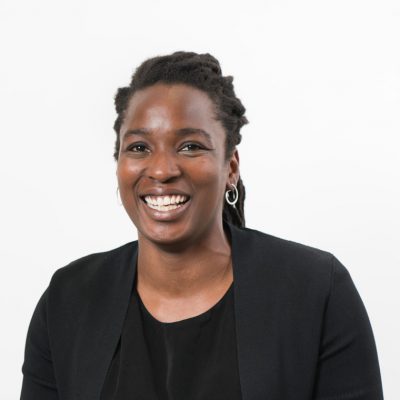
Toyin Ajayi
Physician
5
APPEARANCES
5
PODCASTS
Oct 8, 2026


Toyin AjayiGUEST
"If there's an issue that needs to be triaged, we'll triage it." Um, suddenly this sense of scarcity, the sense that, that from a patient's perspective, you've gotta wait to see your doctor, and damn it, you gotta get everything in, in the ten minutes, like that, that whole c- notion goes away.
Toyin AjayiGUEST
And the notion that you have to rely on this one human who is fallible, remembering everything about your context, parsing it all, um, uh, meshing it with the new information you're giving them, coming up with the right hypothesis for what's going on, sifting through all of the most recent medical literature and data to come up with this idea, explaining it to you, and then enacting it.
Toyin AjayiGUEST
Like all of that, it's obvious to me that technology is far better at that than, than humans would be.
Toyin AjayiGUEST
And so there is this huge opportunity to say to every patient across the country, every person, "You have access real time, twenty-four seven." Call it a clinical coach, 'cause I'm-- my colleagues in medicine are gonna feel really touchy about what is a doctor, you know-
19 MINS LATER

Toyin AjayiGUEST
I think, um, uh, for sure, I mean, this is a deeply human model, right? Like, and, um, and by, by design, it is very, very sort of high touch and high trust for sure.
Toyin AjayiGUEST
Um, the high tech part is really important though, because to your earlier point, in every part of the ecosystem, but particularly in primary care and behavioral health, there just aren't enough humans to do this, particularly with the amount of like administrative waste and friction that we ask most people, most physicians, and healthcare providers to wade through.
Toyin AjayiGUEST
And so the tech can be really important, and we've deployed it in such ways, um, in enabling people to spend more quality time doing the things that only people can do.
23 MINS LATER

John MarchicaHOST
I'm sure you spent a lot of time thinking about this, but just sort of your general sense on where you are today and what you're looking at in 2027.


Joel BervellHOST
I know that you see AI as a positive for relationship and trust building, which I think in some ways may seem counterintuitive to a lot of the listeners.
Toyin AjayiGUEST
That is so important is throughout all of this experience, we've learned that if we can engender trust and real engagement with our members, we earn the right to have them share more information about what matters to them that we can then use to better provide care to them.
Toyin AjayiGUEST
And we've spent a lot of time surveying our members and our patients, really trying to understand what creates trust.
Toyin AjayiGUEST
What people tell us is that often when their trust has been broken in health care, it's because the system broke, not because a person didn't care.
Toyin AjayiGUEST
If a person says, I'm going to make the referral to you to see an oncologist and then the referral never comes through.
16 MINS LATER
Joel BervellHOST
But if we were to sit down again in 2035, so 10 years or nine years from now, I guess, what would you hope has fundamentally changed about that experience of being a patient and a physician? And what part of medicine do you hope remains deeply human, no matter how advanced AI becomes?


Chip KahnHOST
Give us some sense of how we should reapportion and what would it take to redirect the investment towards the patients, particularly your patients, who are left out frequently from the care they need?
Toyin AjayiGUEST
This has become a real sort of burning imperative for me to sort of sound the alarm and try to get us all on board to think differently about how we invest because, you know, history will tell us and certainly our experience now tells us this technology is probably one of the most powerful force multipliers that any sector has experienced in the last decade, right? It is so, so powerful and we're only getting started.
Toyin AjayiGUEST
What the technology does is enable us to do what we were doing before better, faster, and hopefully cheaper.
Toyin AjayiGUEST
What it does not do is change our incentives or change our motives or determine what the outcome is going to be.
Toyin AjayiGUEST
And so if you apply a powerful, potent force multiplier on a system that already is built for inflationary drivers to drive up costs, to drive up revenues for providers and not incentivized around outcomes, you're just going to get more of the same and you're going to get there faster.
Toyin AjayiGUEST
I think health care costs are one of the most existential threats that our country faces right now.
11 MINS LATER
Chip KahnHOST
In that context, what does it mean in terms of your deployment of all the AI tools that you've been talking about? How do you overcome that doubt many of your members may feel and bridge that gap?


Toyin AjayiGUEST
... insurance coverage and all the other things that are sort of, uh, the ways that our traditional system used to sort of rationalize who gets care.
Toyin AjayiGUEST
In, in a value-based care model, we try to use data to determine how we leverage resources and tools.
Toyin AjayiGUEST
Um, and what that's led to has been, um, pre-AI, I would say, a better but not perfect approach to this, which is to say if you are a frail senior living at home, um, like this gentleman that we were talking about, you know, in, in the basement of a home, um, who, who's visually impaired and may not be able to get out on his own, we're gonna send somebody to you, and we're gonna probably send someone to you multiple times a month, and that person's gonna be quite highly skilled and quite expensive.
Toyin AjayiGUEST
Um, if you are a 22-year-old and you are on Medicaid because you're pregnant and you have sickle cell disease, but actually you get out and about pretty well and you're pretty good with your smartphone, we may not send a nurse practitioner to your home.
Toyin AjayiGUEST
We may send a nurse, um, at a specific period of time when it seems like you're most vulnerable.